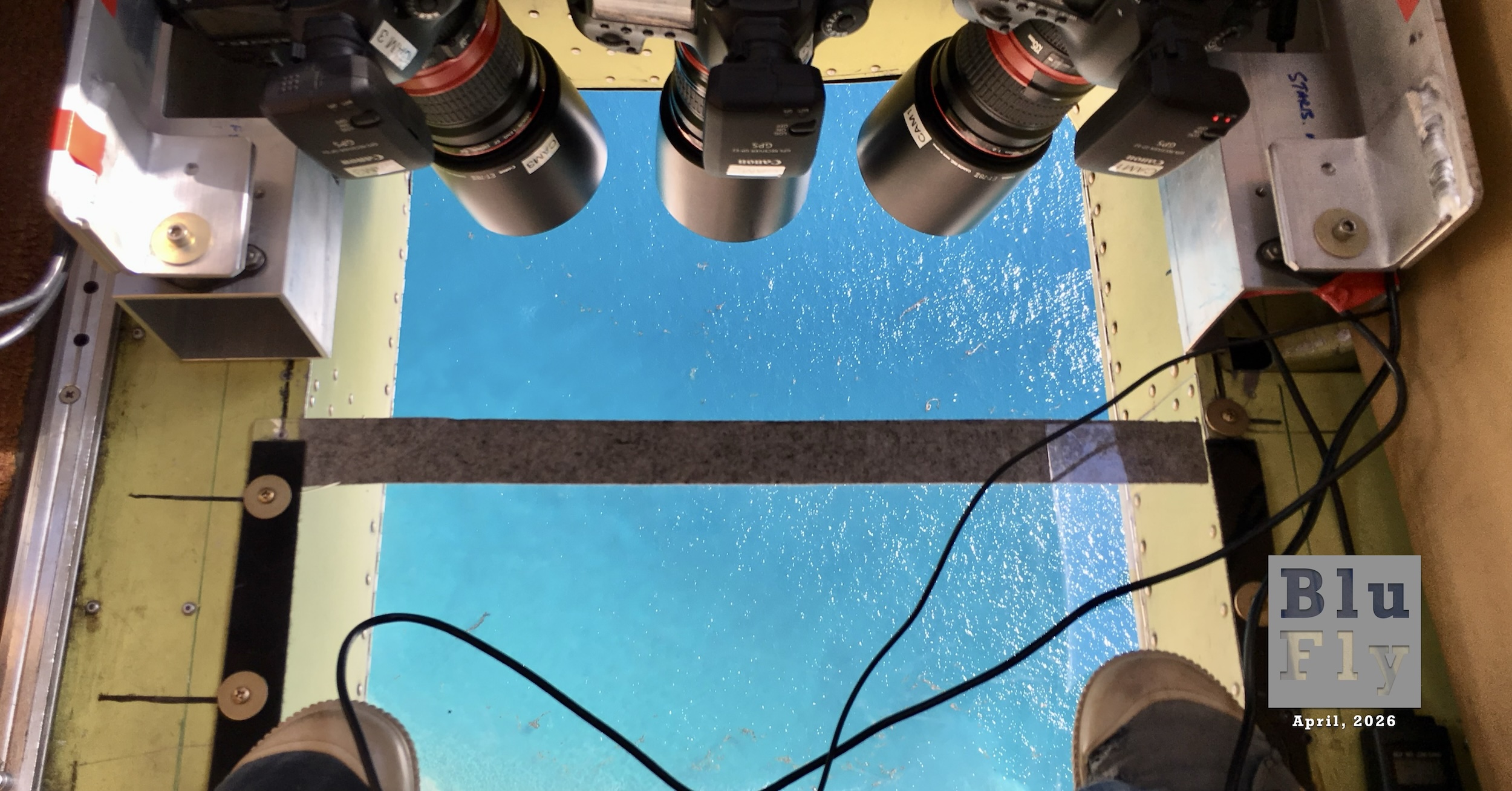
Looking through the belly port of a Partenavia P-68—chartered from Aspen Helicopters in Oxnard, California—and employed by the Seabird Studies Team at the USGS Western Ecological Research Center. They conduct aerial photographic surveys of the ocean off central and southern California to create comprehensive maps of seabird and marine mammal distributions. (📸 Laura ‘Laney’ White, US Geological Survey in the public domain.)
April, 2026
« Mother Nature's a mad scientist, Jerry. » — Cosmo Kramer
By Terence C. Gannon
In The Air
Imagine you’re a gifted aeronautical engineer standing on the brink of a brilliant career. For what seems like decades, you’ve piled up undergraduate and postgraduate degrees, a PhD, along with a passel of postdoctoral fellowships at the best institutions of higher learning around the globe.
Now, also imagine there is just one thing standing between you and doing what you have loved since you were a kid: a capstone project intended to test all of these hard-earned skills.
 At the front of the room where you sit waiting, there’s a lectern and what appears to be a tripod easel with a poster, but covered in a sheet so as to hide it from view. Enter stage left, your revered—and feared—professor with a clipboard in her hand. She then steps up to the lectern and bends the mic towards her slightly.
Your final assignment, she starts, clearing her throat, is to design a UAV with an unrefueled range of roughly 14,000 kilometres. Okay. Thoughts of a spindly, carbon-fibre framed, sailplane-like, solar-powered stratospheric cruiser poking along for days en route pop into your head. However, you must build it with entirely naturally occurring, unprocessed materials. The record-scratch drop jerks you back to reality.
Wait, what?
She doesn’t say, and you don’t realise, that the 14,000 is not random: it represents just about the longest, one-way, transoceanic flight on Planet Earth; one from the westernmost reaches of Alaska to the southern tip of Australian territory: Tasmania. The longest way possible across the Pacific. Fourteen-thousand kilometres where Earth’s surface is at its most consistently featureless and therefore the most difficult to navigate.
Furthermore, your aircraft can consume no fossil fuels. Instead, only naturally occurring grains, vegetable matter, proteins—and sunlight, of course—are acceptable. Also, the vehicle can produce no waste that is not fully biodegradable. At the end of its service life, the entire airframe and all its components also have to be entirely recyclable. Your curiosity at the outset is beginning to turn to bewilderment. It’s beginning to sound like some kind of bad joke, intended to trip us all up, you think. You want to wake up from this nightmare.
So, what do we have in the way of maximum all-up weight? one student asks, perhaps taking this more seriously than you are.
Six hundred grammes, less one percent for payload, she quickly retorts, without having to check her notes. There is an audible gasp from her audience. There is a muttering of expletives and a smattering of nervous laughter.
With respect to navigation, you may not depend on any external, artificial reference. To make that clear, no space- or ground-based electronic assistance of any kind. The UAV must find its way to its pre-determined destination only by what it can sense directly and see out to the horizon. Now you’re beginning to get angry—like you’re the top, big-league prospect, only to suffer a horrendous compound fracture at the final, season-ending tournament.
Oh, and just one more thing,—more?—the UAV must have the ability to create copies of itself at will. That’s it! You’re enraged and stand up.
Is this some kind of joke? Okay, you got me—very funny—now can we have the real assignment, the one that’s not utterly impossible short of some sort of miracle!
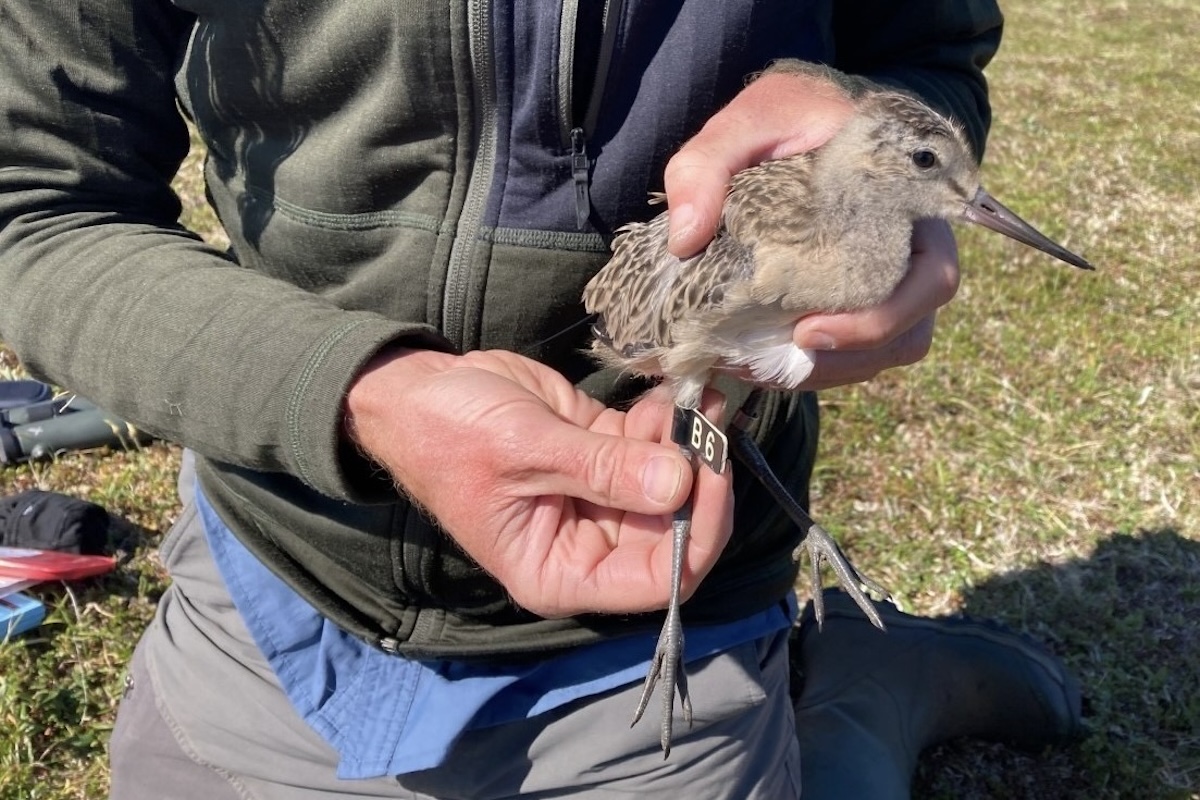 Well, I’ll grant you the miracle part, she smiles wickedly, but would it surprise you to know it’s already been done? She steps up to the easel and pinches the edge of the sheet covering it. Student candidates, may I present, she then pulls the sheet off the easel with a showy flourish, the bar-tailed godwit B6.
On the poster is a photograph of a diminutive but highly photogenic little seabird, cradled gently in human hands, and captured so it appears to be smiling out at you, triumphantly.
Master Aviator
While this overwrought scenario is entirely imaginary, the bar-tailed godwit B6 is absolutely the real deal, as are its accomplishments described in the classroom scene. It’s all a set-up intended to remind us all that no matter how accomplished we might think we humans are at this aviation game, we are all a distant last compared to the tiny godwit when it comes to long-distance aviation.
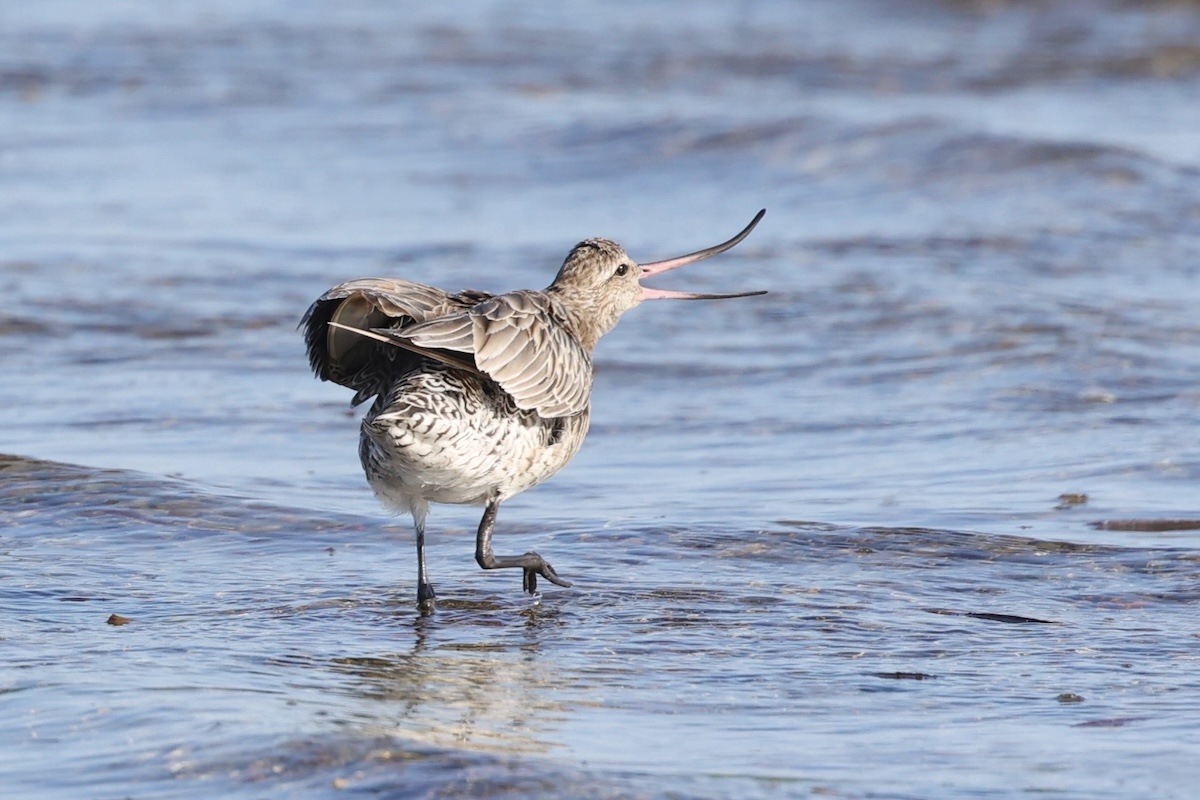 I stumbled on B6’s story when it was mentioned in passing in a LinkedIn post. At first, I thought it was the product of some sort of AI-related malfeasance, given away by the utterly laughable mischaracterisation of some other aviation event; most likely of the human-made variety. Such was my arrogance.
However, for a couple of days, I simply couldn’t shake the thought that there might just be a bird capable of such not-of-this-planet aeronautical achievement. After all, the superbly charismatic, chunky Atlantic puffins routinely make their way over that ocean seemingly without a second thought, all the while flapping their wings furiously 300 to 400 times per minute.
The bar-tailed godwit B6’s accomplishments were several orders of magnitude beyond the puffin’s already amazing performance. Even more stunning, B6’s behaviour is reasonably routine for the species. Making an annual round-trip flight across the Pacific is just what bar-tailed godwits do.
My entry point into the godwits’ world was the article Juvenile Bar-tailed Godwit “B6” Sets World Record 1 found on the US Geological Survey website. B6 hatched out just four months before the USGS-banded bird departed the Kuskokwim Delta in Alaska on October 13th, 2022. Apart from the band on its leg, its only carry-on was a solar-powered satellite transmitter weighing just five grammes.
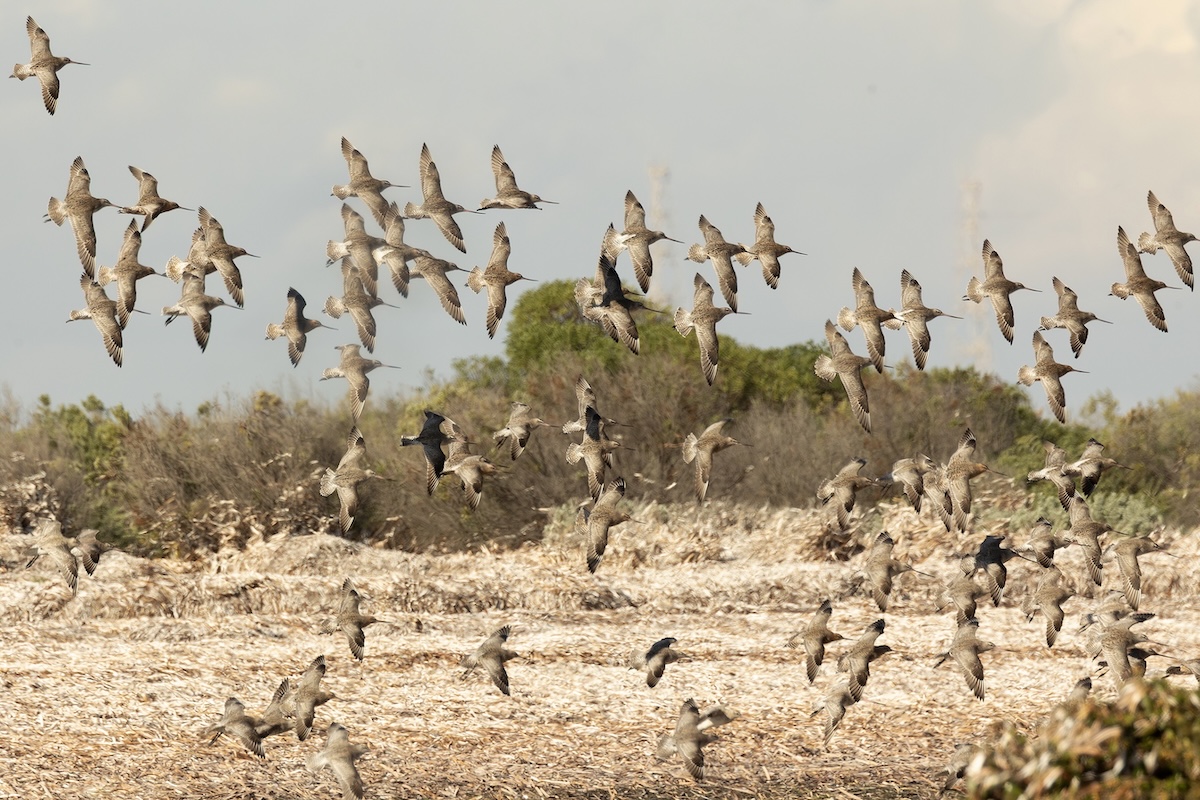 Eleven days later, on October 24, B6 arrived on the northeastern shore of Tasmania, a journey of 13,558 kilometres. That works out to an average speed of something like fifty kilometres per hour, twenty-four hours a day, for eleven days straight.
They definitely will not land on water, and they do not use soaring flight like a hawk or stork to any significant degree, said Dr. Jesse Conklin, a collaborator on the project who I interviewed recently.2 I expect they use little dynamic soaring (using small-scale updrafts from waves by flying very close to the water) because we think they generally fly well above the water. However, I do expect they use some measure of intermittent gliding, but perhaps only for seconds at a time. So, it can be reasonably concluded the godwits might well be flapping their wings for most of the entire flight, like the pugnacious Atlantic puffin.
Amongst my many questions for Dr. Conklin, the answer that intrigued me the most was how the godwits navigate across all of that empty ocean.
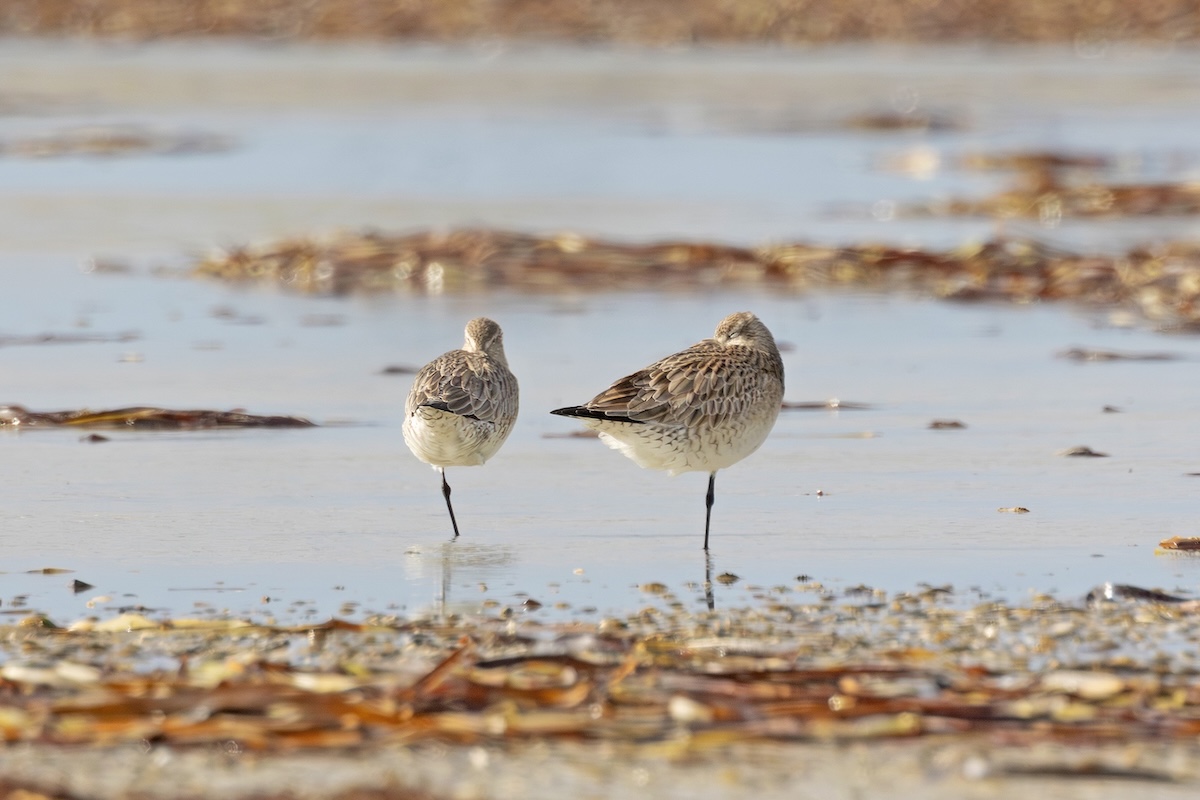 Birds are known to navigate oceans by a number of cues, which can include polarised light, magnetic fields, and of course what they can see (and perhaps smell). But the bigger question is how they know where they intend to go, particularly for a first-time migrant like B6, responded Dr. Conklin.3 He continued: However, we don’t have all the answers here, and we are currently studying it, as part of a project to determine whether they could possibly sleep en route.
And what about sustenance—both food and water—while in transoceanic transit?
They have little capacity for catching airborne insects, and are thought to persevere on only stored fuel and metabolic water.4 In other words, completely self-sustained, unrefueled flight for the entire distance.
It’s at times like these that give me pause with respect to my unfulfilled desire to be an aeronautical engineer, and think about replacing it with an equally likely to be unfulfilled desire to be an ornithologist like Dr. Conklin.
If I’m lucky enough to come back this way again, I really hope I’m bestowed with the intellectual capacity, and the perseverance, to be both.
Forget the Moon or Mars, Let’s Explore Planet Earth
Having already departed substantially from BluFly’s human-made credo for this month’s column, I’m keen to bring us back to now seemingly rather ordinary-by-comparison world of aircraft we two-legged, carbon-based lifeforms cobble together for ourselves.
 In my fascinating conversation with Dr. Conklin, which I invite you to read in its entirety,5 I was both in awe of his knowledge of the subject—based on his lifelong commitment to it—and also surprised that despite such concentrated efforts to study the birds, there is still much yet to discover. As Dr. Conklin mentioned in the interview, for example, how is it that godwits sleep while en route, or at the very least somehow manage to function with no sleep for eleven days in a row? No one knows.
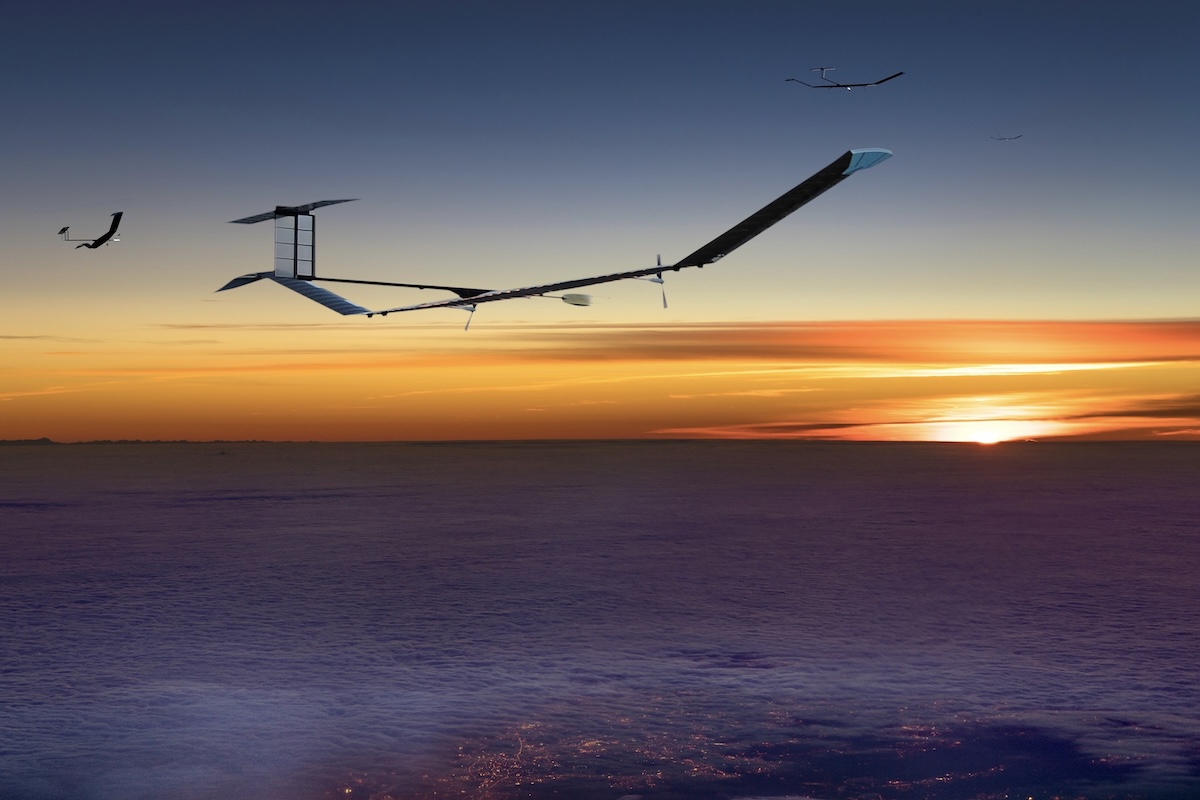
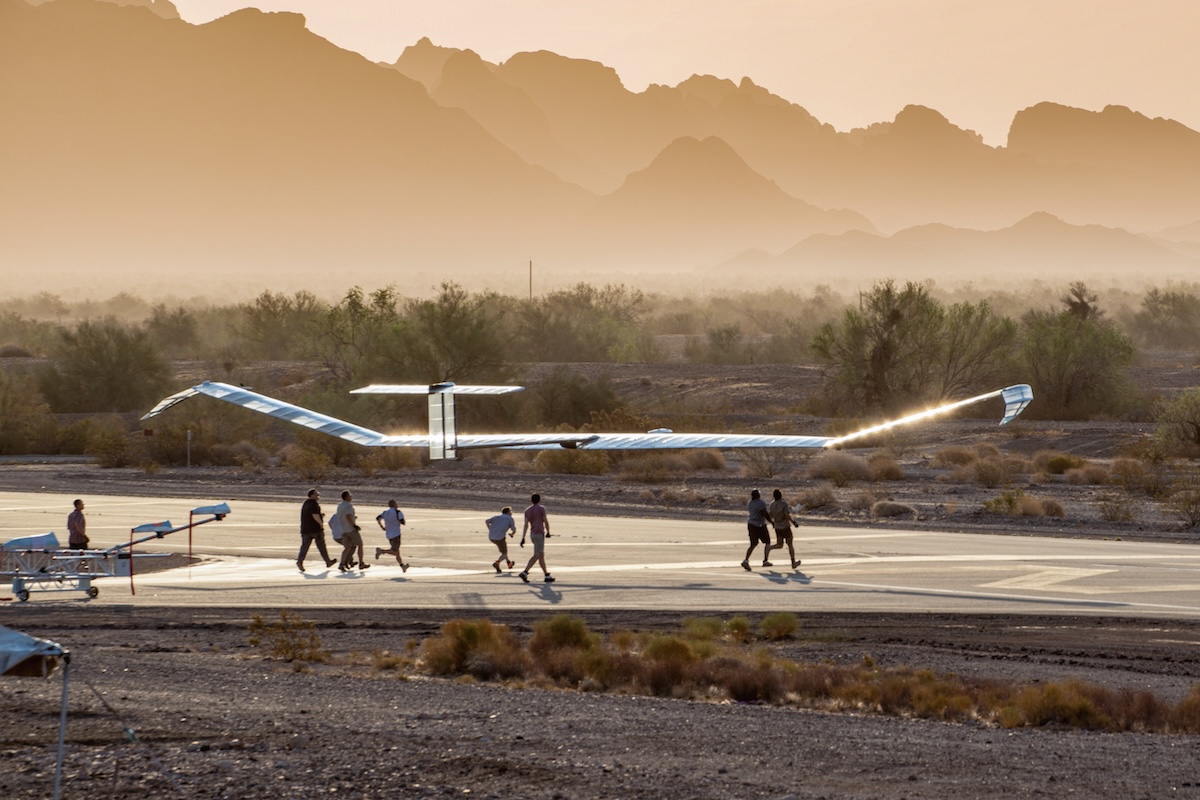
It then occurred to me that the closest we’ve come to emulating the godwits’ capabilities are solar-powered, high-altitude aircraft like the Airbus/AALTO Zephyr. In 2025, one of these flew continuously for sixty-seven days.6 Assuming it can keep up with the godwits, their journeys are seemingly well within the Zephyr's reach.
So, how about this: a Zephyr flight that will pick up the godwit flock as it departs Alaska in the fall and follows it all the way to, well, wherever they wind up on that particular migration, whether it be New Zealand, the eastern Australian mainland, or like the miraculous B6, on the northeast coast of Tasmania.
There is the small matter of how to keep track of a multiple 600-gramme targets flying 20,000 metres below or, indeed, what information could be gathered from something so small when visualised from so far away. It would also have to have the capability of making its observations both day and night. That said, I just know there are much smarter people than me that could figure this part out.
 It wouldn’t be the close observation afforded by the Partnavia P.68s chartered by another branch of the US Geological Survey, the Seabird Studies Team at the USGS Western Ecological Research Center,7 flying in Southern California and as shown in this month’s cover photo. However, if it has been routine to count cars in Pyongyang parking lots8 for decades from even higher altitudes, then figuring out if the godwits’ wings keep flapping, or how the little birds sleep and fly at the same time, should be child’s play by comparison. It would be the highest and best use of the technology, rather than using it to peer over the fence at our pesky, prickly neighbours.
There are so many mysteries of the godwit, and all animals who regularly participate in great, global migrations, the least we can do as a lesser species is to try and figure out how they do it.
If you want a better reason, other than sheer, child-like curiosity like mine, then let’s do it to figure out what we can do to ensure the godwits’, and all other great migratory journeys, continue long after all of us have flown west. 🛩️
***
Do you know how to keep track of 600-gramme targets from 20,000 metres away? Or perhaps you're a bigwig at Airbus/AALTO, and are intrigued by the notion of a Zephyr flight to follow a flock of bar-tailed godwits across the Pacific? In either case — or any case, come to think of it — no foolin', I'd love to hear from you.9 Until then, thank you so much for reading and also for engaging with BluFly’s posts on Bluesky and LinkedIn.10
Also, a very special and heartfelt thank you to Jesse Conklin, Sandy Horne, and Laney White for their invaluable contributions to this month’s column. I hope I can return your kindness at some point down the flyway, and would be honoured to do so.
Until we meet again next month, fair winds and blue skies.

Terence C. Gannon
Managing Editor
This Month's Stories
This is what we managed to put together for you for April, with most recent at the top:
Just when you think every microscopic detail of Amelia Earhart's life has been thoroughly examined, something new shows up. In this case, twenty-one seconds of her voice, brought to you by the great people of the indelibly magnificent @librarycongress.bsky.social. | 🛩️ 🎙️ 🥇
[image or embed]
— BluFly 🛩 (@blufly.media) April 8, 2026 at 10:38 AM
« Fast Commuter Air Transport Between Regional Pacific Northwest Cities » by Jennifer Ferrero, writing for Northwest Aerospace News. An airline flying PC-12s; a 'must-fly' route for us in the future. (📸 ©2026 Dean Cameron | Northwest Aerospace News) | 🛩️ 📍 🇺🇸 🥇 | 🔗 viewer.joomag.com/northwest-ae...
[image or embed]
— BluFly 🛩 (@blufly.media) April 7, 2026 at 4:53 PM
For anybody who thinks local news is dead, we offer the @theorkneynews.bsky.social as a stellar counterpoint ✨ to that point of view. Their daily newsletter is one of our favourites. For example, take a look at the gem 💎 they featured today about this significant milestone. | 🛩️ ⚡️ 📍 🏴 🥇
[image or embed]
— BluFly 🛩 (@blufly.media) April 3, 2026 at 9:18 AM
Okay, colour us intrigued. 🤔 Rahul Rao, writing for @spectrum.ieee.org, provides an excellent primer on the Sceye/SoftBank partnership to seamlessly augment ground-based cellular coverage with the SceyeCELL antenna technology integrated with Sceye's stratospheric airship. | 🛩️ 📡 🛰️ ⚡️ 🎈 🥇
[image or embed]
— BluFly 🛩 (@blufly.media) April 2, 2026 at 4:06 PM
We kicked off the April issue with a Cosmo Kramer quote, and another one popped to mind when this showed up, what with it being April 1st and all: « Madam, I pray you're not toying with me. » Available April 4th according to the LEGO announcement. | 🛩️ 📡
[image or embed]
— BluFly 🛩 (@blufly.media) April 1, 2026 at 6:26 AM
It may be April Fools' Day, but—no foolin'—the April issue is out. 💥 This month, we kick things off peering out the belly port of a Partenavia P.68, and then hopscotch across the Pacific in search of a master aviator capable of aeronautical feats of which mere mortals dare not dream. | 🛩️ 🥇
[image or embed]
— BluFly 🛩 (@blufly.media) March 31, 2026 at 4:02 PM
Note that the embedded posts above are from the Bluesky 🛩️ Custom Feed11 which is the reference feed for BluFly.