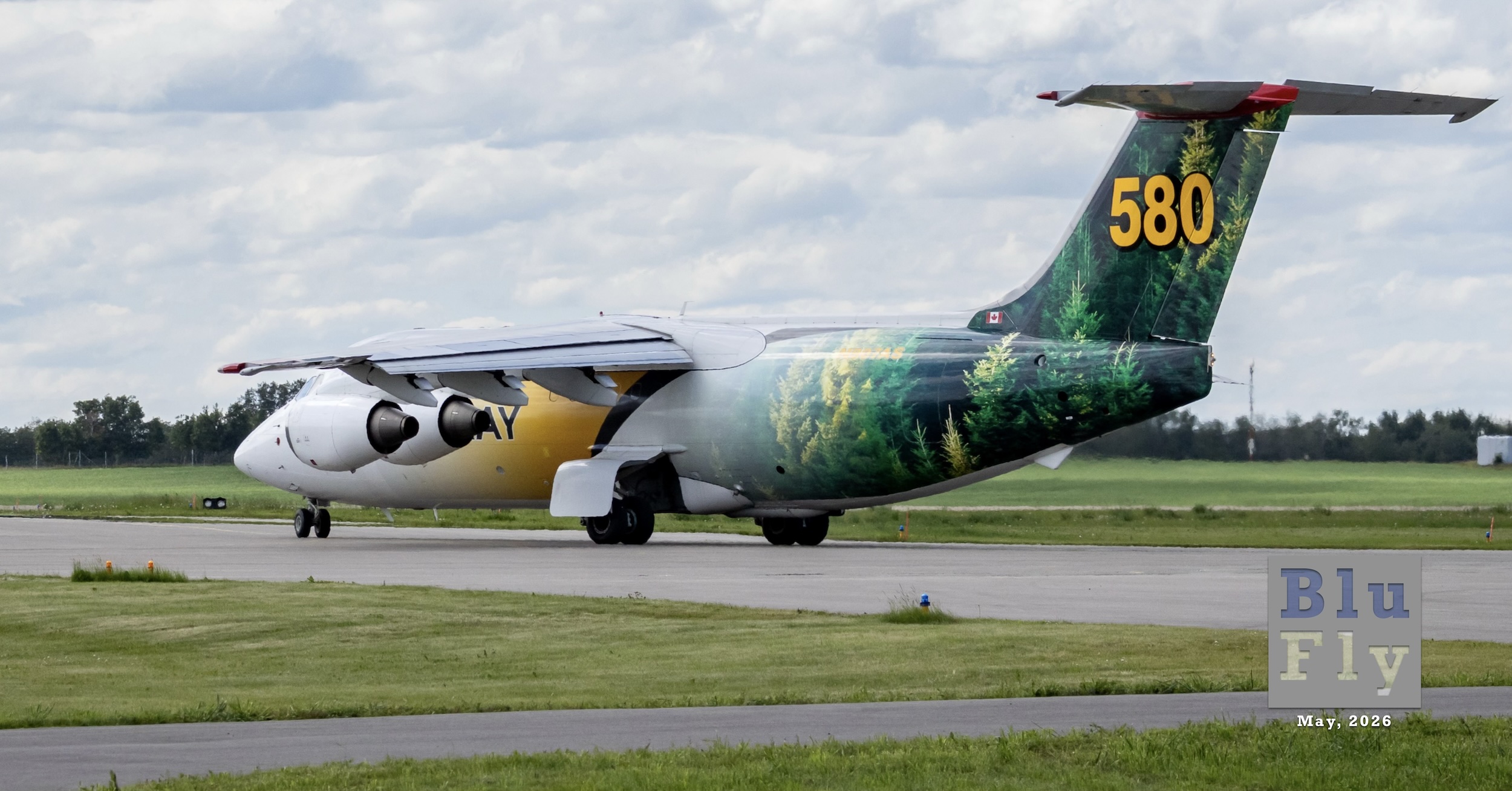
Captured on July 4, 2025, an Air Spray-registered British Aerospace BAe 146-200A, N907AS, spotted at the Red Deer Regional Airport (CYQF) in Alberta, Canada. (📸 Jason Hampton)
May, 2026
« Even castles in the sky can do with a fresh coat of paint. » — Haruki Murakami
By Terence C. Gannon
In The Air
If you’ve ever watched a polished aluminum airframe as it coursed majestically through a summer sunset sky, you know that an aircraft doesn’t need paint to fly. They might even fly better without it, given that it can add somewhere between 273 and 544 kilogrammes1 to a typical airliner airframe. Based on the industry standard of eighty-four kilogrammes per passenger, the aircraft’s fancy paint job means it’s leaving between three and six fare-paying passengers in the terminal.
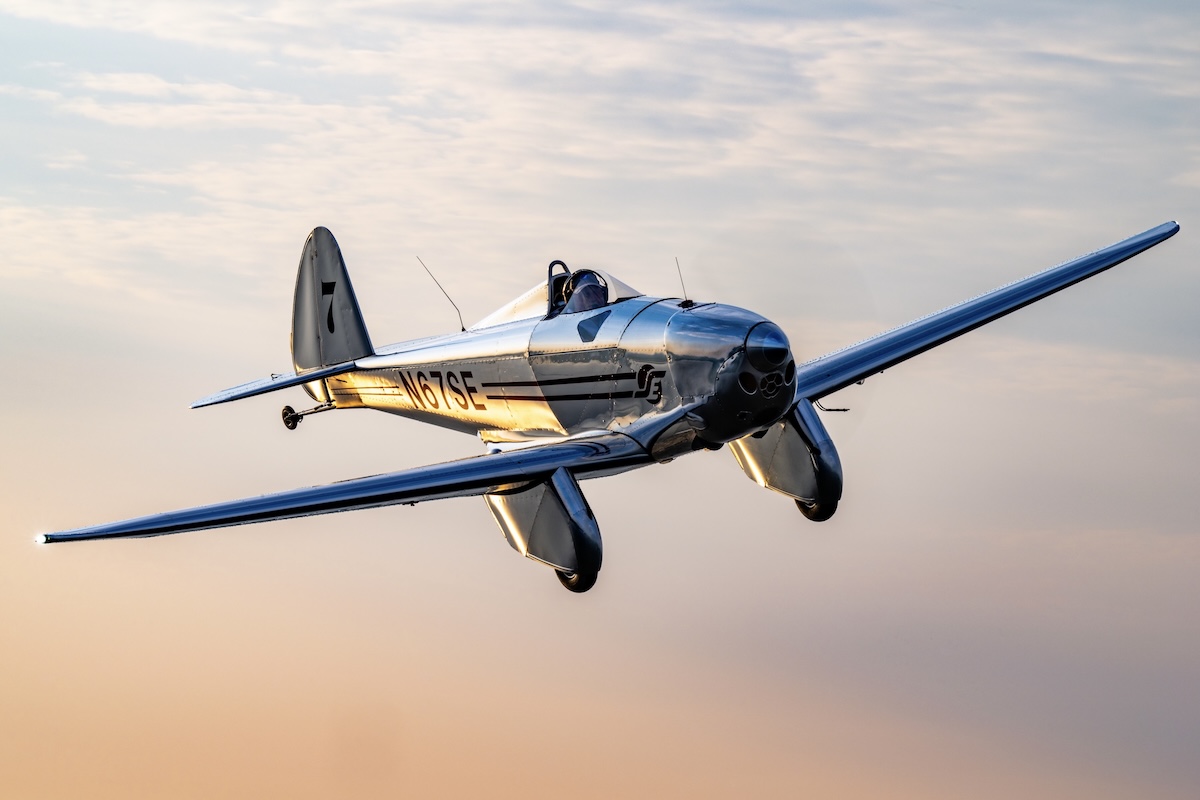 At the very least and based on that accumulating cost, it seems wise to make the airplane’s paint earn at least some of its keep by putting it to work selling something to somebody.
Furthermore, with the advent of modern, composite construction techniques, an aircraft en déshabillé often looks less like art deco sculpture and more like a patchwork quilt of white, grey, and primer-coloured panels impossible for all but the hardened test pilot to love. As such, the aircraft’s naked skin becomes a tempting canvas for both the technically skilled and the artistic to make a little aeronautical magic.
Inspired by BluFly Trusted Contributor2 Jason Hampton’s excellent photograph of Air Spray’s evergreen-themed BAe 146 captured in the wild, some livery-related stories:
A River Runs Through It
Unlike the commercial imperatives primarily driving many special aircraft paint schemes, there are some liveries that seem to be purely exercises in exquisite aesthetics. When I think about this, it’s this design, rendered by Duncan Aviation of Lincoln, Nebraska, that often first comes to mind. While it doesn’t hurt that the Pilatus PC-12 is one of my favourites, this exquisite livery brings out the absolute best in the elegant, Swiss aircraft and speaks eloquently on its behalf.
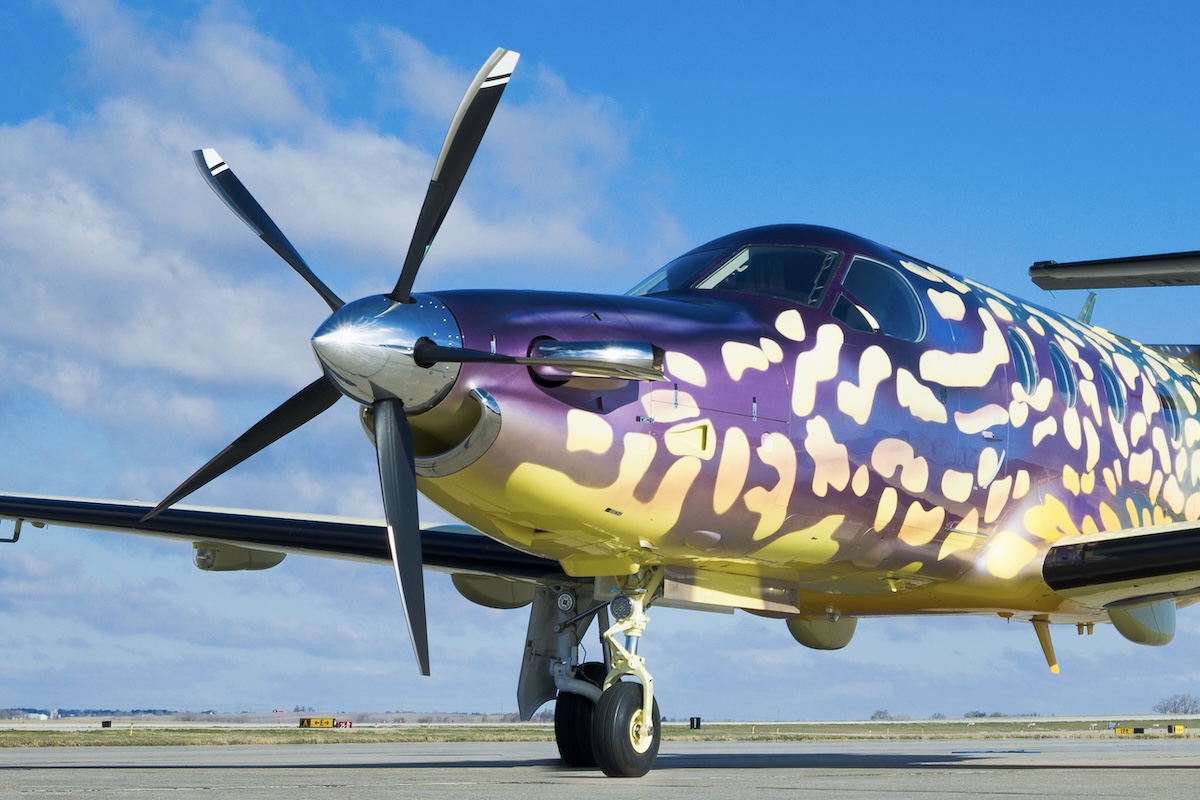 As just one small, initial indication of the fine art component to this design, it was completed in collaboration with noted Livingston, Montana-based artist Derek DeYoung,3 who has spent a significant portion of his career re-defining the look of traditional fly fishing art. A poke around the artist’s website will provide some strong hints as to DeYoung’s unique style, as well as some strong hints as to how the rest of the PC-12 looks. However, I can’t imagine a more unique and challenging canvas for DeYoung’s artwork.
All that said, my jottings cannot possibly do the aircraft justice. Therefore, I’m delighted to let you know that coming soon, Eric Anderson, of Duncan Aviation, will be sharing a ton of detail about the one-of-a-kind aerial work of art. I’m intentionally teasing it with this one photograph chosen to not give away the entire design before Eric’s excellent article comes out shortly on BluFly’s Avergreen imprint.
Also, because true beauty is more than skin deep, Eric’s article will cover all the upgrades to this particular PC-12 both inside and out. There’s even an interesting Canadian connection that captured this Canuck’s attention that I’ll try and tease out of Eric as well. But I have likely already given away too much—follow BluFly on either Bluesky or LinkedIn to be the first to know when the entire story of this magnificent PC-12 is out.
Oh, yes, and a final related thought: as I always say, if my Lotto Max numbers come in, I am not going to shout it from the rooftops. However, there will be signs: one of the first will be me planning a flight in my newly acquired, civilian version of the CT-102B Astra II (if you know, you know.) The first station stop on this imaginary flight will be Livingston, Montana, and thence onwards to Lincoln, Nebraska, so that the collaborators DeYoung and Duncan can work their unique magic on my dream aircraft.
What’s Old is New Again
One thing that special aircraft liveries are not, is new. As far back as 1911, and with the participation of no less than the Wright Brothers in the form of their Wright EX biplane, Calbraith Perry Rodgers departed Sheepshead Bay, New York, in pursuit of a $50,000 prize for the first flight across the continental United States.4
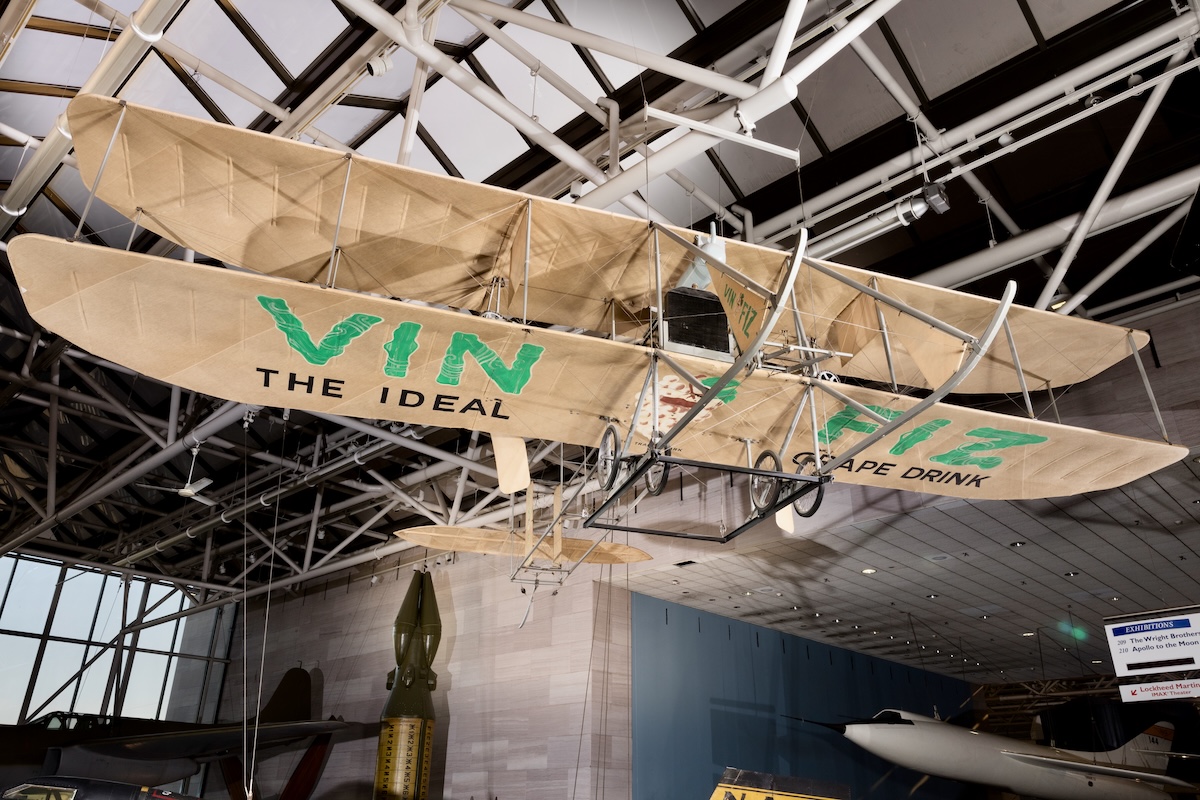 Around the same time, Chicago meatpacking magnate J. Ogden Armour wanted to get the name, and hopefully shortly thereafter, his new Vin Fiz grape drink, on the lips of Americans from coast to coast. He spotted a unique opportunity in Rodgers’ flight and agreed to pay the pilot the bet-hedging fee of five dollars for each mile successfully flown east of the Mississippi. In return, Rodgers agreed to paint VIN FIZ — THE IDEAL GRAPE DRINK, along with its logo, on the lower, visible surfaces of the delicate, diaphanous aircraft.
Incidentally, the prize money for the flight was put up by the quintessential attention junkie, William Randolph Hearst, with one stipulation: the journey to the eventual destination of Pasadena, California, had to be completed in thirty days or less.
Rodgers eventually made it to Pasadena in the Wright EX. However, with the many crashes and attendant repairs along the way, there was seemingly little left of the original aircraft that departed Sheepshead Bay. Most of it had been replaced with spare parts. Even so, in a final irony, it took forty-nine days for Rodgers and the Vin Fiz to make the journey—nineteen days longer than it needed to be in order for Rodgers to collect the prize money. While Hearst was a man of many extravagances and dalliances, that did not extend to this case, and Hearst did not part with the cash. Apparently, in the Hearst canon, a deal was a deal, no exceptions, even for derring-do aviators like Rodgers.
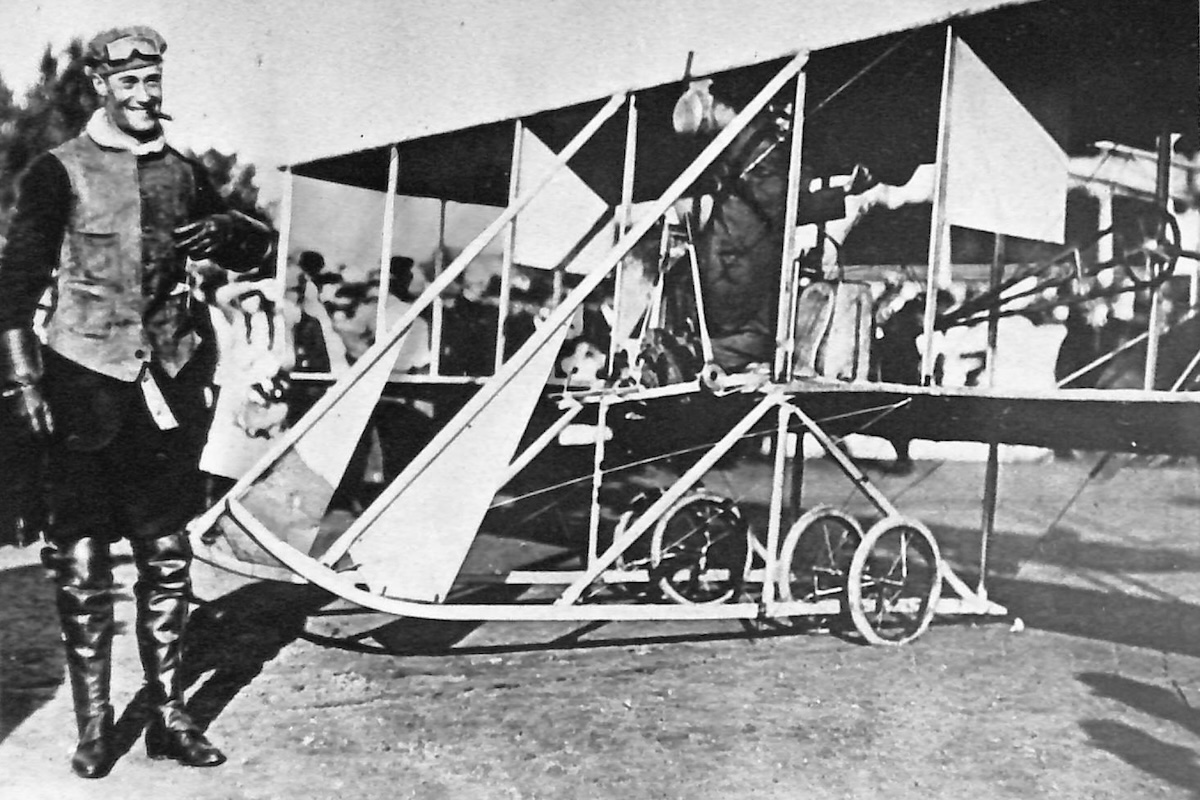 Not surprisingly, the hero’s welcome Rodgers and the Vin Fiz received provided its own form of intoxicating gratification. Perhaps caught up in that, and the historical moment, the pilot went above and beyond the original requirement and flew on to Long Beach, further west. There, Rodgers ceremoniously and poetically dipped the wheels of the Vin Fiz in the Pacific. While the extraordinary flight across the United States didn’t claim his life—despite a number of miraculously close calls—Rodgers did finally succumb a few months after the flight, not long after he and his family had decided to make California their permanent home.
So far as Vin Fiz—the drink—is concerned, problems with the bottles’ sealing mechanism resulted in the drink often arriving at the point-of-sale tasting distinctly rancid.5 Perhaps the product could have benefitted from regularly scheduled air freight services, but alas, they were still fourteen years in the future. The Ideal Grape Drink hardly outlasted Rodgers’ flight, going out of production shortly after its conclusion on the Pacific coast.
Of all the fascinating characters in this story, only a few of whom are featured above, it can easily be argued that the Vin Fiz—the aircraft, that is—faired best of all. It was eventually restored and presented to the Carnegie Foundation for posterity. In turn, they donated it to the absolutely perfect long-term care facility for old aircraft, the National Air and Space Museum, where it is still on display to this day.
The star-crossed Vin Fiz drink may have seemingly come and gone in an instant, but its moment on the underside of its namesake flying billboard will live on forever. 🛩️
***
Is there a particular aircraft livery you've spotted in the wild, or perhaps directly helped to create? Or perhaps one that's a particular favourite of yours and you would like to share with others? In any of these cases, or on any other matter, I'd love to hear from you.7 Until then, thank you so much for reading and also for engaging with BluFly’s posts on Bluesky and LinkedIn.8
Until we meet again next month, fair winds and blue skies.

Terence C. Gannon
Managing Editor
This Month's Stories
This is what we managed to put together for you for May, with most recent at the top:
We're delighted to hear about Electra achieving another significant milestone in their development program: it's the best illustration yet of what they call Direct Aviation: « how regional air travel can move beyond airports to become faster, simpler, and far more accessible. » | 🛩️ ⚡️ 📹 📰 🥇 | 🧵 1/2
[image or embed]
— BluFly 🛩 (@blufly.media) May 28, 2026 at 10:59 AM
Spectacular news incoming: the Smithsonian, including the National Air & Space Museum, has hooked up with open-access maven Unsplash to make a generous portion of the institute’s photography more easily accessible than ever. (📸 Smithsonian on @unsplash.com) | 🛩️ ⚔️ 📰 🥇 | 🔗 unsplash.com/collections/...
[image or embed]
— BluFly 🛩 (@blufly.media) May 27, 2026 at 7:13 PM
Another amazing restoration of which we only recently became aware is the De Havilland DH.84 Dragon 'Iolar', Aer Lingus' very first aircraft, undertaken to celebrate the airline’s 90th anniversary. Press release linked. (📸 Aer Lingus) | 🛩️ 📰 🥇 | 🧵 1/2 | 🔗 mediacentre.aerlingus.com/news/2705202...
[image or embed]
— BluFly 🛩 (@blufly.media) May 27, 2026 at 12:55 PM
We love hearing from award-winning journalist @hbaskas.bsky.social, which, to be candid, isn't often enough. 😉 But we did today, to remind us that it's National Paper Airplane Day. Consider following her here on @bsky.app, and/or subscribing to her Stuck at the Airport mailing list. | 🛩️ 🪽 📹 📡
[image or embed]
— BluFly 🛩 (@blufly.media) May 26, 2026 at 11:08 AM
Leonardo announces that the International Test Pilot School (ITPS) « Orders Leonardo M-346 T Block 20 Advanced Jet Trainers to Meet Evolving Tactical Training Requirements » to be based out of North Bay, Ontario. Press release with link. (📸 Leonardo) | 🛩️ ⚔️ 📰 🥇 | 🔗 www.leonardo.com/en/press-rel...
[image or embed]
— BluFly 🛩 (@blufly.media) May 26, 2026 at 8:55 AM
Gosh, we had no idea this project was even in the works. Our hats 🎩 are off to Renault for getting behind this amazing effort, intended to enable the aircraft—one of the most beautiful ever 😍 in our humble opinion—to get back in the air, where it belongs. More details and videos with link. | 🛩️ 📹 📰 🥇
[image or embed]
— BluFly 🛩 (@blufly.media) May 23, 2026 at 11:13 AM
When (not if) we finally get to Australia 🌏 the Powerhouse Parramatta museum is going to be at or close to the top of our list of places to visit. Scheduled to open in late 2026, they are now assembling exhibits. Check out what's just arrived. Better yet, check out the video with the link. | 🛩️ 📍 📹 🇦🇺
[image or embed]
— BluFly 🛩 (@blufly.media) May 22, 2026 at 8:12 AM
Don't know how we missed this: « Outside Beyond the Lens: Jets in the Wild » from @pbs.org, which ostensibly provides a how-to on photography at the 'Sidewinder' low-level military flying corridor in Southern California. (📸 18THIRTY Entertainment) | 🛩️ ⚔️ 📍 🇺🇸 📹 🥇 | 🔗 www.rmpbs.org/shows/outsid...
[image or embed]
— BluFly 🛩 (@blufly.media) May 21, 2026 at 7:26 AM
It's spring in Minnesota, and with that come the grasshoppers, we assume. Well, at least one, for sure: the Piper L-4H Grasshopper undergoing meticulous restoration by AirCorps Aviation in beautiful Bemidji. Chuck Cravens provides the details. (📸 @p-51c.bsky.social | AirCorps Aviation) | 🛩️ ⚔️ 📍 🇺🇸 🥇
[image or embed]
— BluFly 🛩 (@blufly.media) May 20, 2026 at 11:55 AM
Our 'snips' from today's announcement about the Snowbirds. ✂️ The good news: « National Defence will procure the CT-157 Siskin II (Pilatus PC-21) for the future Snowbirds team. It too will serve as both a training and air demonstration aircraft. » | 🛩️ ⚔️ 📰 🥇 | 🧵 1/2 | 🔗 www.canada.ca/en/departmen...
[image or embed]
— BluFly 🛩 (@blufly.media) May 19, 2026 at 11:05 AM
For our part, we didn't realise there was actually a Junkers family member involved with the Junkers brand, which consists of aircraft, of course, as well as other luxury goods. Charlotte Junkers speaks eloquently on behalf of her famous family in this new interview. (📸 Junkers Aircraft) | 🛩️ 👩🏻✈️ 🥇
[image or embed]
— BluFly 🛩 (@blufly.media) May 15, 2026 at 12:13 PM
We just followed @professoroyola.bsky.social, and you should too. Amongst many accomplishments, she's the Ned P. Smith Distinguished Chair of Meteorology at @uwmad-aos.bsky.social *and* a student pilot. She further introduces herself in this short article just out in @madison.com. | 🛩️ 👩🏻✈️ 🏫 🥇 | 🧵 1/2
[image or embed]
— BluFly 🛩 (@blufly.media) May 14, 2026 at 9:42 AM
An excellent, albeit quite brief article from @inverting-vision.bsky.social, written for @jstor.bsky.social. A great introduction to the fraught-sounding relationship between Arctic explorers Roald Amundsen of Norway and Umberto Nobile of Italy. Lots of links to additional reading. | 🛩️ 🎈 🥇 | 🧵 1/2
[image or embed]
— BluFly 🛩 (@blufly.media) May 13, 2026 at 11:52 AM
With the Atlantic hurricane season looming, this in-person/online event on May 20, 2026, is timely: service members of the 53rd Weather Reconnaissance Squadron—'The Hurricane Hunters'—will recount their experiences flying in all manner of terrible weather. Free, registration required. | 🛩️ ⚔️ 📅 📍 🇺🇸 🥇
[image or embed]
— BluFly 🛩 (@blufly.media) May 12, 2026 at 11:38 AM
« Team SkyAlyne Completes Factory Acceptance of First CT-157 Siskin II (Pilatus PC-21) Destined for RCAF » SkyAlyne, Pilatus and the RCAF keep clicking ✅ on milestones. More photos of the ceremony and a short video with link. (📸 SkyAlyne) | 🛩️ ⚔️ 📹 📰 🥇 | 🧵 1/3 | 🔗 skyalyne.ca/latest-updat...
[image or embed]
— BluFly 🛩 (@blufly.media) May 11, 2026 at 8:43 AM
As we've said, we love milestones achieved ✅ and this seems significant: « Unither Bioélectronique Completes World’s First Piloted Hydrogen-Electric Helicopter Circuit Flight in Québec » Canadian Advance Air Mobility press release linked. | 🛩️ ⚡️ 🚁 📰 🥇 | 🧵 1/2 | 🔗 canadianaam.com/unither-bioe...
[image or embed]
— BluFly 🛩 (@blufly.media) May 8, 2026 at 5:48 PM
While many are zigging and linking John Travolta's 'Propeller One-Way Night Coach' trailer, we're zagging and linking his 1997 book, the existence of which we fully admit came as news to us. Check your local used bookstore first. (📸 Apple | Warner Books) | 🛩️ 🎬 📚 | 🔗 www.abebooks.com/servlet/Sear...
[image or embed]
— BluFly 🛩 (@blufly.media) May 7, 2026 at 9:15 AM
« Otto Aerospace Advances DARPA Research with Successful Laminar-Flow Aircraft Flight Test | [V]alidated predicted aerodynamic efficiency of the aircraft’s laminar-flow design technology in flight. » Press release linked. (📸 Otto Aerospace) | 🛩️ ⚡️ 📡 📹 📰 🥇 | 🧵 1/2 | 🔗 ottoaerospace.com/news/otto-ae...
[image or embed]
— BluFly 🛩 (@blufly.media) May 6, 2026 at 12:07 PM
It's no secret that we're unapologetically nuts about our four-legged friends 🐶 here at the BluFly home office, so we can't think of a higher and better use of sometimes-maligned drone technology than this one. Spoiler alert: Toffee the dachshund is now safe and sound. 😅 | 🛩️ 📡 🥇
[image or embed]
— BluFly 🛩 (@blufly.media) May 6, 2026 at 8:42 AM
The Millennium Falcon? No, but it was its inspiration, as per this article: « The Real Aerial Battles That Inspired Star Wars » by Cory Graff for @smithsonianmag.bsky.social. It's Star Wars Day, and may the fourth be with you, too. (📸 See ALT) | 🛩️ ⚔️ 📍 🇺🇸 🥇 | 🔗 www.smithsonianmag.com/air-space-ma...
[image or embed]
— BluFly 🛩 (@blufly.media) May 4, 2026 at 1:08 PM
« DLR Tests Shape-Shifting Wings in Flight » While changing the shape of an aircraft's wing can arguably be traced back to at least the Wrights, DLR is going some interesting development work in this area. (📸 @dlr-en.bsky.social under CC BY-NC-ND 3.0) | 🛩️ 🏫 📡 📹 🤖 📰 🥇 | 🔗 www.dlr.de/en/latest/ne...
[image or embed]
— BluFly 🛩 (@blufly.media) May 2, 2026 at 10:00 AM
The new issue is out. 🎉 There is no denying the appeal of great aircraft livery, and we're celebrating it throughout the month of May. We're kicking things off with a 💥 with this great cover photo from our friend @jasonchampton.bsky.social and thence onwards to flying fish and fizzy drinks. | 🛩️ 🥇
[image or embed]
— BluFly 🛩 (@blufly.media) April 30, 2026 at 11:42 AM
Note that the embedded posts above are from the Bluesky 🛩️ Custom Feed9 which is the reference feed for BluFly.