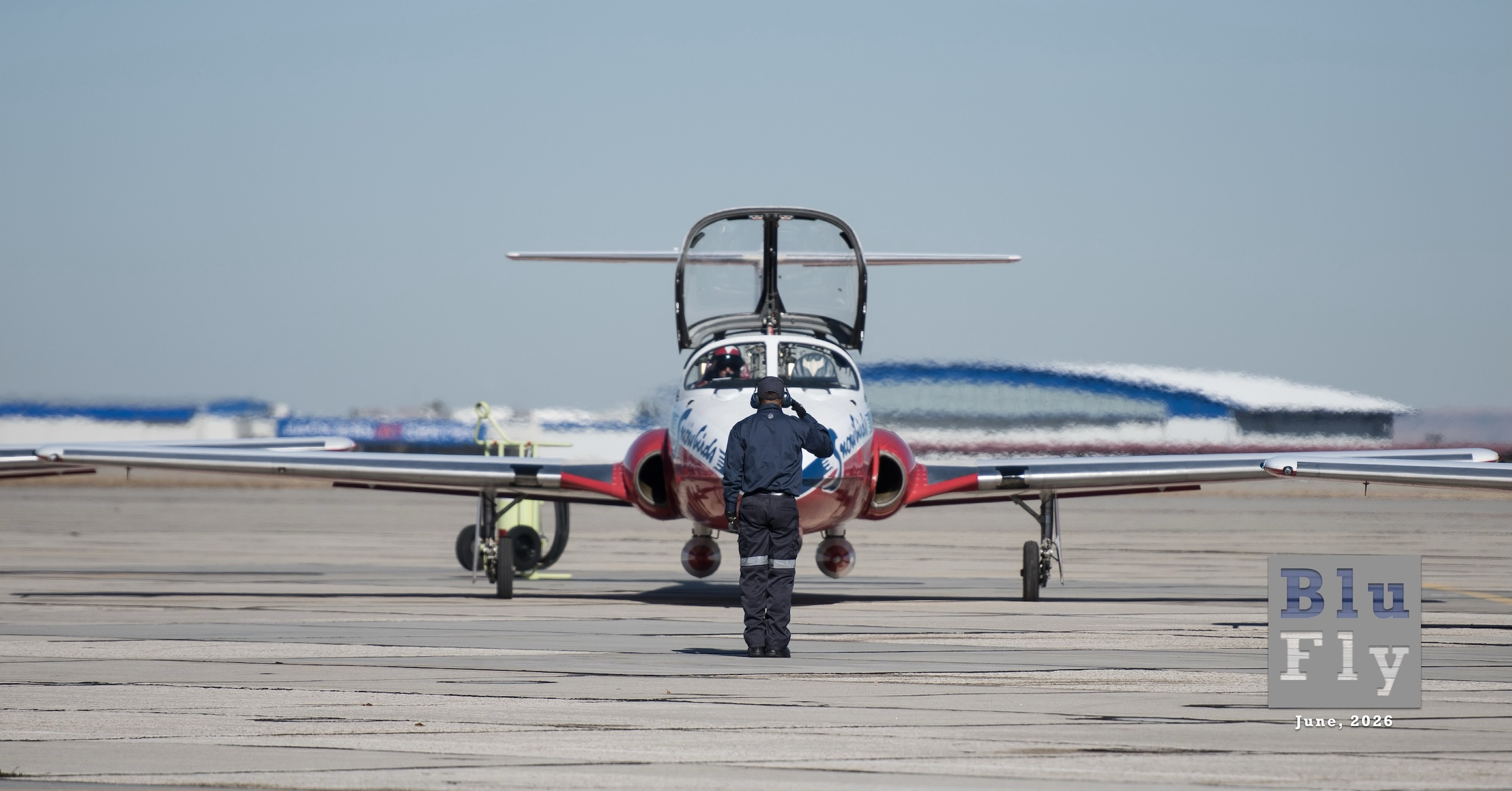
A salute to a Snowbird, at the airshow hosted by the Idaho Army and Air National Guard at Gowen Field, Idaho, on October 14 and 15, 2017. More detail in About That Cover Photo, below. (📸 Air National Guard photo by Technical Sergeant John Winn, in the public domain. The appearance of U.S. Department of War (DoW) visual information does not imply or constitute DoW endorsement.)
June, 2026
« Go in close, and when you think you are too close, go in closer. » — Thomas McGuire
By Terence C. Gannon
In The Air
Ifirst attended the Abbotsford International Airshow (AIA) in 1971. Even back then, it was a busy time for CYXX, with the line of overstuffed cars stretching way beyond the airport boundary. My mum, dad, and my two elder siblings endured the wait and the stifling August heat without too much fuss, as I recall, although my parents likely would have recalled it quite differently.
The date is easy to remember. It would have been the year after our nuclear family decamped from Quebec, where I was born, for British Columbia. It wasn’t expressly because the AIA was a stone’s throw away from where we lived in our new home city of Vancouver, but for the hardcore avgeek kids of even harder-core avgeek parents, it certainly didn’t work against the argument for the big move to the left coast.
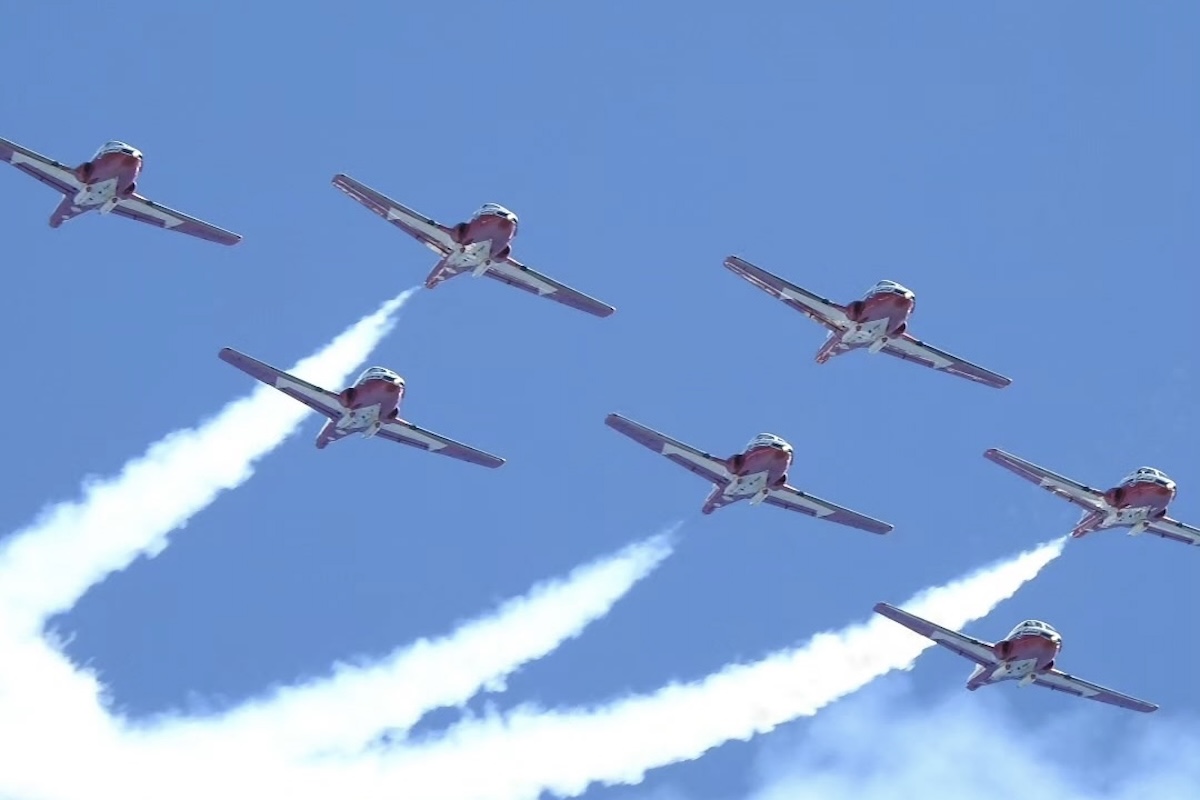 The date is also easy to nail down because it was the year the newly formed Royal Canadian Air Force Snowbirds performed at Abbotsford for the very first time.1 They were the hit of the show, with a formation so tight they appeared to move as one. The only other AIA participant arguably more universally adored was the Royal Air Force Vulcan. The days of its waiting-for-doomsday tenure on the front line of the Cold War were numbered, though, with withdrawal from active service just a decade or so in the then-future. Above all, I remember the Vulcan was really loud as its graceful delta form swept about the airfield.
The Snowbirds, however, just kept on flying right up to the present day. That said, unless you have been under ten feet of water for the last month, all that is about to change. More on that in a moment, after I selfishly make another couple of stops along memory lane.
I’m On My Way to Reno
In1995, I travelled to Reno, Nevada, for the National Championship Air Races.2 By strange coincidence, it was combined with a visit and a road trip with my parents along with my elder brother in a strange, near-echo of 1971. We stayed near Westwood, California, on the shore of Lake Almanor and made the commute back and forth for each of the three days of races, which coincidentally included a relatively rare appearance by the Snowbirds at that Reno event.
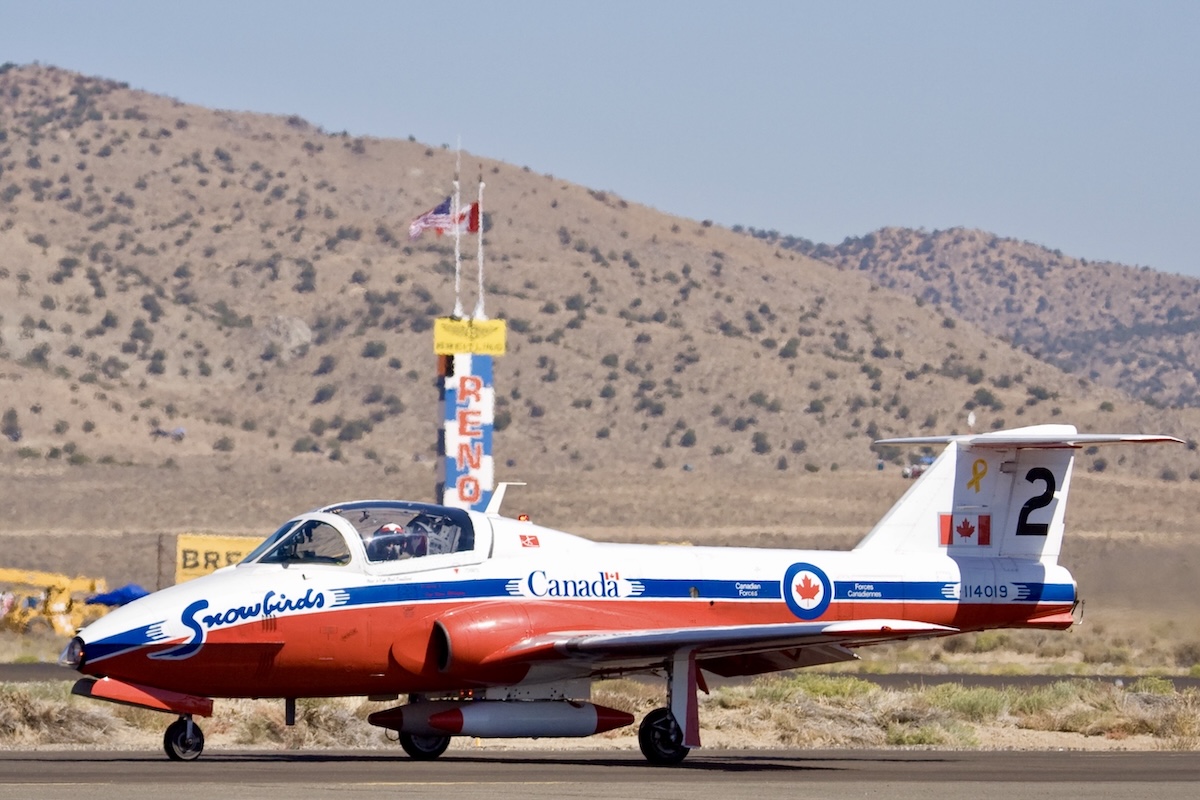 What distinguished this latter meet-up from my first encounter with the team was the immense national pride I felt at their presence in front of the very American crowd. The team flew spectacularly, seemingly in an even tighter formation than twenty-four years before. As I have written previously in this column,3 the Snowbirds did an exceptional job of representing Canada at its very best, both in the air and on the ground. They were, and are, superb ambassadors for the Great White North.
Their excellence was not a product of having the best or fanciest or most expensive equipment; the CT-114 Tutor was already thirty-four years old in 1995 and presumably already showing its age. Rather, the Snowbirds proved back then, and continue to prove to this day, that with dedication, hard work—and, above all, heart—there is no limit to what can be achieved. There is no more shining example of Canadian values than this.
My third brush-with-the-Snowbirds story isn’t so much about the team, but rather my chance encounter a few years ago with a former team leader, Robert Scratch Mitchell, as he was trying to have a nice, quiet lunch with a friend of his at the CAV-OK Grill at Springbank Airport near Calgary, Alberta. I didn’t actually have the gall to interrupt their meal, but I will admit to kind of staking out the place as they finished up.
To make a long story just a little less so, I eventually recorded about ninety minutes of audio with Scratch for my podcast entitled The WorkNotWork Show. That raw audio was eventually edited down into something under an hour, and I was pretty pleased with it.
Fortunately for you, though, if you don’t want to partake of it all, it’s only necessary to really listen to the first two minutes and four seconds.4. Setting all modesty aside, not only is it the best audio I have ever recorded and edited, I also believe it comes close to capturing the ephemeral essence of the Snowbirds in the broadest possible terms. All credit is due to Scratch for finding exactly the right words and articulating them so eloquently.
We’ll Meet Again
More recently, the Snowbirds have been called up for active duty on a couple of fronts that, while less personal, still impacted me in a profound way, as was the case of many others, I am sure.
First, there was Operation INSPIRATION,5 undertaken in 2020 ostensibly as a salute to frontline workers battling COVID. My hunch was the real mission was to cheer us all up and, damn, we sure needed that. Even more so when the tour had to be cut short when Snowbird 11 ingested a small bird shortly after take-off near Kamloops, British Columbia. The Tutor subsequently crashed and tragically took the life of Officer Jennifer Casey and greviously injured Captain Richard MacDougall.6 I can’t speak for anybody else, but for me this was the low point for me in the whole, sorry pandemic episode.
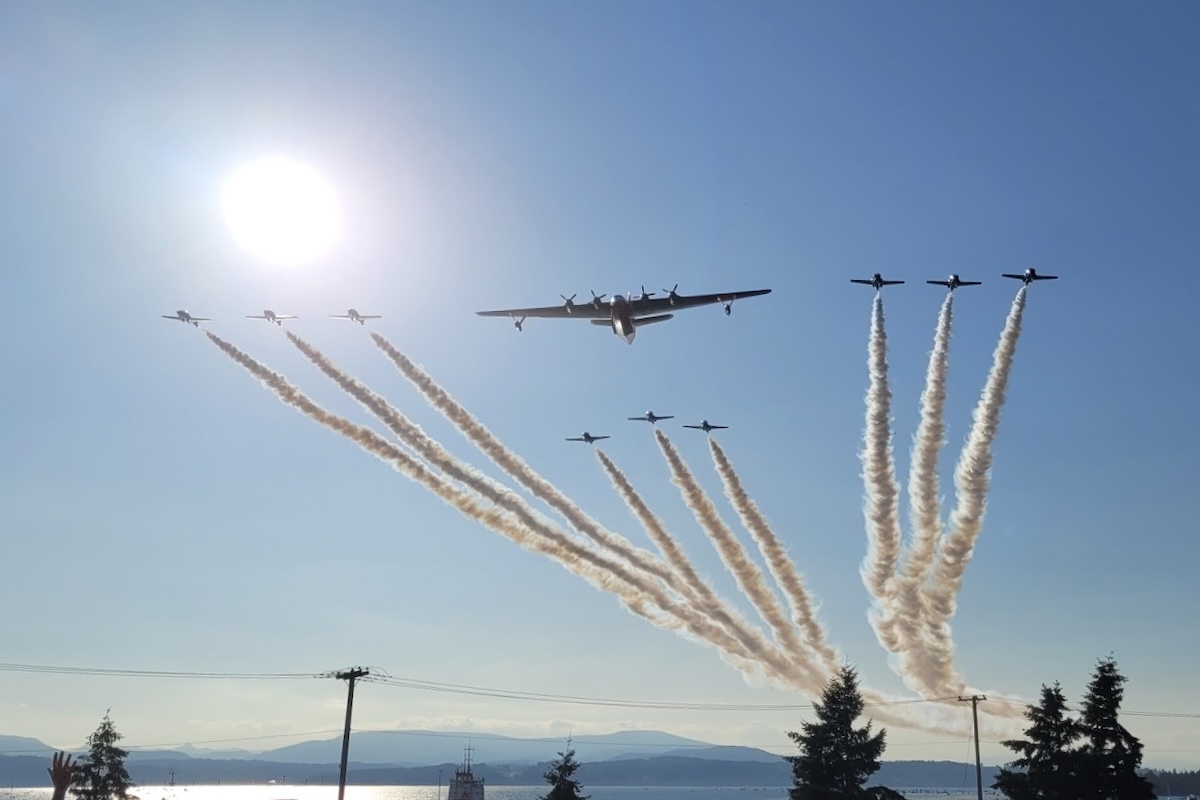 Then, in slightly happier times in August of 2024, the Snowbirds volunteered to provide a fitting salute and send-off to Coulson Aviation’s magnificent Martin Mars as it flew off into permanent retirement at the British Columbia Aviation Museum. At the sight, unless you have a heart made of pure blue granite, most couldn’t help but sniffle and wipe away a tear as they all flew in tight formation in gin-clear skies. At summer’s end, two old friends saying goodbye to each other for the very last time.7
For me, the Snowbirds are personal. That's based on encounters with them spread fairly evenly over a lifetime already longer than I care to admit, and the knowledge that through thick and thin I could always depend on the Snowbirds to just be there to continually create indelible memories and set down milestones in my life.
I am really going to miss them.
Don’t Let the Teardrops Rust Your Shining Heart
Of all the verbiage uttered in the recent announcement regarding the Snowbirds standing down for an extended period, the part that dropped like a sledgehammer on a cement floor was the … expected to be operational in the early 2030s.8 Ugh.
First, I don’t like the rather vague sound of … 2030s. That could be right up until 2035 and still be technically correct, and I hate to think how old I’ll be by then. Second, there’s the … expected to be … part, which makes delivery by the end of the next decade still more-or-less true, if expectations are not met. In other words, my current reading of Canada’s Minister of National Defence, David McGuinty’s statement, is that it could be code for never, and that makes me inconsolably sad.
Then again, a politician has never, ever said one thing and meant another, so I suppose I ought not to be concerned.
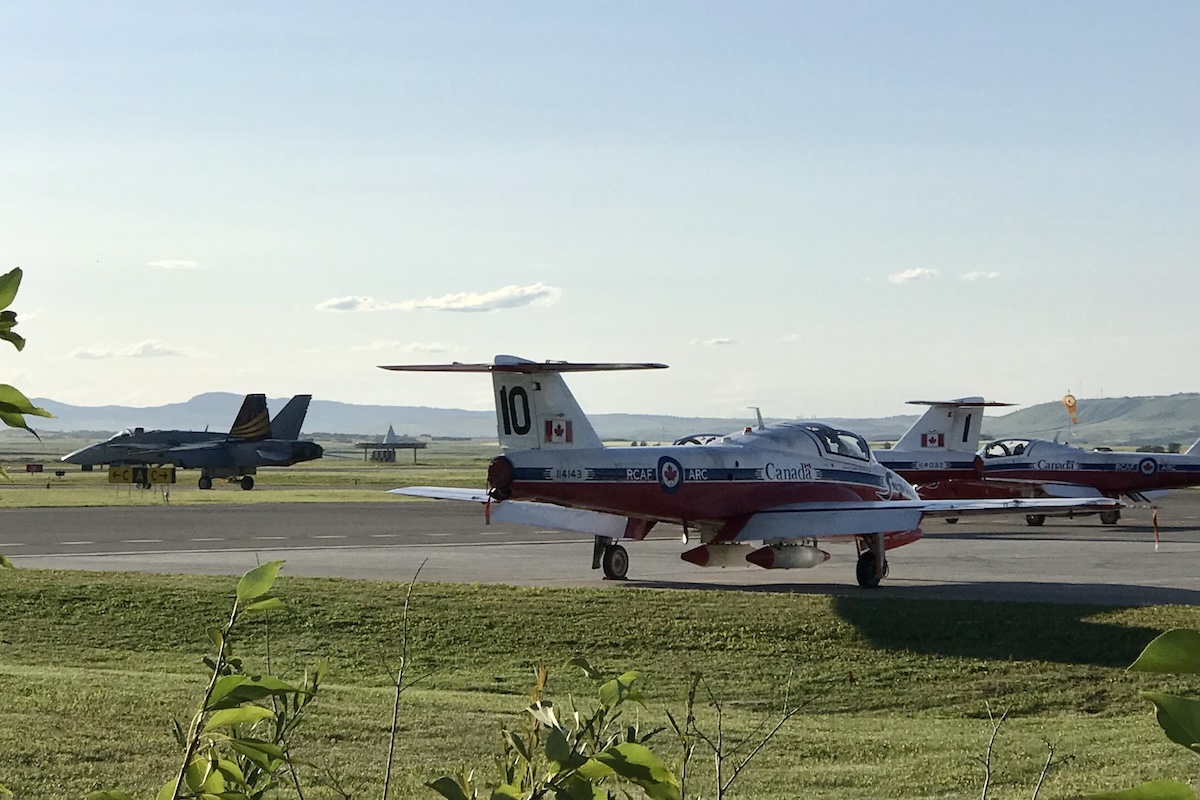 For the moment, I’ll set aside my severe doubts about the veracity of the official statement on the scheduled return of Les Oiseaux de Neige, because there was more on offer. Perhaps to placate those of us hyperventilating and feeling a little lightheaded at what we had all just read, the statement went on to announce the Pilatus PC-21, a muscular turboprop rebadged as the CT-157 Siskin II, as the Snowbird’s eventual replacement aircraft. The CT-157 was also recently rolled out as an integral part of the Future Aircrew Training9 (FAcT) program, an entirely revamped training regimen for RCAF pilots. The aircraft destined for this fleet are already rolling off the Pilatus assembly line.
As a side note, in a nod to an illustrious history of military flight training in Canada, including most notably the British Commonwealth Air Training Plan, the new aircraft’s livery incorporates that jaunty, oh-so-Canadian Trainer Yellow. So there’s that, at least.
There are a number of voices making the case that a true jet, of some sort, would have been a more appropriate choice for the Snowbirds. These are not just anonymous internet blowhards looking for clicks. Rather, they include Snowbirds alumni and others with hard-earned experience and relevant expertise.10 Another Snowbirds alumnus, Major Ian McLean, and no less than a former team lead, even managed to get his letter to Canadian Prime Minister Mark Carney read out loud on the floor of the Canadian Senate, where he expressed his manifold concerns about the future Snowbirds program.11
These petitioners on behalf of the Snowbirds have likely forgotten more than I will ever know about the subject, so I respect these opinions, and we must all continue to pay close attention to them as the situation evolves.
You Say Goodbye, I Say Hello
Perhaps surprisingly, I’m good with the CT-157 decision. Actually, thrilled would be a more apt description, and I’ll offer a few initial thoughts as to why, based on both hard, footnoted facts combined with my own subjective opinion. Yes, everyone is entitled to one, and at least I’m not an anonymous internet blowhard.
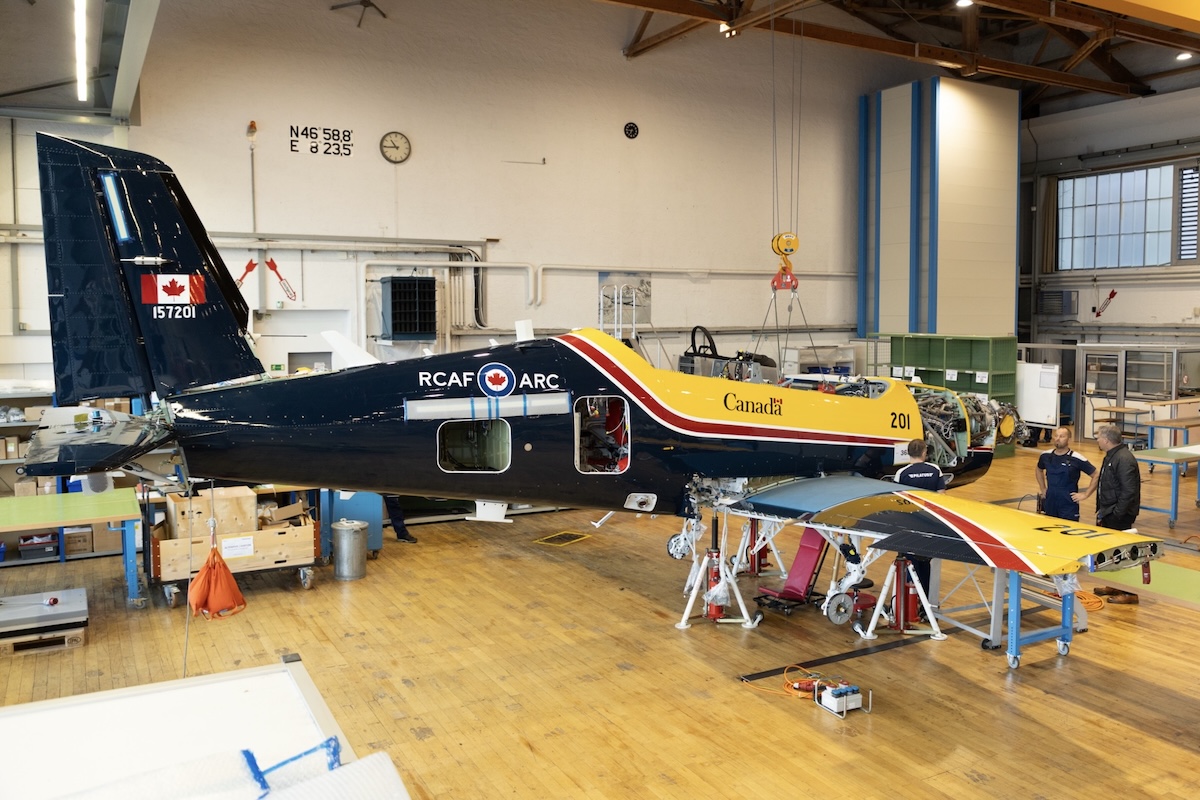 First, despite using a jet engine to turn a prop instead of generating thrust directly, the CT-157 and the CT-114 are quite similar in terms of performance, at least by the numbers. For instance, the maximum speed at sea level for the CT-157 is 685 km/h (370 kt),12 and 763 (412 kt) for the CT-114.13 Maximum rate of climb at sea level: 20.37 m/s (4,010 fpm) for the former,14 and 21.59 m/s (4,250 fpm) for the latter.15 So far as load factor is concerned: +8.0 g and -4.0 g for the CT-15712 and +7.3 g and -3.0 g for the CT-114.16 Empty weights for the two aircraft are essentially the same, with the empty CT-15712 balancing the scales at 119 kg (262 lb) less than the similarly empty CT-114.13
The Tutor was the designated training aircraft for the Royal Canadian Air Force for many decades. The Siskin II is intended to the be the new training aircraft for the RCAF for decades to come, as an integral part of the Government of Canada’s comprehensive FAcT program. There is a long history of overlap between these two distinct and very different uses for a single aircraft.
Incidentally, it’s this overlap that led me to the my folksy notion that demonstration teams are intended to show off the freshly-minted skills of new flight school graduates. Nothing could be further from the truth; only the highly experienced need throw their side cap in the ring. These applicants are then put through a rigorous and demanding selection process and only then are you invited to join the team.
All that aside, when the name Siskin II dropped, my natural reaction was there was a Siskin I? In fact, there was: officially known as the Siskin Exhibition Flight, they were established in 1929 as an RCAF flight demonstration team; a distant, genetic ancestor of the Snowbirds, named after the three, stately Amstrong Whitworth Siskin biplanes they flew.
We’re Bound for South Australia
There’s a spectacular example of the PC-21 being employed for military formation flight demonstrations from which much can be learned: the Royal Australian Air Force equivalent of the Snowbirds, called the Roulettes, currently fly the PC-21. From the video evidence I’ve seen, the flight display product of the future Snowbirds, similarly equipped, will be every bit as impressive as any we have known and loved in the past. But don’t take my word for it, find some video evidence of your own and take a look for yourself.17 It’s quite the show.
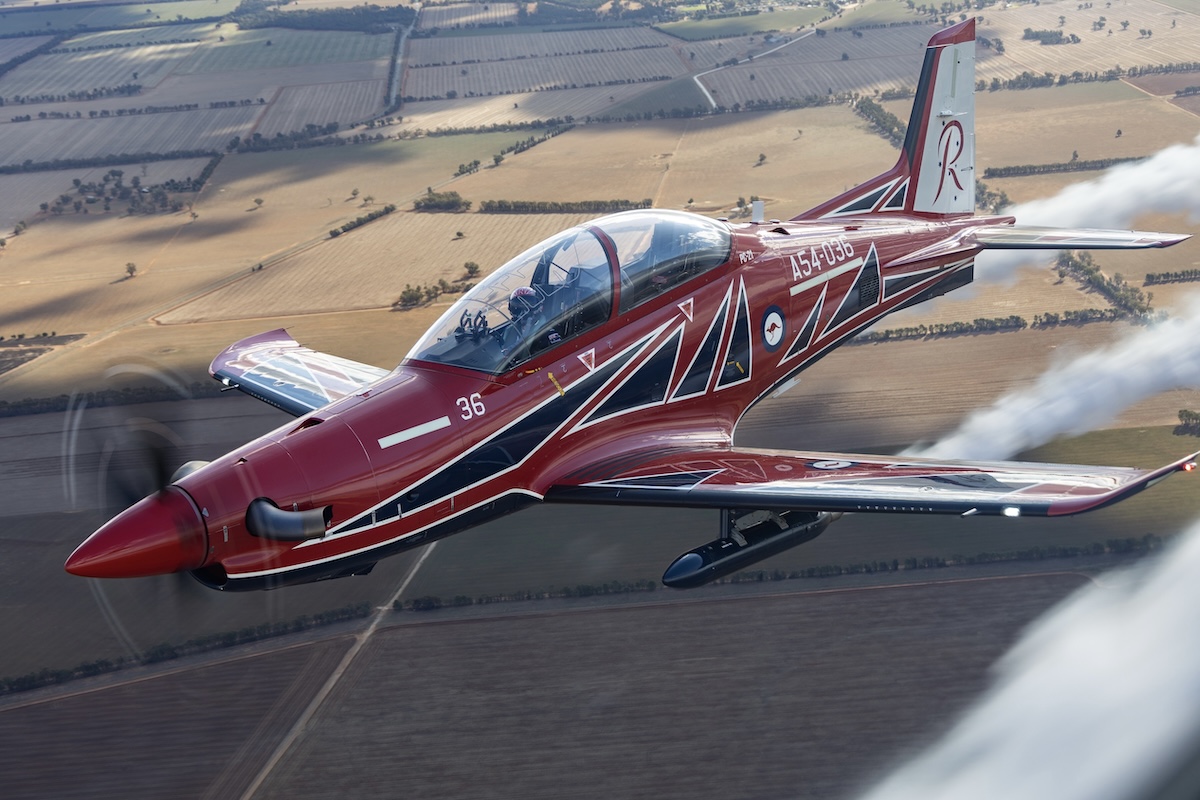 I have been in touch with Australians who have seen them firsthand; the only minor quibble, for some, seems to be the Doritos paint scheme. Otherwise, they’re embraced and loved every bit as much as we love our team. For my part, I kind of like how the Roulettes look in their new fancy triangles.
Finally, the PC-21 is made in Switzerland (by a company that used to make some beautiful sailplanes), and I like the sound of that in an increasingly fractious world where you need all the friends you can get.
With the possible exception of the last point, I’m not entirely on an uninhabited desert island when it comes to these thoughts. Just one example in this regard is A Pilot’s Take: Why the Snowbirds’ New Turboprop Is the Right Choice18 by Steve Fuhr, recently published in Skies magazine. Author Fuhr is not just some dilettante with a hot take: he is currently Canada’s Secretary of State for Defence Procurement and, more importantly, has over 2,500 hours in the Tutor amongst many other accomplishments, aviation and otherwise.
More on this subject is something of great interest to me and I believe a significant number of readers. I hope to follow up on this subject in a detailed article in the future.
About That Cover Photo
Idon’t know about you, but I can’t look at this month’s cover photo without tearing up a little and having to clear the catch in my throat. This near-perfect image was captured by Idaho Air National Guard member Technical Sergeant John Winn at Gowen Field, Idaho, in October 2017. It was obtained through the excellent Defense Visual Information Distribution Service19 (DVIDS) website.
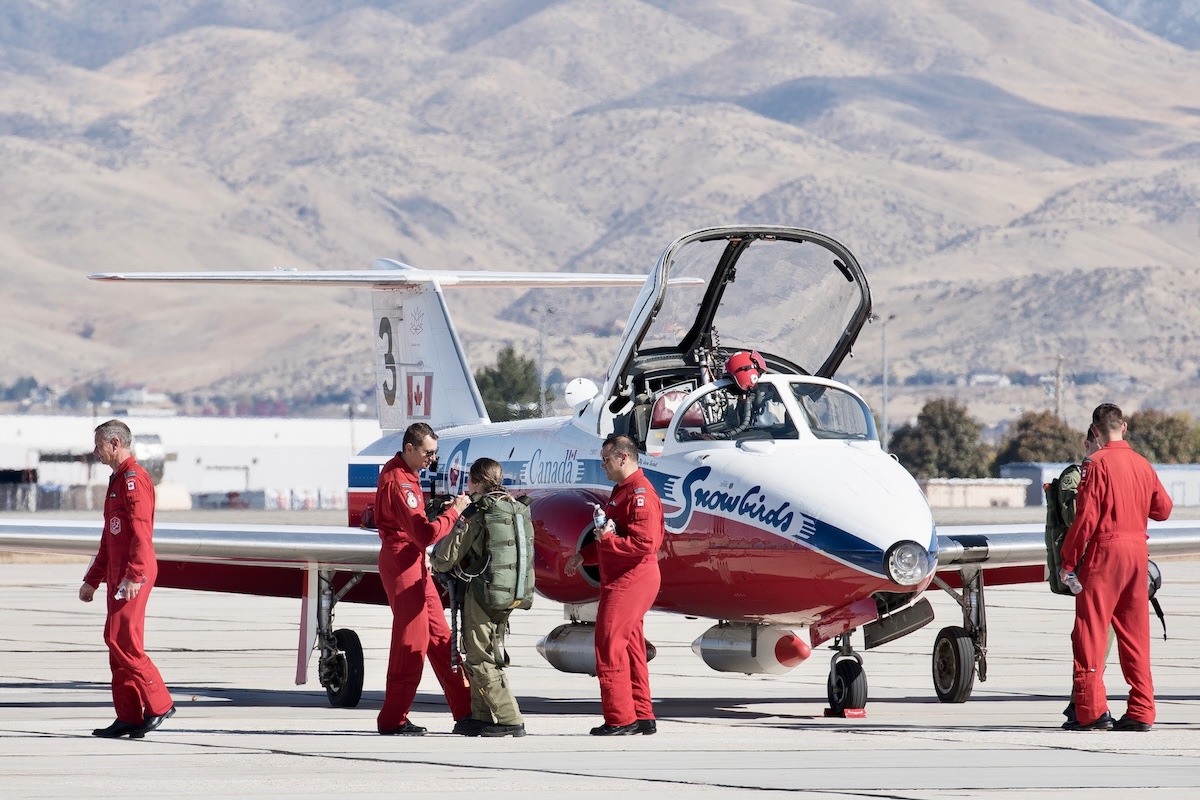 If you look very closely at the photo—you can click or tap on it for the full resolution—you’ll see that the camera’s focus has locked onto the blue jumpsuited crewmember standing in front of the aircraft, and therefore subconsciously drawing our attention to them. The Tutor, on the other hand, is very slightly out of focus, as is the airport infrastructure in the distant background.
Whether it was intended by the photographer, I’m not sure, but his choice of framing and focus is the perfect metaphor for our relationship with the Snowbirds, if we think of all of us as being this crewmember. As such, it’s all of us who are actually the focal point for this current discussion, even as we offer the team our salute for a job very well done.
Sure, it’s also a story about aviation and technology and politics and money and many other things. Above all else, though, the Snowbirds’ story is our story, and it’s a story about us.
On behalf of all of us up here in Upper Canuckia, thank you, Tech Sergeant Winn, for capturing photographic lightning in a bottle. 🛩️
***
Do you have a Snowbirds story you would like to share? Or perhaps some beautifully composed photograph of them performing one of their heart-stopping manoeuvres like the Lag Back Cross? If so—and even if you don’t—I would love to hear from you.20 Until then, thank you so much for reading and also for engaging with BluFly’s posts on social, where you can find us on Bluesky and LinkedIn.21
Fair winds and blue skies.

Terence C. Gannon
Managing Editor
This Month's Stories
This is what we managed to put together for you for June, with most recent at the top:
Live Event Announcement💥 Coming up on July 15, 2026 at 13:00 UTC, our friend Jon Davison will be taking *your* questions on taking your aviation photography to the next level. It's a free event, but registration in advance is mandatory. Details and sign-up information with the link below. | 🛩️ 📅 🥇
[image or embed]
— BluFly 🛩 (@blufly.media) June 27, 2026 at 7:36 AM
It's no secret we're fans of AirCorps in beautiful Bemidji, Minnesota. If you're in the vicinity and slogging away on some mind-numbing software job, here's an alternative with the potential to get you 'up and close and personal' with something much more aligned with your interests. | 🛩️ ⚔️ 🧰 🥇
[image or embed]
— BluFly 🛩 (@blufly.media) June 25, 2026 at 5:12 PM
We'll readily admit that @cnet.com is not always the first place we check when looking for the Story of the Day. But that sometimes means we miss a nugget like this from @joehindy.bsky.social. For casual flight sim dilettantes like us, it seems pretty good, and you sure can't beat the price. | 🛩️ 🖥️ 🥇
[image or embed]
— BluFly 🛩 (@blufly.media) June 23, 2026 at 9:12 AM
We love this story: @noaa.gov is using specially configured versions of Black Swift's S0 fixed-wing drone, dropped from the P-3, to increase the detail and accuracy of hurricane data, while keeping humans at a safer distance. More with link. | 🛩️ 📡 ⚡️ 📹 🥇 | 🧵 1/2 | 🔗 www.aoml.noaa.gov/new-drone-da...
[image or embed]
— BluFly 🛩 (@blufly.media) June 22, 2026 at 11:12 AM
Lest you think that all that paraglider pilots do is hang around 🪂 all day, think again: « Paraglider Durogati Climbs Equivalent Of Two Mount Everests For New Hike-and-Fly World Record » More with link. (📸 Daniele Molineris / @RedBull.com Content Pool) | 🛩️ 🪽 📰 🥇 | 🔗 www.redbull.com/pk-en/aaron-...
[image or embed]
— BluFly 🛩 (@blufly.media) June 11, 2026 at 8:29 AM
We generally don't do birds (or bugs or space) except in the case of aviation-oriented studies of our feathered friends. To wit, this fascinating article by Lorna Gibson from her brand-new book 'Birds Up Close: An Engineer Explores Their Hidden Wonders' on @mitpress.bsky.social. | 🛩️ 🦅 📚 🥇 | 🧵 1/2
[image or embed]
— BluFly 🛩 (@blufly.media) June 10, 2026 at 9:46 AM
Okay, we'll cop to being total suckers for the yellow-green primer colour. 😍 We also love a milestone achieved, which is what @brittennorman.bsky.social reports: « First UK-Built Islander Passes 75% Completion at Bembridge, on Schedule for Delivery » | 🛩️ 📰 🥇 | 🔗 britten-norman.com/first-uk-bui...
[image or embed]
— BluFly 🛩 (@blufly.media) June 9, 2026 at 10:59 AM
Mini-Story 🗜️ It somehow wasn’t audacious enough to shoehorn a 1,200 horsepower Garrett turboprop into a Turbine Legend, which Innovative Wings, Inc. (IW) already has on their resume with the legendary, record-setting Legend C-GUTT. Now, … | 🛩️ 📍 🇨🇦 🥇 | 🧵 1/6 | 🔗 www.innovativewings.com?utm_source=b...
[image or embed]
— BluFly 🛩 (@blufly.media) June 7, 2026 at 2:16 PM
Yet another project that kind of snuck up on us, but we're happy to help spread the word now. Just out today: Cameron Levasseur writing for the @bangordailynews.bsky.social in beautiful Bangor, Maine reports on this fascinating-sounding project; we wish them the very best of luck. | 🛩️ 🎈 🪙 🥇 | 🧵 1/3
[image or embed]
— BluFly 🛩 (@blufly.media) June 4, 2026 at 6:06 PM
Our hunch? SAF is somewhere between 'never gonna happen’ and panacea. Now, much smarter, better-educated folks than us have published research: « WSU Study Offers Realistic Look at the Future of Sustainable Aviation Fuel » (📸 Dan Meyers via @unsplash.com) | 🛩️ ⚡️ 🏫 📰 🥇 | 🔗 news.wsu.edu/press-releas...
[image or embed]
— BluFly 🛩 (@blufly.media) June 4, 2026 at 8:30 AM
Last month we teased this; now, in rich detail, Duncan Aviation's Eric Anderson describes how this Pilatus PC-12 was lovingly refurbished from the ground up, and capped off with this striking livery by renowned contemporary artist Derek DeYoung. Yes, sometimes dreams do indeed come true. | 🛩️ 🌲 🥇
[image or embed]
— BluFly 🛩 (@blufly.media) June 3, 2026 at 11:15 AM
The new issue has dropped. 💥 Triggered by recent events, we're celebrating the Snowbirds in June. @terencecgannon.com kicks off with a personal retrospective on the team, and then segues into some thoughts about their future. Surprisingly, he thinks it's brighter than many might think. | 🛩️ ⚔️ 🥇
[image or embed]
— BluFly 🛩 (@blufly.media) June 1, 2026 at 5:56 PM
Note that the embedded posts above are from the Bluesky 🛩️ Custom Feed22 which is the reference feed for BluFly.