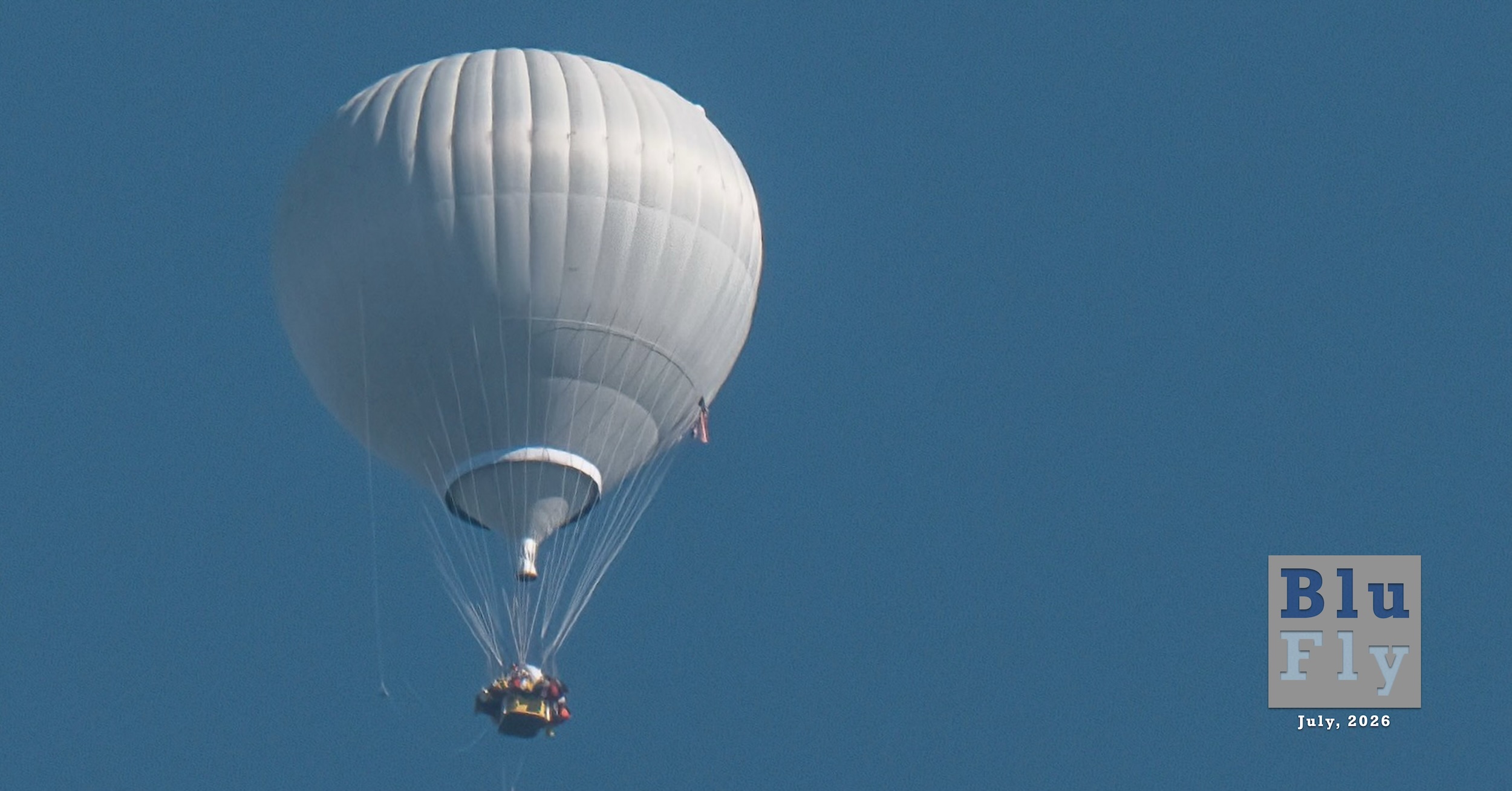
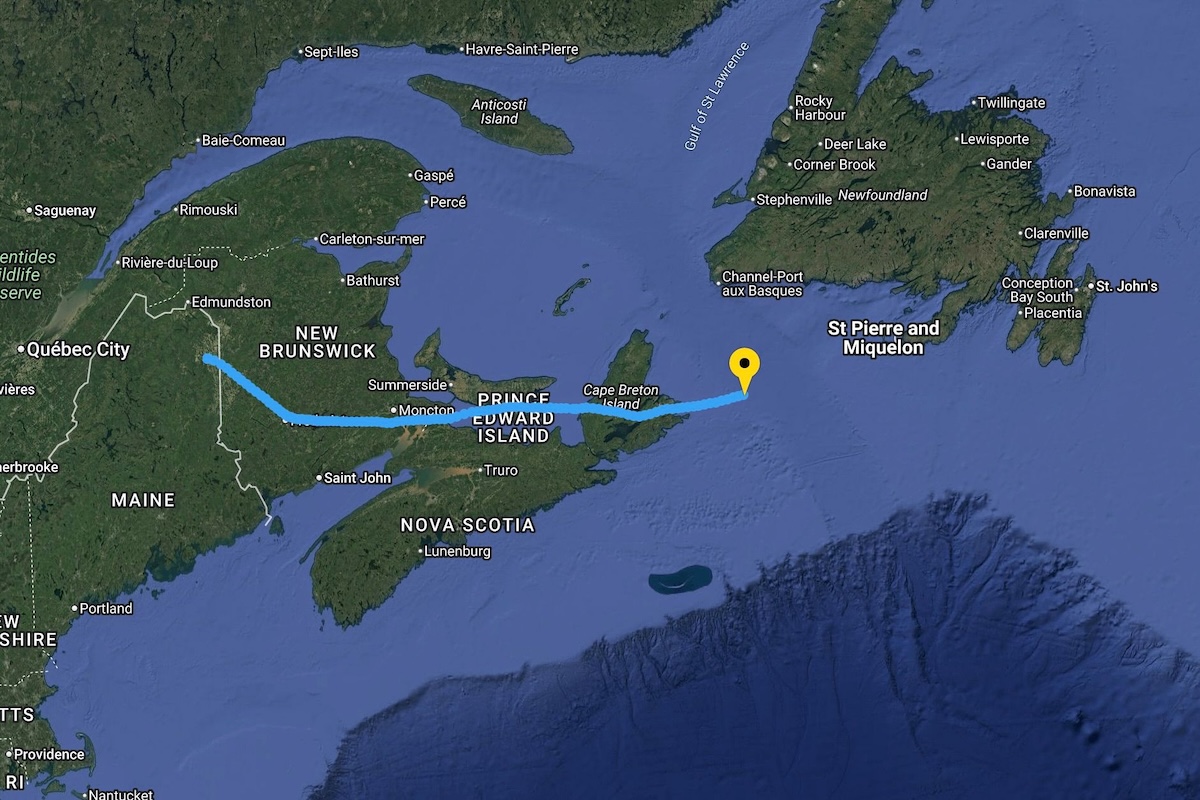
After departing Presque Isle, Maine, the Atlantic Explorer captured over Cape Breton on June 4, 2026, heading eastwards and onwards, across the Atlantic and thence to Europe. (📸 Kris Tynski)
July, 2026
« We must look upon what is to occur as having already occurred, and see nothing but the present in the future, for the future is but the present a little farther on. » — Jules Verne, Five Weeks in a Balloon
By Terence C. Gannon
In The Air
The first faint signal—a disturbance in the force, if you like—came not from some name-brand news source. Rather, it was in the form of a tangy Bluesky post from tech maven Rachel Andrew seemingly made almost in passing:
There are currently some people flying a hydrogen balloon from America to Europe, which is behaviour that I encourage, she said,1 in her signature clipped, precise micro-prose. What’s more, I accidentally stumbled on her post not on one of the multitude of aviation-related sources monitored for this humble journal, but instead on a turbid tech feed related to the software development newsletter to which I regularly contribute.
 Wait, what? I thought, arrogantly assuming her use of the word hydrogen had been that of a generic, poetic license placeholder for some other lighter-than-air gas—almost certainly helium. Surely, the positively explosive history of actual H2 meant that nobody of sound mind would strap themselves to a bag of it, flick on the NO SMOKING sign and cut loose for France. Oh, the humanity.
But Ms. Adams was exactly right, as I should have expected given her impeccable reputation. By the time I was hip to their trip, the intrepid crew of the Atlantic Explorer, as diligently reported by Bangor Daily News and seemingly no other news outlet,2 were already aloft and climbing purposefully over Canada’s eastern coast, on the brink of heading out over the gaping maw of the cold, cruel Atlantic.
It all had such a wondrous Jules Verne ring to it.
Five Weeks in a Balloon
Way back in 1863, Jules Verne wrote Cinq semaines en ballon or, if you prefer, Five Weeks in a Balloon.3 In this, his first published work, the singularly important progenitor of modern science fiction speculated about three aeronauts touring Africa in an airship hoisted aloft by—you betcha—a hydrogen gas balloon.
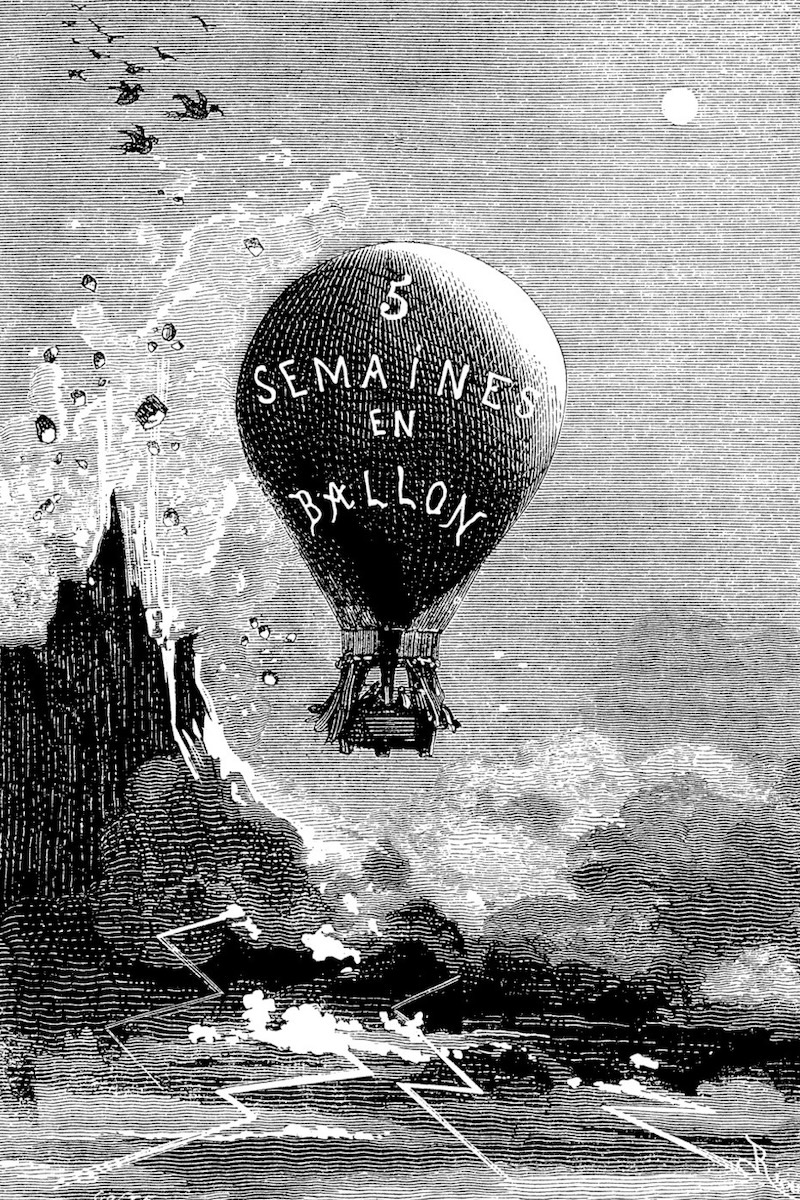 Set aside for the moment, in the year of the book’s publication, it was already eighty years on from Henry Cavendish identifying the then-future hydrogen as flammable air.4 By writing a novel, of course, Verne was also freed from the additional, very real and very brutal constraints of most lighter-than-air aircraft.
The sheer audacity of what the Atlantic Explorer and its fearless crew were attempting was utterly intoxicating for me. For those here in the BluFly home office, and undoubtedly countless others around the world, we were all put-it-on-the-big-screen transfixed as we followed their flight with the help of the team’s superb and simple tracking app. I won’t spoil the ending, although I’m pretty sure you know how it turns out. I’ll get to that in due course.
Through a helpful member of Bluesky’s small but mighty aviation community, I was subsequently connected with Ms. Kim Vesely, Atlantic Explorer’s Press Officer, who worked tirelessly assembling an outstanding collection of photographs, many of which are featured here, as well as the quotes for this article. She also cheerfully helped answer, or facilitated answers to my questions, most of which I’m sure were hopelessly naïve, even if she was far too kind to say that out loud. I won’t wait until the afterword for this; heartfelt thanks for your invaluable help, KV. I simply could not have completed this story without your contributions.
Preflight
For Bert Padelt, one of the most highly respected master balloon designers and builders in the world,5 the Atlantic Explorer was a lifetime in the making. He, along with his wife Joanie and a cast of friends, hand-built the balloon and gondola on the premises of the Best Aviation Services, Bert’s repair station and balloon manufacturing business located in Bally, Pennsylvania. Best in name and, given the experience housed therein, best in capabilities, as well.
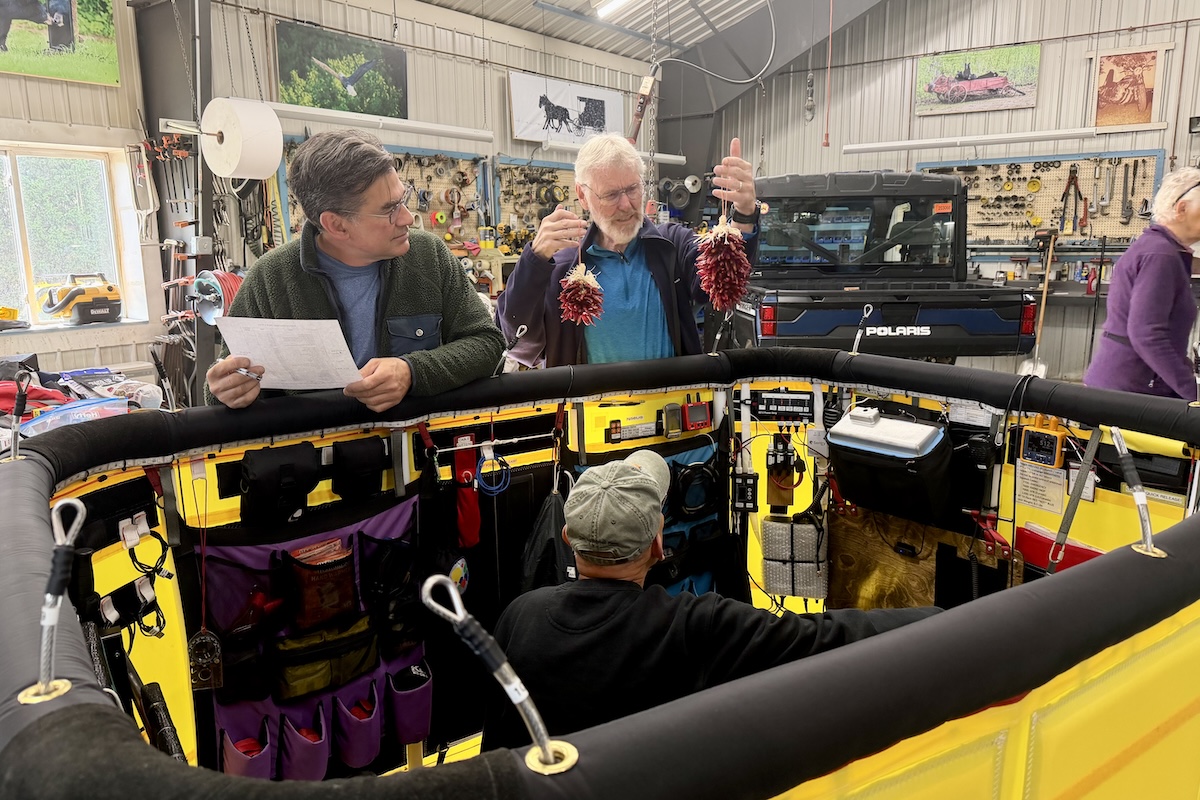 The professionalism with which the Atlantic Explorer project was undertaken was unmatched. The checklists for this thing were epic, Kim commented, every single thing in the basket—down to the pilots and the 3.6-ounce New Mexican chile ristra carried for good luck—were weighed and catalogued,6 since almost everything on board in an emergency could be used as ballast. The implication, of course, was that under sufficiently dire circumstances, virtually everything was a candidate to be thrown overboard.
In what is undoubtedly a testament to Bert's reputation, the project attracted some remarkably talented and accomplished members of the worldwide ballooning community. Helping to co-ordinate this detail-intensive, error-intolerant effort was Jason Fischer, a noted American balloonist who makes his home in Latvia.7 He assisted Bert in writing the detailed checklists and in coordinating the inflation. John Piper, who before his retirement amongst many other accomplishments directed balloon operations for the famous Macy’s Thanksgiving Day Parade, took on some of this role during the final preparations as well as doubling up as the official observer for the record-setting flight.
The recently concluded Atlantic hop was not a spur-of-the-moment, thrown-together exercise; the polar opposite, in fact. The transatlantic flight plan was made, and subsequently scrubbed three times, starting in 2023. Whether it was foul weather, in the first attempt, or ballast problems in an aborted second attempt in 2024 or yet another aborted flight with a suspected hydrogen leak the following year, which only make it as far as Prince Edward Island, it must have seemed that all the necessary elements were never going to line up.
At the very least, I hope my fellow Canucks extended a warm Spud Island welcome to alloy the team’s disappointment last year.8
Neither was the crew of 2026’s successful flight locked in from the beginning. Bert’s crew in 2023 consisted of noted balloonists David Hemplemen-Adams from the UK and Sweden’s Frederik Paulson. They also returned for the 2024 attempt, but had to bow out on short notice in 2025. To replace them, Bert elected to have Peter Cuneo, a friend and long-term technical consultant on the project, join him in the basket as Kim Vesely put it. In an intriguing twist, Alicia Hemplemen-Adams, David’s daughter, was included in the 2025 crew selection. Ms. Hemplemen-Adams, while relatively new to ballooning, was already setting records in her own right. Padelt, Cuneo, and Hemplemen-Adams, the younger, would eventually be the crew for the triumphant flight.
Briefings
What Monsieur Jules assumed away 163 years ago was that command and control of the Victoria, as his fictional air vehicle was called, was a whole lot more capable than anything the immutable laws of physics would actually permit. That said, full marks to Verne for coming up with a calorifer, for example, to heat the hydrogen—yikes!—and thus enabling the control of the ship’s altitude without having to vent off excess gas or toss ballast overboard. If only, I think Bert and his fellow aeronauts might say. That notwithstanding, the fictional precision altitude control enabled various wind currents to be employed for directional control of Verne’s Victoria.
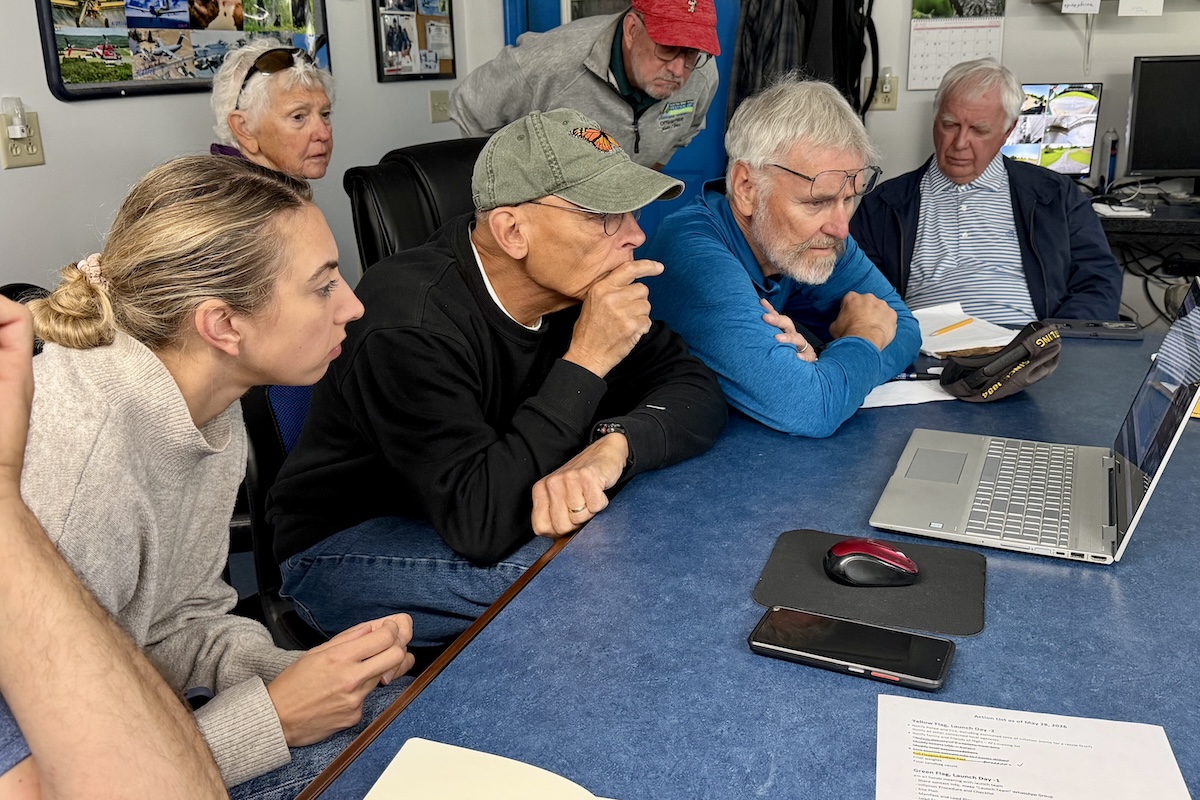 At least with regard to the use of changing wind directions at various altitudes, Verne got it dead to rights, as he often did. That’s exactly how crewed balloons are steered to this day. It has limitations, but it works so long as the destination is generally downwind, of course. As with much of Verne’s published work, it’s remarkable how hard it is to dismiss any of it as pure poppycock.
Perhaps beyond the fertile imagination of even Jules Verne were the precision forecasts available today by space-based and other technologies. Getting a weather briefing enabled by these was central to the Atlantic Explorer’s success. As Kim put it, flying in general is highly weather-dependent; in ballooning, it’s everything. Given that, the team employed the expert services of Don Day and Randy Lefevre to find an invisible pathway across the Atlantic sky.
Don runs a weather consulting company in Wyoming and, among other things, was the chief meteorologist for Felix Baumgartner's and Alan Eustace’s record-setting, high-altitude skydiving flights, and Randy does the same for ApMet,9 an applied meteorological services company also specializing in high-altitude ballooning, related Kim. Continuing, both have been chief meteorologists for the Albuquerque International Balloon Fiesta. So, basically, the best two people in the business, by the sound of it.
Don and Randy were able to thoroughly optimise whatever luck provided; they not only found a pathway, but an incredibly fast one at that: the flight would eventually take just seventy hours and eleven minutes to complete; an average of nearly thirty-five knots over the entire 2,852 nautical mile route.
In addition to the all-important weather forecast, there were other advisors who provided ongoing briefings to the Atlantic Explorer team. Tomas Hora, another highly experienced, Sweden-based gas balloonist, provided vital advice for the trip. Another subject matter expert, Clive Bailey, was also consulted, as were the family members of the three pilots, all ballooning experts with a raft of significant accomplishments: Joanie Padelt, Peter’s wife, Barbara, and previous transatlantic pilot Sir David Hempleman-Adams all provided invaluable input.
Inflation and Launch
Inflation of Atlantic Explorer’s gas cell was a demanding project all unto itself. A casual onlooker might think filling a bag of gas is a fairly trivial matter; kind of like blowing up a kid’s rubber balloon. How complicated can it be?
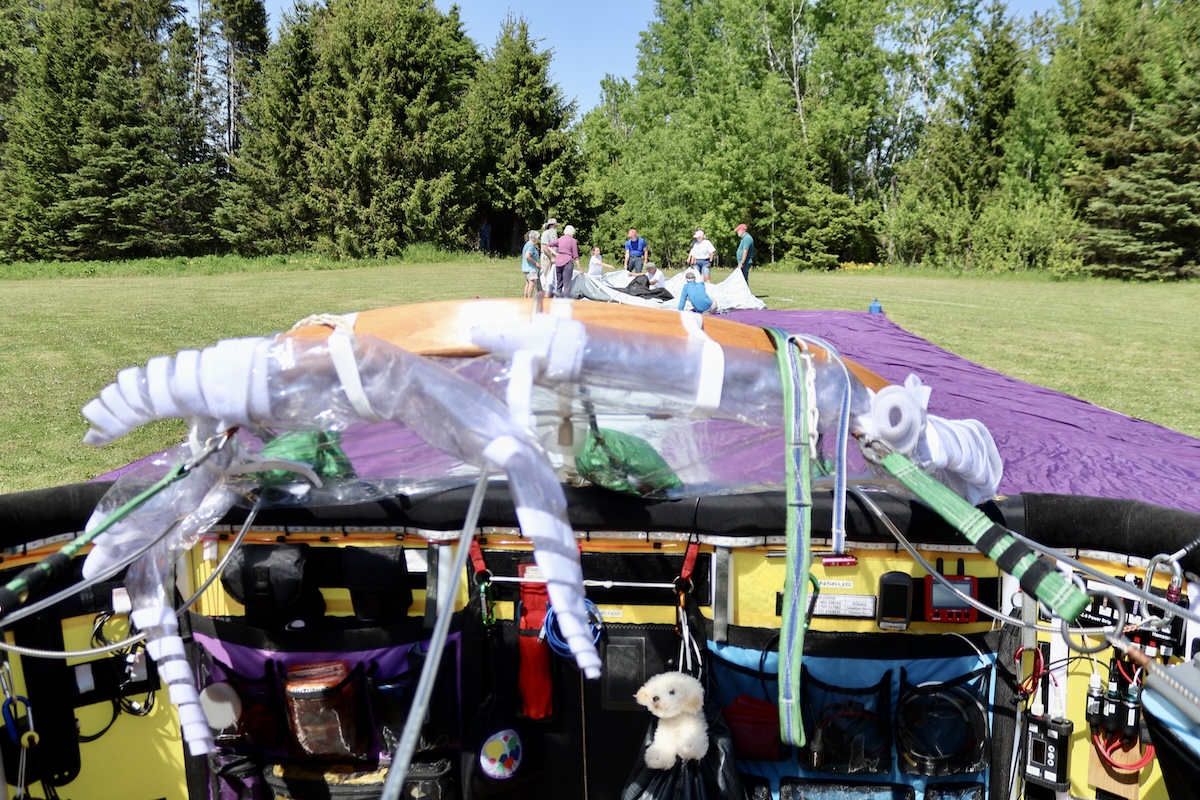 Very, as it turns out. Again, as with many aspects of the Atlantic Explorer’s flight, this superficially simple-looking task was fraught with potential hazards; first amongst which was the choice of Cavendish’s flammable air, of course.
Like a strong, graceful athlete who makes nearly impossible physical feats look easy—like anyone could do them—the team employed a highly disciplined, checklist-driven approach that while it may have made preparations look straightforward, they were anything but. Atlantic Explorer checklists were seemingly more suited to a space shot, as opposed to a simple balloon flight.
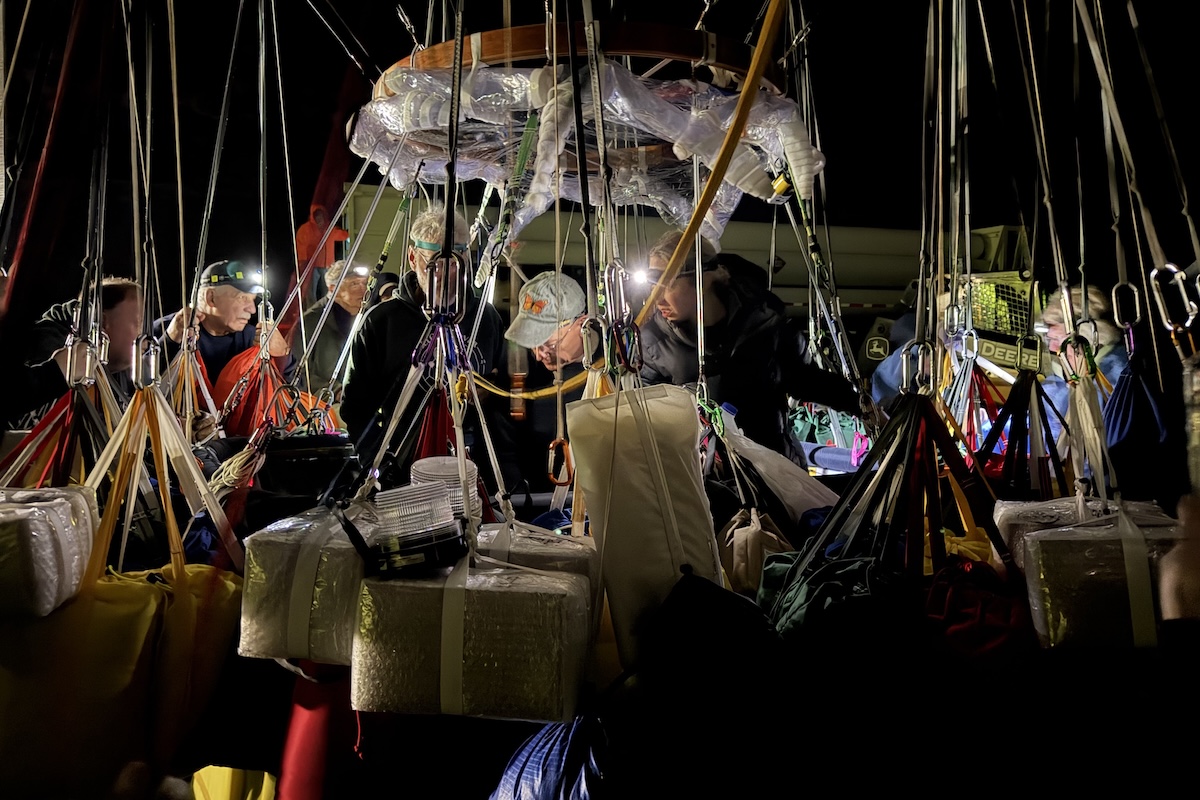 The inflation effort was prefaced by specific, strict precautions to prevent inadvertent ignition of the gas; the area was cordoned off and open only to the crew involved in the inflation, Kim Vesely explained. In this case, with the balloon only partially filled, there were several delays due to high winds whipping through the launch site, she continued. The sound of the wind blowing through the load tapes and against the balloon was otherworldly. Each time the wind momentarily died down, the inflation team was able to make additional, incremental progress on the many ever-present checklists.
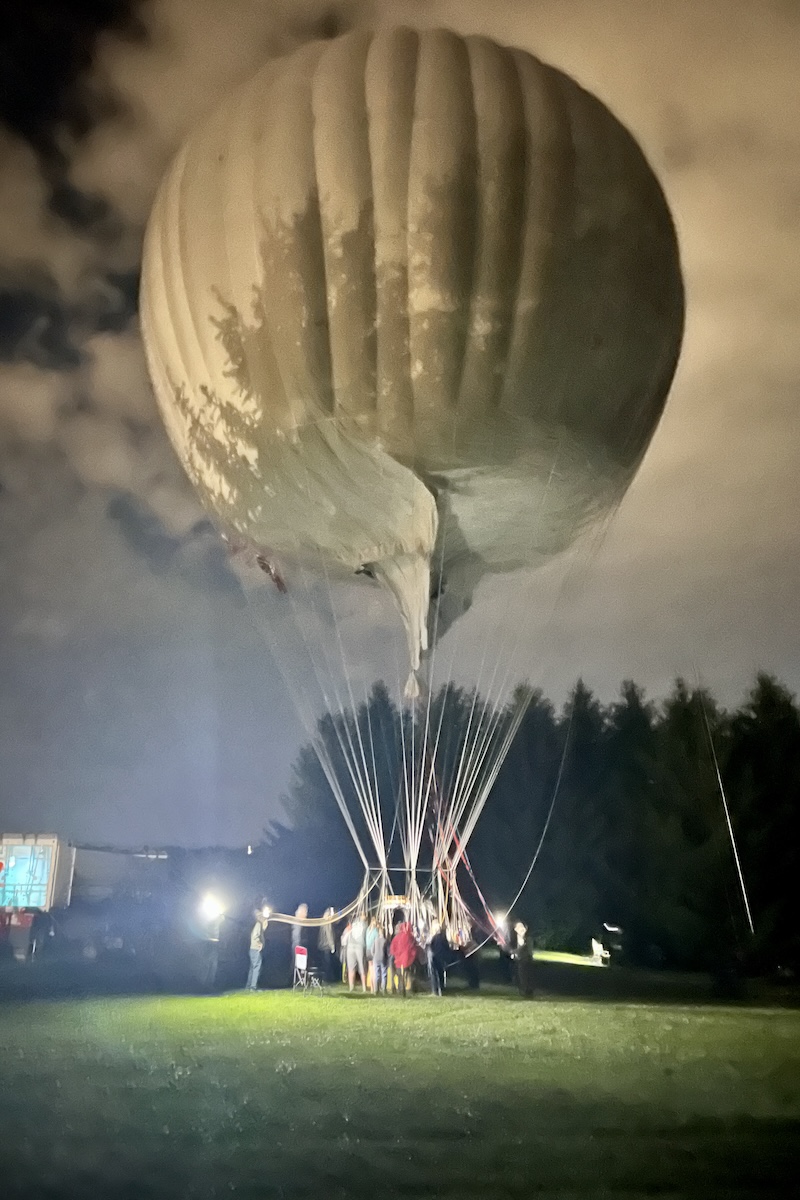 With the gas cell ready to go, there was the further meticulous responsibility of making sure everything was in its place, either within the basket and hanging over the side. As Kim said, they can’t stop at the 7-11 in the middle of the ocean if they forget anything. Indeed. The nice thing about having all manner of checklists, though, is that eventually you get to the end of them, and with that, the confidence everything that possibly can be done to assure success has been done.
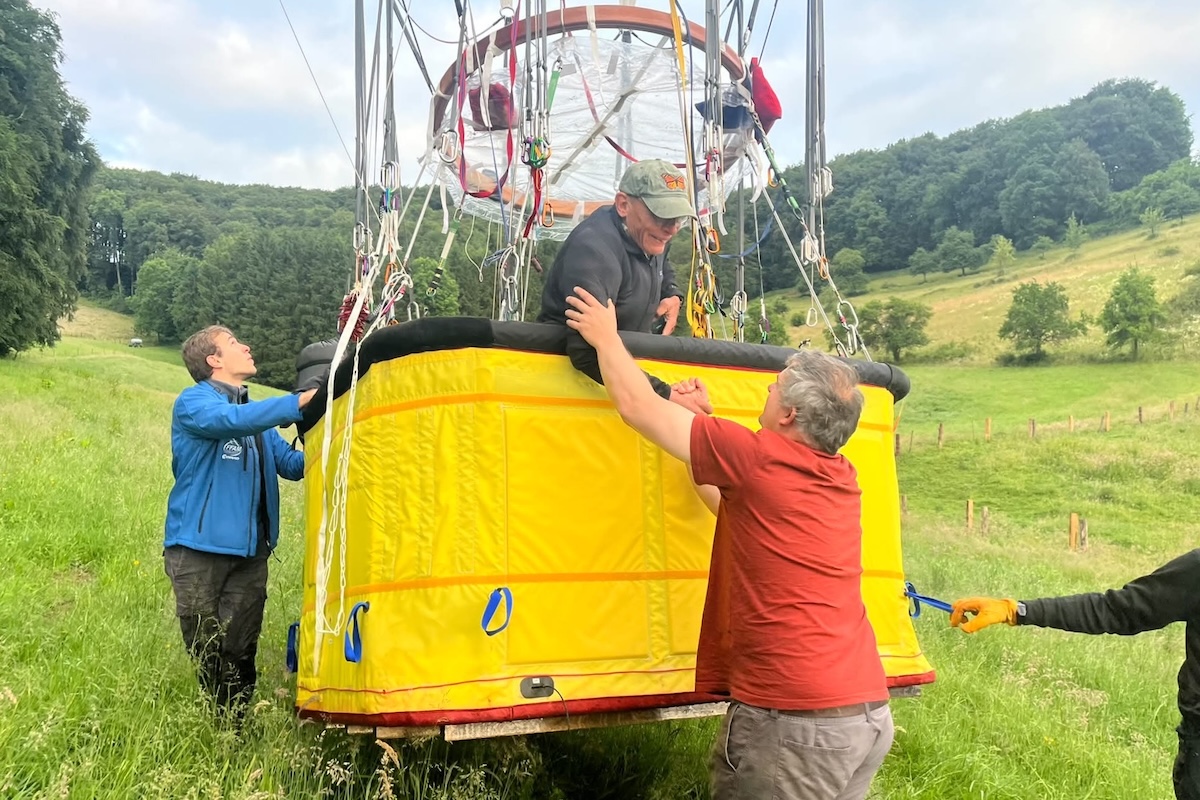
With that and a million other little details sorted, at approximately 02:00 EDT on June 4, 2026, there was just one more thing to do: Bert Padelt, Peter Cuneo, and Alicia Hempleman-Adams gathered with the ground crew—who had all worked twelve hours and some more than eighteen to make the Atlantic Explorer mission ready—and together they recited the preflight version the traditional Balloonist’s Prayer.10
The three crewmembers were then finally alone in the basket. There, they presumably paused for a moment to take a deep breath, perhaps took another moment to have one last look around Paul Cyr’s farm11 and the verdent Maine forest beyond, and eight minutes later cast off for the adventure of a lifetime.
In Flight
So just hang around for roughly seventy hours and, bingo, you’re in Europe, right? Wrong. Absolutely wrong. In fact, nothing could be further from the reality of what it’s like to transit the Atlantic in a balloon.
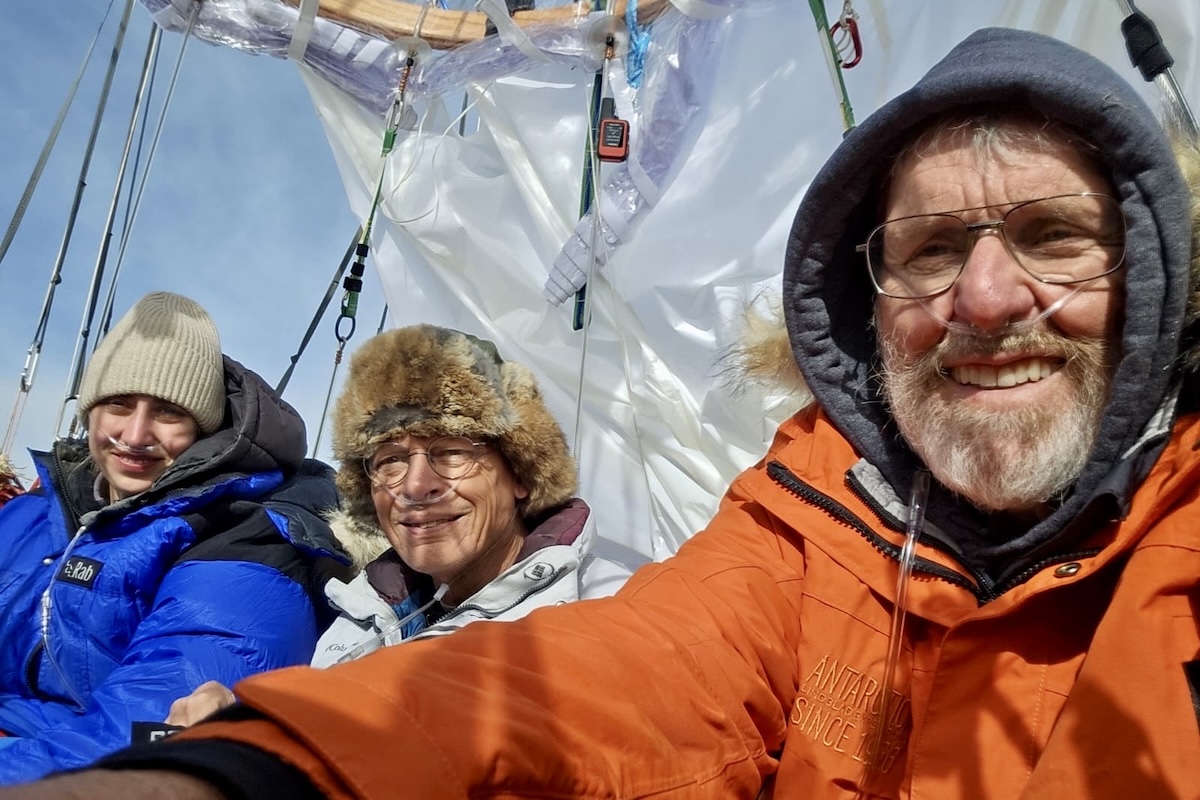 Despite a weather forecast favourable enough to warrant departure, that which was encountered en route was still extreme; heavy rain, snow, and temperatures resulting in the formation of ice on the vehicle’s gas envelope, significantly impacting its performance. In an attempt to escape this, altitudes as high as 25,000 feet were required; that’s approaching the height of Mount Everest. This necessitated the ongoing use of supplemental oxygen, delivered by uncomfortable nasal cannulae and even the so-called Hudson mask enclosing both nose and mouth.
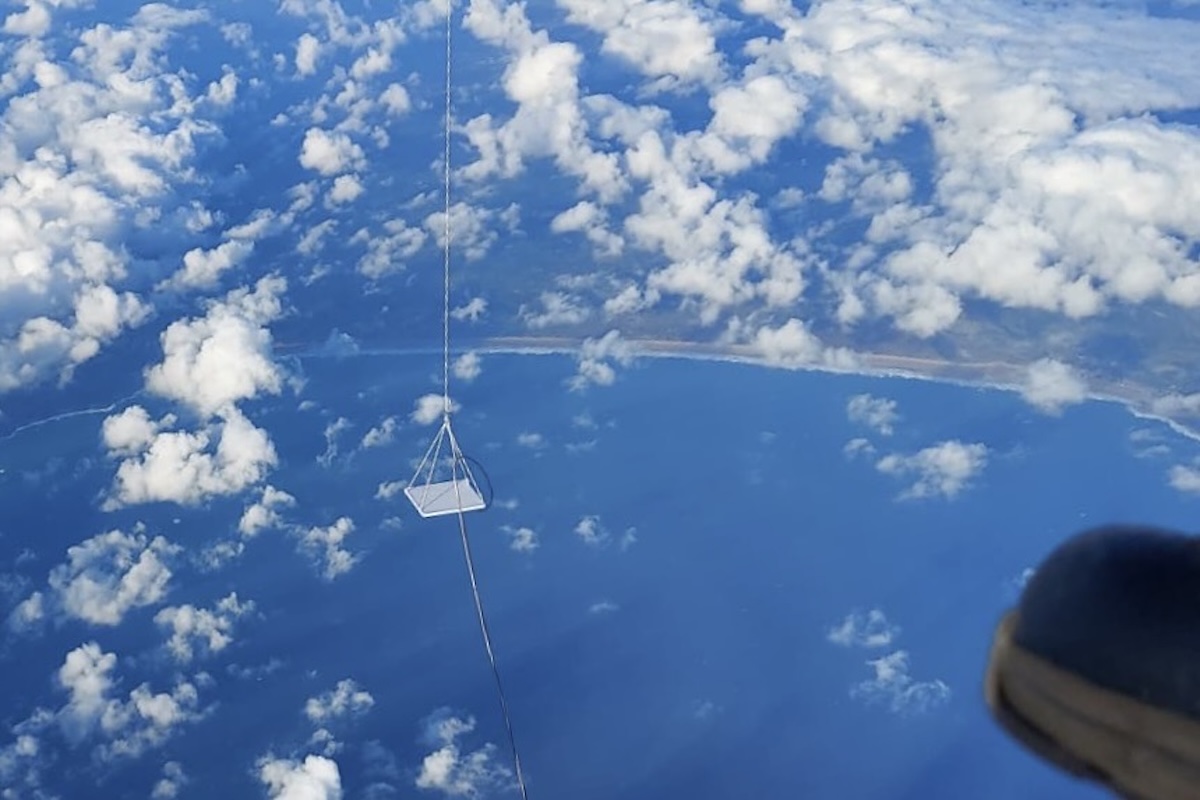 The ancient mariners who once plied the ocean below, generally along the same route as the Atlantic Explorer, for example, described the mysterious and haunting St. Elmo’s fire that appeared during severe weather on the high seas; it hovered on their ships’ masts and rigging, and was taken as a sign of both good and bad luck. It therefore must have been very spooky indeed when the exact same glowing blue-violet plasma appeared near the Atlantic Explorer, at high altitude over what must have seemed like an endless, featureless, and unforgiving Atlantic.
It’s easy to forget, in all the excitement of such a flight, that there were myriad aeronautical rules and regulations requiring strict adherence throughout: Kevin Stass and his team of experts worked around the clock with controllers and agencies in the US, Canada, Britain, France, Belgium, and Luxembourg … to help the aviation community and the balloon navigate through airspace balloons seldom traverse, Vesely said. She then then continued:
 Kevin is a flight operations specialist who ran the Mission Control operation for Steve Fossett’s solo circumnavigation of the Earth in 2002 as well as numerous other transoceanic balloon flights. His core team of Clive Bailey and Jonathan Harris have similarly impressive resumes. This part of the operation was based in England, underscoring the truly international nature of the flight.
In the early days of long-distance ballooning, communications with ground crews while along the route was a dodgy affair. It mostly relied on the grace and patience of crews of passing airliners, who would relay important information in both directions. Today's space-based communications technology obviates the need for this quaint method of keeping everybody in the loop for this current generation of adventurers.
Perhaps as a nod to this fine tradition, and without a doubt as yet another layer of safety for the balloonists, Jet Blue and Air France crews conversed with Atlantic Explorer while en route. It’s hard to imagine how exciting that must have been for the aircraft crews and perhaps even their passengers, assuming they were kept informed. This international, aeronautical goodwill always makes me emotional; I believe it is safe to say it had the same impact, or likely more, on those directly involved.
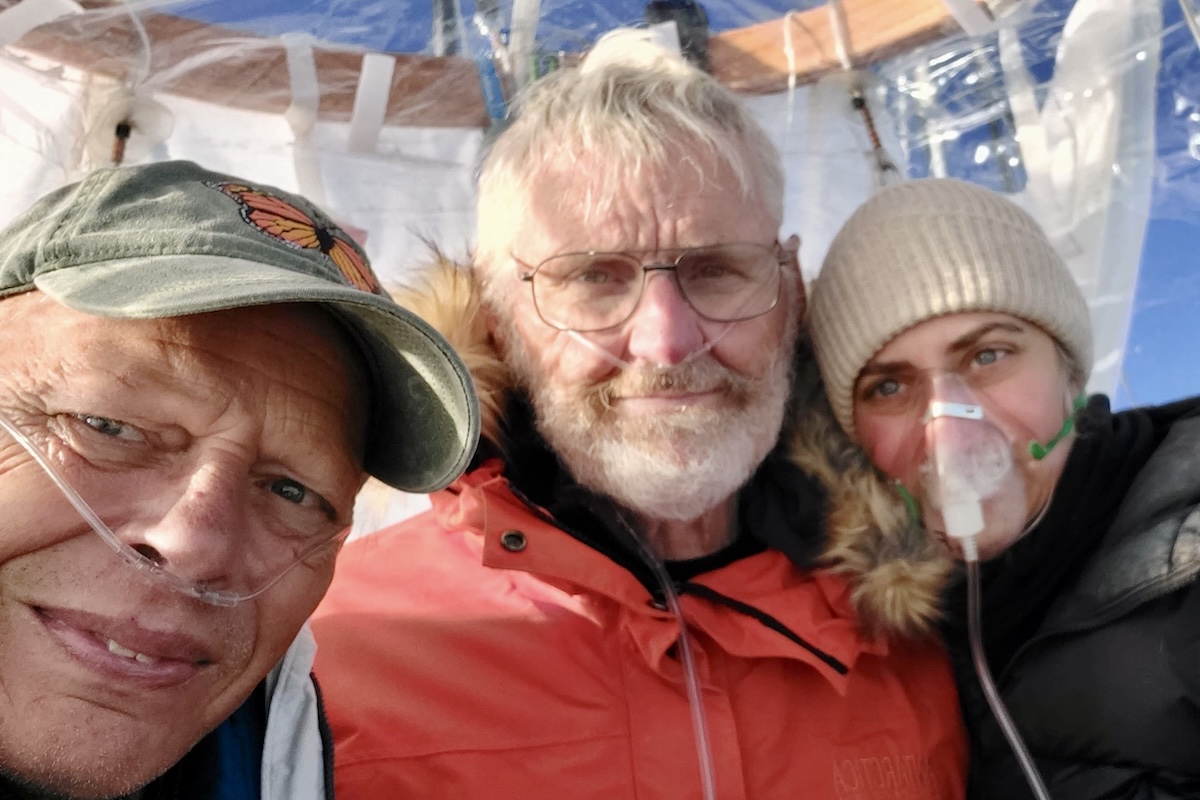 It’s also easy to overlook that there were three human beings just trying to get by and get along in an open basket described as about the size of a small closet, with only a small plastic rain cover which offered scant protection from the elements. Some hint of the human toll to which the crew subjected themselves can be seen clearly in the two selfies taken en route: one taken earlier in the flight and the second as they made landfall over Europe. The stress, anxiety, and fatigue seem to be etched right there on the crew’s faces.
They crossed the French coast, just north of Siouville-Hague on the Cherbourg peninsula, at 14:35 EDT on June 6th, and subsequently traversed the beaches of Normandy until coming ashore for good near Le Havre. Although it was entirely a coincidence, it seemed a fitting and highly relevant tribute that their arrival was eighty-two years to the day of another famous arrival on French beaches in a much darker and much more desperate time.
Landing
However, the flight wasn’t over quite yet. Surface weather conditions at the coast, combined with a dwindling supply of ballast essential to an eventual safe landing, made it unfavourable for an immediate set down in France. Atlantic Explorer carried on and eventually came to rest in Luxembourg, near Bastendorf and the village of Tandel, on June 7, 2026 at 12:19 EDT with an absolutely perfect stand-up landing.
 Although I have likely stretched the comparison to Jules Verne’s work of fiction to the absolute breaking point, I still believe it’s fitting given the famed author was working in the past and looking forward to a future something like the one we live in now. A stunning number of his predictions turned out to be true. On the other hand, the Atlantic Explorer story, set in the present of course, seems to make a nod to the quaint, fanciful past Jules Verne helped to create and make famous. I imagine if Jules were alive to see it fly, he would have found the Atlantic Explorer uncannily familiar.
Setting aside the poetry of the moment, I am and we should all be gobsmacked by all the impossibly hard stuff bested by Atlantic Explorer and crew; it was an incredible feat of aeronautical expertise enabled by countless, invisible hours by a cast of so many. It also required the team to work through multiple failures and yet remain hopeful and moving forward, not to mention the bravery and perseverance once the Atlantic Explorer was actually in the air. Like that graceful athlete, they made it look all so easy—like something we could all do.
Finally, what I love most about the story is in a world seemingly drowning in a sea of miserable news on almost every front, the Atlantic Explorer rose above and flew over it with apparently effortless aplomb and brought us all along for a hell of a ride.
It was the story we all needed, just when we needed it most. 🛩️
***
Once again, I want to thank Kim Vesely for her invaluable and irreplaceable support in preparing this article and, through her, the rest of the Atlantic Explorer organisation for their help. So, what about you? Do you have an uplifting story of aviation-related derring-do, persistence, rigour, team work or pressing on regardless of failure and through to eventual success? I'd love to hear from you.12. Until then, thank you so much for reading and also for engaging with BluFly’s posts on social, where you can find us on Bluesky and LinkedIn.13
Until we meet again next month, as always, fair winds and blue skies. Oh, and happy Canada Day to all those who celebrate.

Terence C. Gannon
Managing Editor
This Month's Stories
This is what we managed to put together for you for July, with most recent at the top:
The meticulously restored Connie Super Star that we've teased for a while now is ready for its close up. 🎥 The Lufthansa Group Hangar One visitor and conference centre opens this weekend. More details with the link. (📸 Lufthansa Group) | 🛩️ 📍 🇩🇪 📅 🥇 | 🔗 newsroom.lufthansagroup.com/en/lufthansa...
[image or embed]
— BluFly 🛩 (@blufly.media) July 29, 2026 at 10:50 AM
Kinder commentators would say we here at the BluFly home office have a soft spot for the PC-12. 🙂 Less kind ones might say we're full-on obsessed. 🤪 Well, guilty as charged. 🧑🏻⚖️ To feed that, here's a … (📸 Robert So via @pexelsofficial.bsky.social) | 🛩️ 🥇 | 🧵 1/2 | 🔗 airfactsjournal.com/2026/07/flyi...
[image or embed]
— BluFly 🛩 (@blufly.media) July 28, 2026 at 9:39 AM
Although we always preface these spots with 'we don't do birds' (excellent coverage is provided elsewhere), we make an exception often enough that it seems we kinda do. At least where there is an aeronautical component to the coverage, as with this from @ucdavisengineering.bsky.social. | 🛩️ 🦅 🏫 🥇
[image or embed]
— BluFly 🛩 (@blufly.media) July 24, 2026 at 2:00 PM
Sounds like many airports (including those near the BluFly home office) could take a page out of Brisbane Airport's playbook on how to treat their planespotters. The good folks at BNE clearly haven't forgotten—as many seem to have—that we're fans. What say you? How does your local compare? | 🛩️ 📍 🇦🇺 🥇
[image or embed]
— BluFly 🛩 (@blufly.media) July 23, 2026 at 4:48 PM
A newsletter we discovered recently, and think you should too if you haven't already, is that of Avialan Blue, writing on a variety of topics; most recently about why « Aero Tuning Isn’t What You Think It Is (Probably) » Worth a look, and subscribing. | 🛩️ 📡 🥇 | 🔗 www.avialanblue.com/email-list/a...
[image or embed]
— BluFly 🛩 (@blufly.media) July 22, 2026 at 2:51 PM
We've always been a little puzzled as to why @ltaresearch.com doesn't publish more long-form articles, but here's one that somehow escaped our attention. If you're listening, folks over there, how 'bout more on the gory details of the design and construction in which our audience revels? | 🛩️ 🎈 🥇
[image or embed]
— BluFly 🛩 (@blufly.media) July 17, 2026 at 3:48 PM
Tipped off to their arrival by our friend @jasonchampton.bsky.social, these three beauties are on a tour of western Canada. We touched base with the Erickson Collection, from whence they came and obtained this … (📸 Erickson Collection) | 🛩️ ⚔️ 📅 📍 🇨🇦 🥇 | 🧵 1/4 | 🔗 ericksoncollection.com?utm_source=b...
[image or embed]
— BluFly 🛩 (@blufly.media) July 16, 2026 at 1:29 PM
It's a fair cop that aviation on social can be something of a self-reflecting bubble. Consequently, it's always interesting when a story finds its way through that outer membrane and into the wider, popular media. To wit, a story about Electra by Rachel Cormack just out in the @robbreport.com. | 🛩️ ⚡️
[image or embed]
— BluFly 🛩 (@blufly.media) July 14, 2026 at 6:13 PM
« Guinness World Record for [Università di Pisa] Students with the Largest Paper Airplane in the World » (via Google Translate) You really have to see it outfly the available room, as per the video linked within, which can also be auto-translated by YouTube with reasonable accuracy. | 🛩️ 📡 🪽 🥇
[image or embed]
— BluFly 🛩 (@blufly.media) July 13, 2026 at 12:10 PM
‘Keep Them Flying’ is a good old-fashioned cards and letters campaign being organised to keep the Snowbirds flying through the extended pause between old (CT-114) and new (CT-157) team aircraft. If you have seen … (📸 Russ via Wikimedia Commons under CC BY 2.0.) | 🛩️ ⚔️ 🥇 | 🧵 1/2 | 🔗 keepthemflying.ca
[image or embed]
— BluFly 🛩 (@blufly.media) July 12, 2026 at 4:59 PM
Not sure how big an overlap there is between fans of aviation and fans of the Golden Age of Hollywood, but we count ourselves amongst them. So you know where we'll be on November 6th when the new Jimmy Stewart biopic opens. (📸 Burns & Co.) | 🛩️ ⚔️ 🎬 🥇 | 🧵 1/3 | 🔗 www.jimmythemovie.com?utm_source=b...
[image or embed]
— BluFly 🛩 (@blufly.media) July 10, 2026 at 1:47 PM
The aircraft livery magicians at Lincoln, Nebraska-based Duncan Aviation have been at it again: « Forty-Six Colors, One Bold Vision: Duncan Aviation Unveils Its Most Intricate Paint Scheme Yet » 😲 The whole story, with tons of detail, with link. | 🛩️ 🥇 | 🧵 1/2 | 🔗 duncanaviation.aero/news/46-colo...
[image or embed]
— BluFly 🛩 (@blufly.media) July 8, 2026 at 4:03 PM
The 2026 FAI F4 World Championships for Scale Model Aircraft are about to get under way and run from July 9 through 18, 2026, at the British Model Flying Association headquarters in Buckminster, Great Britain. Well worth a visit; details with link. (📸 BMFA) | 🛩️ ⚔️ 📡 📅 📍 🇬🇧 🥇 | 🔗 worldscale26.bmfa.uk
[image or embed]
— BluFly 🛩 (@blufly.media) July 8, 2026 at 11:50 AM
This month's stop on the sustainable aviation fuel (SAF) beat is at the respected German, sustainable-aviation think tank Bauhaus Luftfahrt, with this recent press release: « Climate-Friendly Aviation: Greater Ambition Pays Off » (📸 Neste) | 🛩️ ⚡️ 🥇 | 🔗 www.bauhaus-luftfahrt.net/en/climate-f...
[image or embed]
— BluFly 🛩 (@blufly.media) July 4, 2026 at 10:01 AM
It's July, which, for us avgeeks, means one thing: Oshkosh. Short of flying there in your own plane, NectAir has come up with the best way ever to attend if you're in the Toronto area. It departs from, and returns to Billy Bishop in one day. (📸 NectAir) | 🛩️ 🥇 | 🔗 www.flynectair.com/oshkosh/
[image or embed]
— BluFly 🛩 (@blufly.media) July 3, 2026 at 9:47 AM
As we've said, there's no such thing as a sure thing, but anything to do with Concorde comes close. Here's your chance to own a piece of—and who's kidding who—what is likely to be the one and only supersonic airliner ever. We're not affiliated with @bringatrailer.bsky.social, but we are fans. | 🛩️
[image or embed]
— BluFly 🛩 (@blufly.media) July 2, 2026 at 8:47 AM
The July issue is out. 💥 This month, BluFly connects with the team of Atlantic Explorer, who recently completed a record-setting, hydrogen-lofted, transatlantic flight from Presque Isle, Maine, to Tandel, Luxembourg. The article is jam-packed with fascinating details and amazing photos. | 🛩️ 🎈 🥇
[image or embed]
— BluFly 🛩 (@blufly.media) July 1, 2026 at 12:11 PM
Note that the embedded posts above are from the Bluesky 🛩️ Custom Feed14 which is the reference feed for BluFly.