August, 2026
« We want to carry on telling the story that this airplane started telling in the 1940s. » — Matt Jones, Silver Spitfire Pilot
By Terence C. Gannon
In The Air
As the world governing body for air sports, the Fédération Aéronautique Internationale (FAI) oversees all manner of flying things flown primarily for the pure fun of it, in heated competition with others, or when challenging official, globally recognised aviation records. There are seventeen different classes of activity ranging from Free Balloons, through to Parachutes & Wind Tunnels, Gliders & Motor Gliders, just to name a few.1
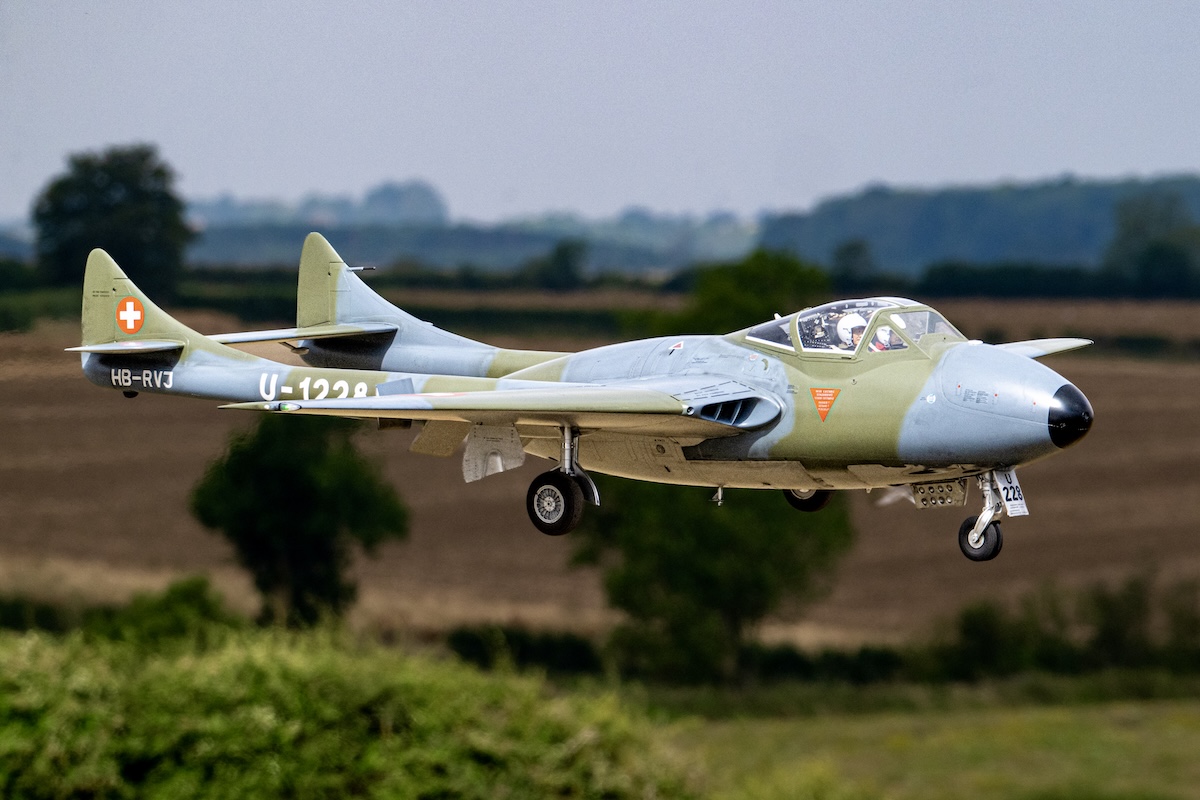 The aircraft covered in the FAI’s mandate range from the very largest, undertaking globe-spanning, altitude-busting, Mach-shattering feats of derring-do, to the very smallest and lightest, weighing in at a handful of grammes and flying for mere minutes entirely indoors. The sweep of the FAI’s coverage is breathtaking, to say the least.
As a result of said coverage, I never quite know what’s coming down the pipe in the FAI news feed, which I monitor closely. There’s always something interesting going on, somewhere in the world. Parenthetically, it always makes me think I need to get out more; everybody seems to be doing something more interesting than I am.
However, the news that always comes as a pleasant surprise is FAI’s Class F; that is, Model Aircraft.2 Furthermore and most surprising of all, perhaps, is news of the FAI’s F4 subclass: Scale Models. As such, you can imagine my delight when the FAI feed started reporting out news of the recently concluded World Scale Championships hosted by the British Model Flying Association (BMFA)3 at their National Centre located at Buckminster in the United Kingdom. Yep, a competition for model aircraft that look and fly just like the real thing. Who knew? Evidently, I didn’t.
Before continuing, disabuse yourself of the notion these are anything like the little stick and tissue Guillow’s Mustang4 we all tried to build as kids. Rather, the scale models featured in the F4 World Championship are nothing short of airworthy museum pieces; the product of countless hours of meticulous research then channeled into precision replication on a smaller yet highly exacting scale. The finished models look more like something from the miniaturisation featured in Fantastic Voyage, rather than the product of human hands coupled with ingenuity and perseverance.
 It staggers me—and it should stagger you, too—that these brave souls are then prepared to take their prized builds, the result of so many late nights and endless weekends in the shop, and commit aviation with them. More specifically, fly them at an altitude and speed sufficient to render them instantly into zwickel-sized shards should they re-encounter terrain in any unplanned manner.
Participants in all categories at the BMFA-hosted event had to first demonstrate, to a panel of well-qualified, independent judges, the fidelity of their model aircraft to the real, full-size equivalent. And, yes, contestants often need to be prepared to cite sources and bring documentation with them. Then, to record an event score, the survivors of this unmitigated hazing then have to fly the model in a manner reflecting the characteristics of the original aircraft. Either one of these requirements would seem to be mind-numbingly difficult. The combination of the two is simply too terrible to contemplate for mere mortals like me.
According to Graham Kennedy, BMFA’s Operational Support Officer, there were 109 aircraft representing twenty-three countries from around the globe, as well as judges from Brazil and Romania, making it the largest, most multinational such competition to date. This shattered the previous record of seventy-six aircraft. Three countries—Luxembourg, Iran, and Colombia—were in attendance for the first time. Clearly, scale aeromodelling is alive, well, and growing.
In The Eye of the Beholder
When examining a competition like this from afar using primarily photographic evidence, it’s quite challenging to get a sense of the competitive flow, along with its various narratives and subplots, competitor intrigue, and judging foibles. For all that, I will just have to attend a future F4 World Championship event, to which I look forward immensely, wherever it might be.
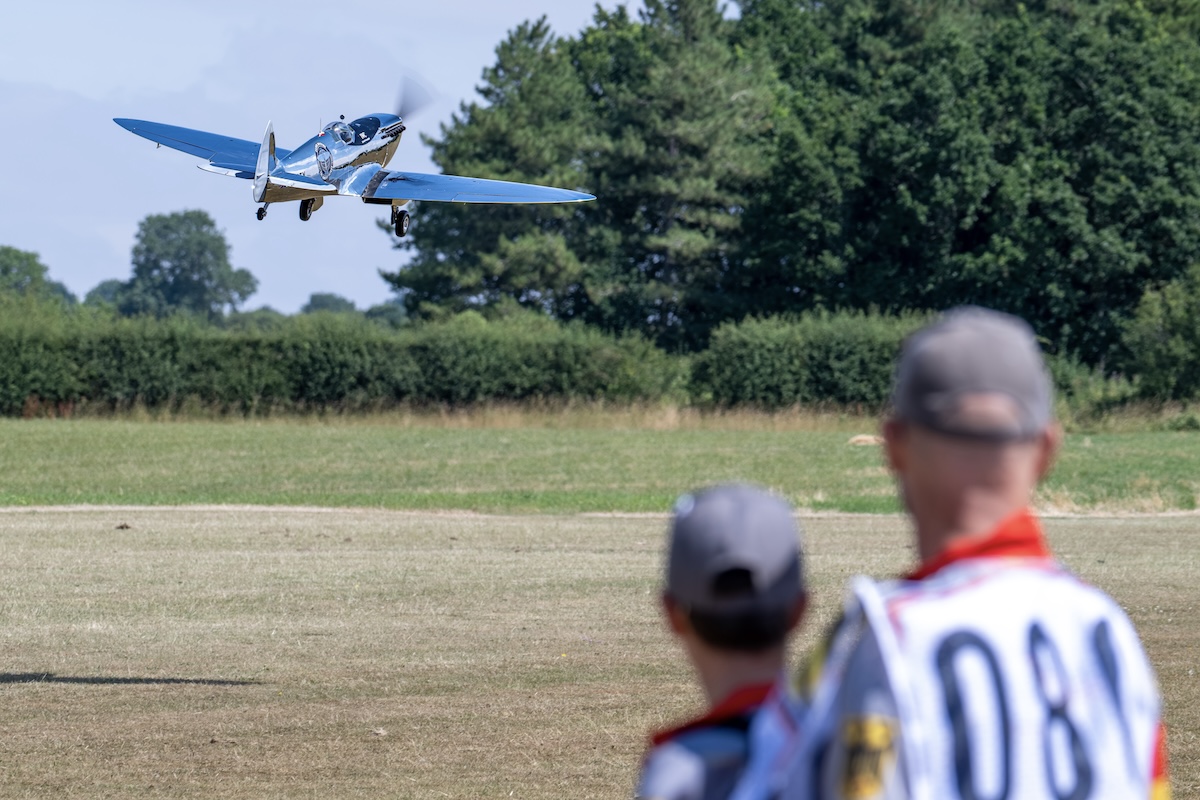 Rather, it was easier for me to find a single aircraft, along with the story behind it, to use as a portal into this fascinating world. For this role, I was tractor-beamed to the magnificent Silver Spitfire entered into the competition by father-and-son team Jörg and Konrad Lange of Germany. They were entered in the F4H category, further described as Stand-off Scale.5 Mercifully, the F4H models are adjudicated from the civilised distance of five metres, by judges disarmed of their digital calipers and finely graduated metal rulers, of course. While the aircraft has to look right from this distance, of course, competition scoring is weighted to the subsequent, radio-controlled flight of the aircraft. You know, the important part.
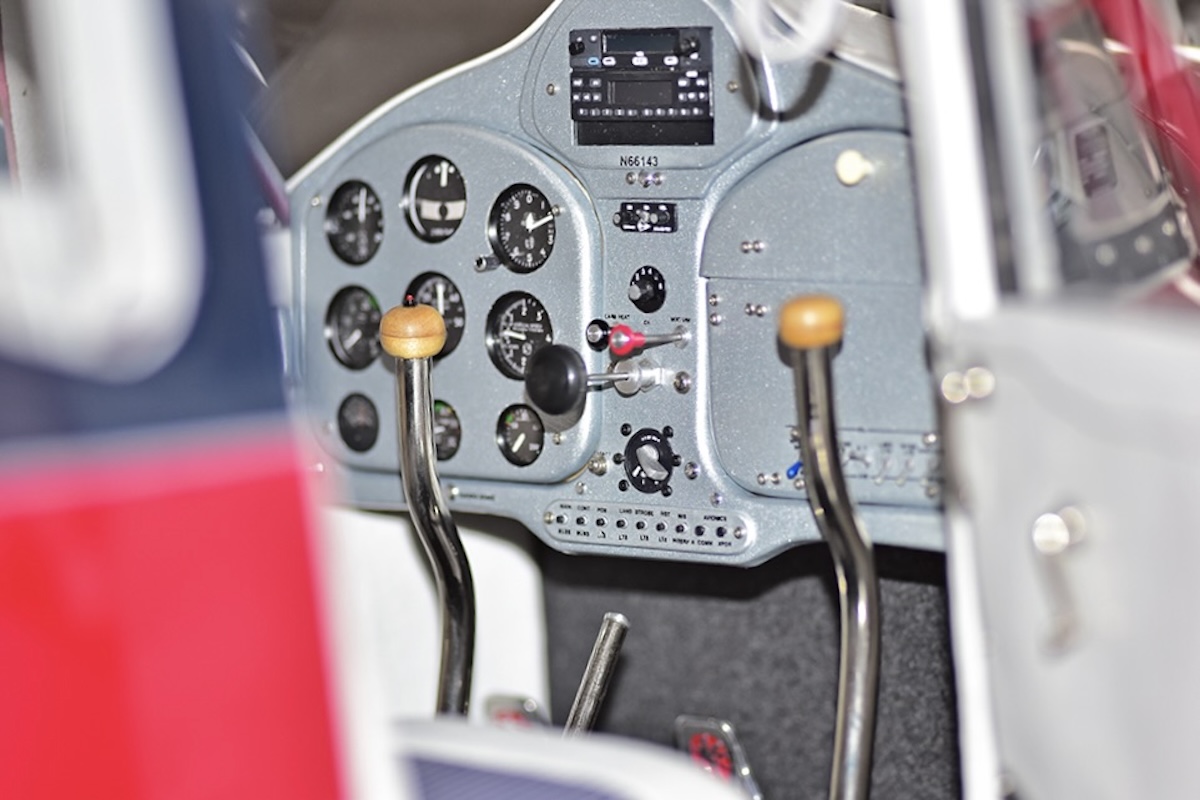
To my eyes and ears, this would seem to be an easier—but not much easier—entry point into the more technically demanding categories, should the competitor ever want to move on to these. Stand-off scale works for me, actually, as my preference has always been to see the aircraft in its natural habitat of the sky, flying as realistically as possible. I want to be swept away to another time and place by the experience. With all due respect, whether the panel instruments actually work in that distant cockpit seems like a relatively minor detail.
The Langes’ story also resonated with me given that Konrad, who piloted the Silver Spitfire for the entire competition, was just twelve years old. Not surprisingly, Konrad embraces the ambition of someday becoming a full-size aircraft pilot. He’s obviously a natural aviator, so it would seem future success in his chosen field, while not assured, has been given the best possible opportunity for success. Konrad flew the Spit to a very respectable tenth place in a field of fifty representing twenty different countries. He was also the winner of The Mick Reeves Trophy for outstanding junior aeromodeller in the event.
In a recent conversation with father Jörg, I learned more about their remarkable radio-controlled, F4H-destined Silver Spitfire project:
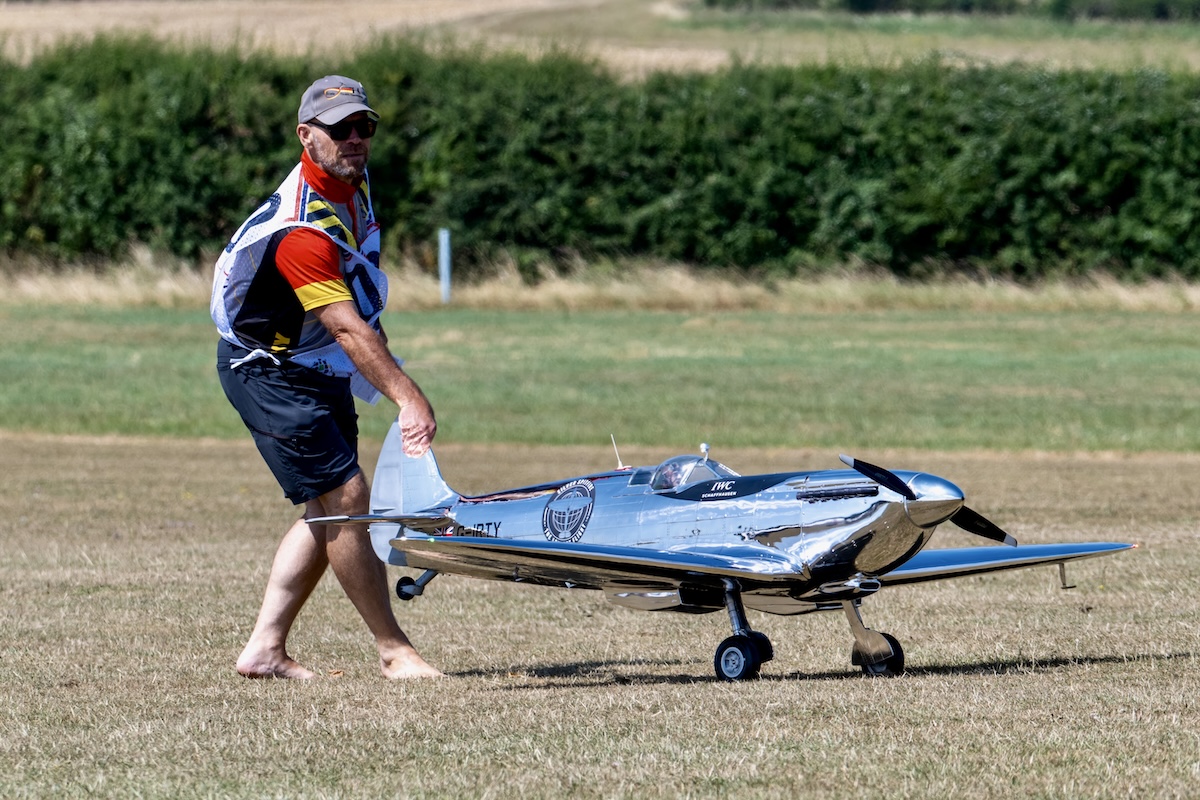 Konrad has loved aircraft for as long as he can remember. Like many young aviation enthusiasts, he has always been fascinated not only by flying itself, but also by the history behind historic aeroplanes and the people who flew them. Of all aircraft, the Supermarine Spitfire has always been his favourite. Its elegant lines, its engineering, and its history captured his imagination from an early age. Jörg then continued. When the Silver Spitfire completed its remarkable round-the-world flight, Konrad said to me one day, I’d like to build exactly that aeroplane. At the time, it was simply the dream of a young modeller. Neither of us imagined where that dream would eventually lead.
I’m delighted to add these comments are just a small part of a much longer story by Jörg told to the editorial staff here at BluFly, and will be delighted to publish later this month.
Incidentally, there’s another reason the Langes’ story was particularly compelling for me. I made a similar trip to a similar competition at a similar age to Konrad, also with my father. I even had some minor success in the event, as it turns out.6 If Konrad’s memories are anything like mine, they will still be as vivid in fifty years as they are now. Even setting aside all other benefits, the future fond recollections alone will make it all worth it, keeping in mind Konrad's current success is still just a stepping stone on a long journey toward an undoubtedly very bright future.
The Real Silver Spitfire(s)
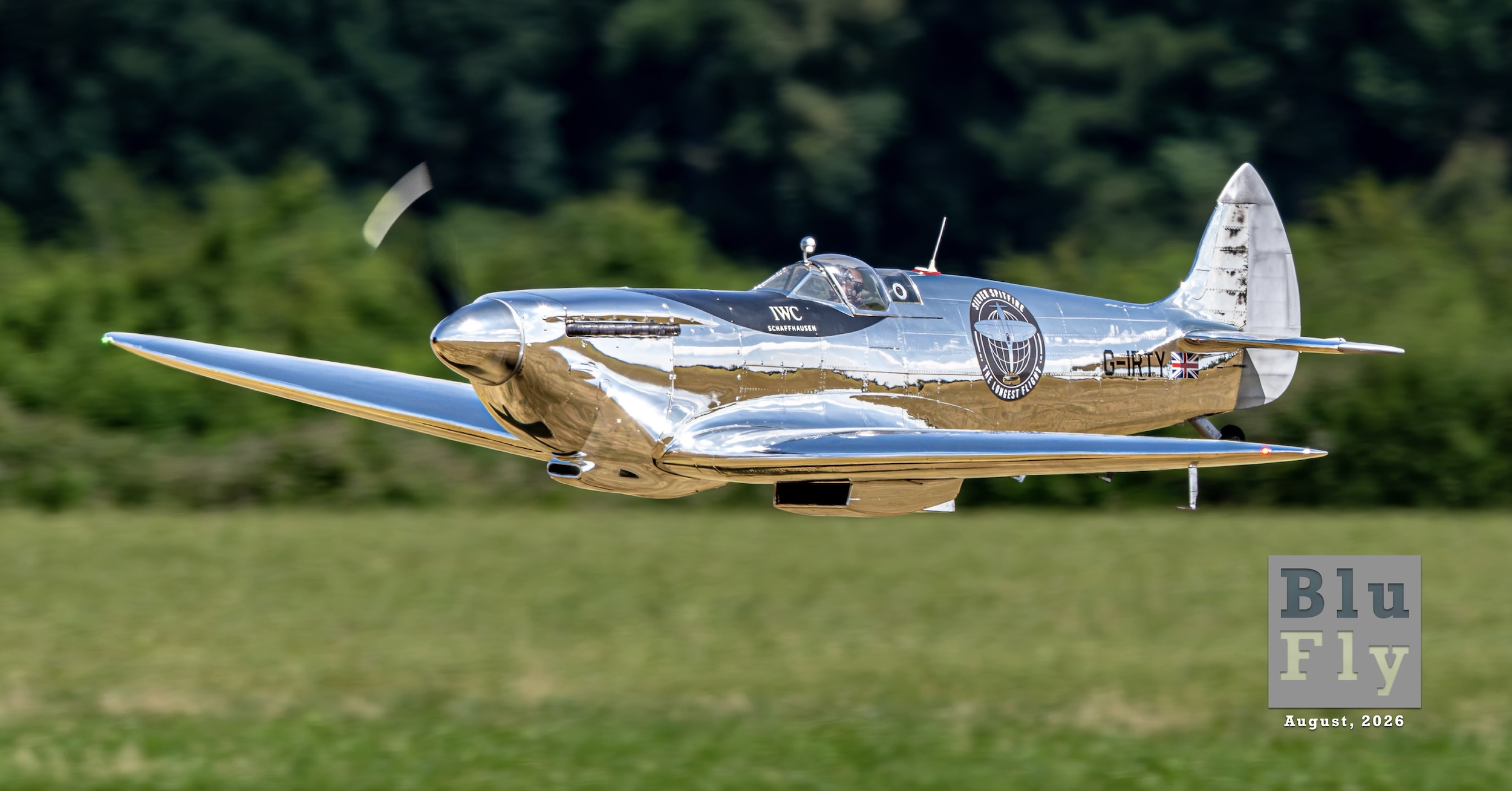
Regular readers will know that I love a great rabbit hole, and the cover image of the Langes’ Silver Spitfire sweeping by the camera at full song sent me rapidly down another one.
To be entirely candid, the story of the real Silver Spitfire came and went without me paying a whole lot of notice to it.7 I think I was put off, at the time, by the eschewing of the usual Sand and Spinach or even the rare but real PRU Blue or Montgomery Pink in favour of polished aluminum. Cool, looking, but not very authentic, no? Also, I can’t help but look at polished aluminum and not think about all the work it must take to keep it looking that way.
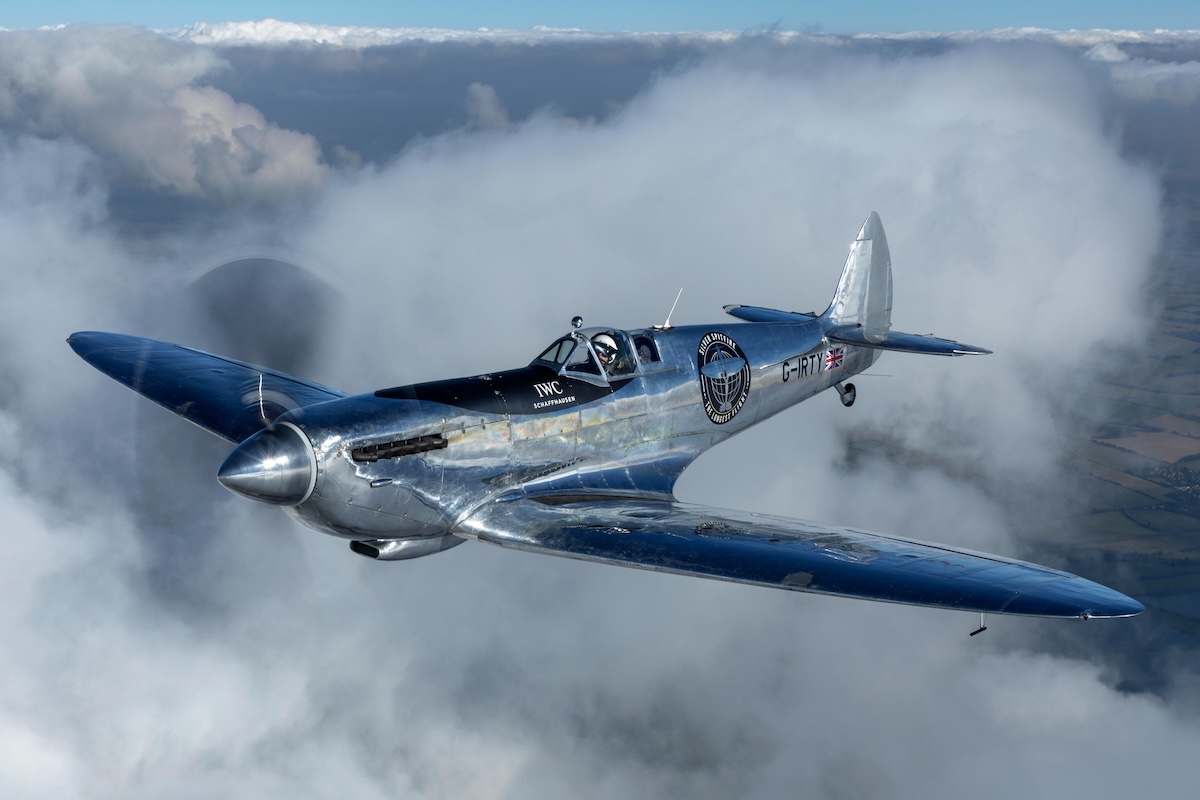 Plugging silver spitfire into any self-respecting search engine gets you, basically, one of two things: the gorgeous Spitfire above and, indeed, an actual bare aluminum Spitfire that saw action during the Second World War. It is described in Tom Neil’s 2013 memoir The Silver Spitfire: The Legendary WWII RAF Fighter Pilot in His Own Words.8 I’m not sure whether the modern Silver Spitfire is any sort of tribute to Neil and his plane, but it seems it certainly could be, and perhaps should be.
However, the real reason for the polished aluminium may be a bit more prosaic. From their website:
The Silver Spitfire is a Mk.IX Spitfire finished in polished aluminium with the guns removed. By de-militarising the aircraft in this manner, we aim to highlight the timeless beauty of its design. With a plane that is less provocative than one adorned with camouflage paint, we hope to broaden the appeal and reach of the project, and gain easier access to nations en route.9 In the sadly jittery world we live in today, unfortunately, the latter may have provided enough justification alone.
The nations en route, above, were twenty-three in number, spread around the globe, and would form the serpentine flight path the Silver Spitfire would take circumnavigating the world in August through November of 2019, in a series of seventy-five segments.10 The flight was memorialised in both a book11 and a documentary.12 This incredible adventure, as mentioned above, was also the inspiration for Konrad Lange’s eventual effort to replicate the iconic aircraft on a smaller scale. It also made me think it was a mistake, on my part, to not have followed the Silver Spitfire more closely, in real time, when it was actually happening.
I also think if R.J. Mitchell had been handed a slightly different brief, the shiny aluminum show pony on offer above may well have been the result. Instead of build the best single-engine engine combat aircraft for the fight to the death in which the world would soon be engaged, the design requirements had read design and build a smokin’ hot, single-engine, single-seat, sport and racing plane, the Silver Spitfire would have been what he would have delivered. To his utter delight and that of his well-healed customers, undoubtedly.
Alternatively, you and I can argue all day what R.J. Mitchell might have thought, had he lived to see the Silver Spitfire(s), and have him contemplate all that they would accomplish at whatever scale. While you might think differently, without a shadow of a doubt I believe he would have loved them wholeheartedly, both big and small. 🛩️
***
This article simply would not have been possible without the tireless and patient assistance of Andy Symons and Graham Kennedy of the BMFA. Also, Jörg Lange wrote an extended and quite extraordinary summary of Konrad’s and his participation in the event, which will soon be its own article here in BluFly. To all of these gentlemen, I wish to extend my sincere and heartfelt thanks. Should the opportunity to return the favour, at some point, I would be honoured and pleased if you asked.
So, what about you? Have you participated in an FAI competition, either crewed or uncrewed, and want to tell us all about it? I’d love to hear from you.13. Until then, thank you so much for reading and also for engaging with BluFly’s posts on social, where you can find us on Bluesky and LinkedIn.14
Until we meet again next month, as always, fair winds and blue skies.
Terence C. Gannon
Managing Editor
This Month's Stories
This is what we managed to put together for you for August, with most recent at the top:
With a view forward like this, how can the Junkers A50 Heritage *not* be on our Lottery Wings list? Perfect for floating around summer skies on warm evenings. More about the German UL category under which it is certified, in a new interview with Steven Egeler, Junkers Marketing Manager. | 🛩️ 🥇
[image or embed]
— BluFly 🛩 (@blufly.media) August 28, 2026 at 8:56 AM
Okay, so we know what we're going to be doing this evening. 🍿 « In this documentary, the MIG-21 takes its final flight after 62 years in the Indian Air Force as retired and active fighter pilots recall its status. » Notably, you can watch in either English or Hindi. (📸 @netflix.com) | 🛩️ ⚔️ 🎬 🥇
[image or embed]
— BluFly 🛩 (@blufly.media) August 27, 2026 at 9:21 AM
It's International Dog Day (and, yes, we're nuts about dogs 🐶 here at the home office) so here's a dog and an airplane from a favourite era of ours. More details with link. Also, gotta get us some of those hats. (📸 The Frank S. 'Luke' Luqueer Photograph Collection) | 🛩️ | 🔗 flic.kr/p/nECWSa/?ut...
[image or embed]
— BluFly 🛩 (@blufly.media) August 26, 2026 at 4:51 PM
As promised earlier this month, here is the *whole* story of twelve-year-old Konrad Lange's F4H World Championship campaign, as told by his father, Jörg. We can't think of a better way of kicking off BluFly Original ✍🏻 our imprint for brand-new stories making their world debut on BluFly. | 🛩️ 📡 ✍🏻 🥇
[image or embed]
— BluFly 🛩 (@blufly.media) August 26, 2026 at 11:43 AM
We've often speculated about what it must take to keep @redbull.com's aviation fleet in the air. Now, here's a glimpse inside the maintenance organization behind their helicopters, ably wrought by Jen Nevans for Vertical Magazine. Also links to a related episode of the Vertical Helicast. | 🛩️ 🚁 🎙️ 🥇
[image or embed]
— BluFly 🛩 (@blufly.media) August 25, 2026 at 9:30 AM
Frankly, we have been wondering 🤔 and now @ltaresearch.com provides an answer, of sorts, with their new, all-too-short post entitled « What Is Pathfinder 1 Designed to Do? » Cool picture, though. (📸 LTA Research) | 🛩️ 🎈 🥇 | 🔗 ltaresearch.com/updates/what...
[image or embed]
— BluFly 🛩 (@blufly.media) August 24, 2026 at 2:11 PM
We'll cop to posting this mostly for the photo’s aesthetics, but it is noteworthy that Saab is on the early development path for a « future uncrewed combat air system » by rolling out the concept model at the Swedish Armed Forces Air Show. (📸 Saab) | 🛩️ ⚔️ 📡 📰 🥇 | 🔗 news.cision.com/saab/r/saab-...
[image or embed]
— BluFly 🛩 (@blufly.media) August 22, 2026 at 12:15 PM
Save that date: the RCAF CT-157 Siskin II (Pilatus PC-21) makes its much-anticipated Canadian debut at AERO Gatineau-Ottawa on September 18–20 at the Gatineau-Ottawa Airport (CYND), achieving yet another significant milestone for this important program. | 🛩️ ⚔️ 📅 📍 🇨🇦 🥇 | 🔗 skyalyne.ca/latest-updat...
[image or embed]
— BluFly 🛩 (@blufly.media) August 21, 2026 at 8:55 AM
It's National Bacon Lovers Day (and we do love bacon 🥓 here at the home office), which made us think about the nexus of aviation and bacon. Here's a good one: Battlefield Airborne Communications Node or BACN for short, which we assume is pronounced bacon. Yes, it's another slow news day. | 🛩️ ⚔️ 🥇
[image or embed]
— BluFly 🛩 (@blufly.media) August 20, 2026 at 9:06 AM
There are those who believe a digital emulation of a traditional print magazine is the way to go. Who are we to argue when the end result looks as good as this flipbook of the Summer 2026 edition of the National Air & Space Museum Quarterly? | 🛩️ ⚔️ 📹 📚 📍 🇺🇸 🥇 | 🔗 www.flipsnack.com/76E95CDD75E/...
[image or embed]
— BluFly 🛩 (@blufly.media) August 15, 2026 at 12:41 PM
While we're proud of the wide range of air vehicles « made by people and flying between the surface and the Kármán Line » we have featured in BluFly, at 0.000084 grams and 3.36 millimetres span, we're pretty sure this is the smallest so far. | 🛩️ 🏫 📡 🚁 🥇 | 🧵 1/2 | 🔗 actu.epfl.ch/news/these-t...
[image or embed]
— BluFly 🛩 (@blufly.media) August 14, 2026 at 1:18 PM
Why is this bizjet smiling? (📸 Duncan Aviation) | 🛩️ | 🧵 1/4
[image or embed]
— BluFly 🛩 (@blufly.media) August 13, 2026 at 12:36 PM
We love concrete milestones achieved ✅, and yesterday's first flight of @heartaerospace.bsky.social's 32-metre span, 11,300-kilogram, battery-electric X1 at Plattsburgh International Airport certainly meets that criterion. Press release linked. | 🛩️ ⚡️ 📰 🥇 | 🔗 www.heartaerospace.com/newsroom/hea...
[image or embed]
— BluFly 🛩 (@blufly.media) August 13, 2026 at 11:17 AM
A feather in SkyAlyne's cap; their support for Vintage Wings' 2026 Yellow Wings program « to create unique educational flight opportunities that connect Canada’s military aviation heritage, and helping to inspire the next generation of Canadian aviators. » | 🛩️ ⚔️ 🧰 🏫 🥇 | 🔗 skyalyne.ca/latest-updat...
[image or embed]
— BluFly 🛩 (@blufly.media) August 10, 2026 at 4:59 PM
What if instead of all the 'fuss and bother' of pressurising the aircraft, all passengers were simply issued these before flight? @spritebark.bsky.social describes how we can all be thankful Carl Rich's idea was a 'Statospheric Failure'. | 🛩️ 🥇 | 🧵 1/3 | 🔗 geoffbarker.wordpress.com/2026/06/30/s...
[image or embed]
— BluFly 🛩 (@blufly.media) August 9, 2026 at 5:19 PM
A fascinating story by Leslie Westmont, writing for the Wisconsin National Guard, about the return of a small piece of Maj. Richard I. Bong's P-38 named 'Marge’, lost in Papua New Guinea in 1944. (📸 Capt. Luke Cofax | Wisconsin National Guard) | 🛩️ ⚔️ 🥇 | 🔗 www.nationalguard.mil/News/State-P...
[image or embed]
— BluFly 🛩 (@blufly.media) August 8, 2026 at 1:37 PM
We like this @unomaha.edu story for all sorts of reasons; not only is it about Mr. Woods’ impressive personal success story, but it also highlights the many opportunities for an aviation career if, for whatever reason, you don't wind up in the pilot’s seat. | 🛩️ 🧰 🏫 🥇
[image or embed]
— BluFly 🛩 (@blufly.media) August 7, 2026 at 9:33 AM
While Air Zermatt has a challenging rescue environment in which to work, it must be nice that the view from their office regularly includes the Matterhorn. Their testimonial, from the Bell Helicopters blog, includes a video with eye-popping visuals. | 🛩️ 🚁 📹 🥇 | 🔗 www.bellflight.com/post/air-zer...
[image or embed]
— BluFly 🛩 (@blufly.media) August 5, 2026 at 8:50 AM
It being early August, we have officially hit the dog days 🐶 of summer and the attendant, dreaded, slow news days. The good part? We have the time to visit some of our favourite photo archives. The San Diego Air & Space Museum's (SDASM) … | 🛩️ ⚔️ 📍 🇺🇸 🥇 | 🧵 1/2 | 🔗 www.flickr.com/photos/sdasm...
[image or embed]
— BluFly 🛩 (@blufly.media) August 4, 2026 at 11:37 AM
For a peek at how the other half lives (rather, more like the other .001% 😉), here's a detailed, long-form read from Frederick K. Larkin for Skies Magazine on what it takes to transform brand-new, tech-laden Bombardier Global 8000 shells into the flying palaces delivered to the customer. | 🛩️ 🥇
[image or embed]
— BluFly 🛩 (@blufly.media) August 3, 2026 at 9:49 AM
The August issue just hit the street. 💥 This month, Managing Editor @terencecgannon.com (re)discovers scale, radio-controlled model aircraft as a result of the FAI news feed. Spoiler alert: they're a universe away from the little stick-and-tissue P-51s we tried to build as kids. | 🛩️ 📡 🥇
[image or embed]
— BluFly 🛩 (@blufly.media) August 1, 2026 at 10:07 AM
Note that the embedded posts above are from the Bluesky 🛩️ Custom Feed15 which is the reference feed for BluFly.