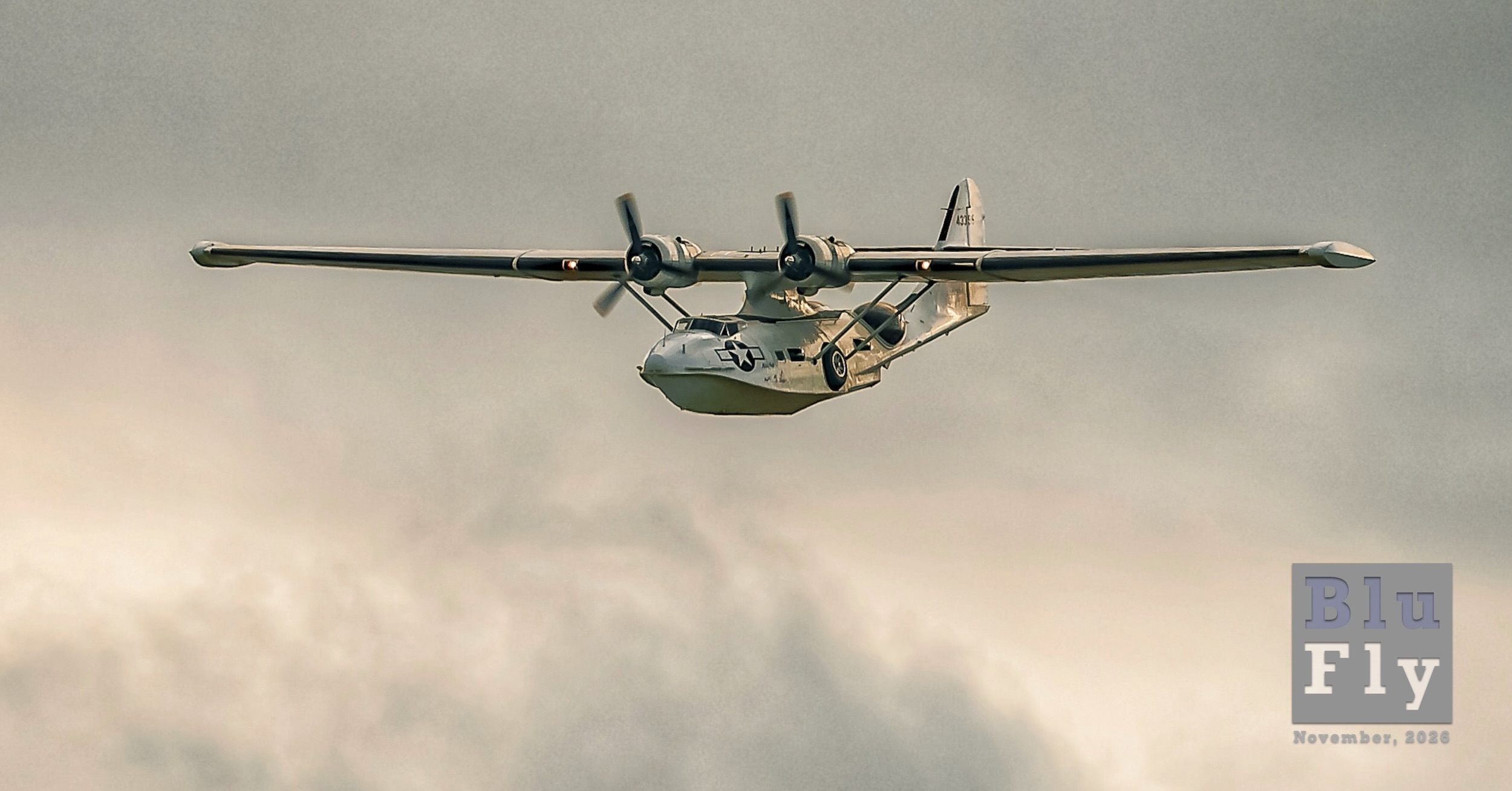
It’s impossible to imagine the relief the stranded soldiers, sailors, and aviators must have felt when the ungainly Catalina hove into view. (📸 Cheryl Goodwin |
Good 2 Go Photography. All rights reserved.)
November, 2026
« The PBY Catalina wasn’t fast, and it wasn’t sleek—but to the men stranded at sea, it was the most beautiful aircraft in the world. »
— Lieutenant Commander Clyde ‘Cash’ Barber
By Terence C. Gannon
In The Air
For many in World War II, the aftermath of their war began when they were mercifully pulled up from the oil-soaked flotsam to which they were desperately clinging and through the yawning rescue hatch of a PBY Catalina. Such open water rescues were one of the ultimate goals of the endless Dumbo missions undertaken over the blue furnace of the South Pacific, the inky blackness of the North Atlantic and every other major theatre of operations in the global conflict.
 For the rest of us who have never participated in such a mission, or been rescued by one of them, it’s impossible to imagine the relief the stranded soldiers, sailors, and aviators must have felt when the ungainly Catalina hove into view. Whatever that must have been like, it would have been exceeded immeasurably when the ponderous yet graceful aircraft began to circle that virtually invisible object spotted on an endless ocean through one of the waist blisters. More so still when it started dropping supplies to those below who might be minutes away from slipping below the surface forever.
Then, rescue. And life.
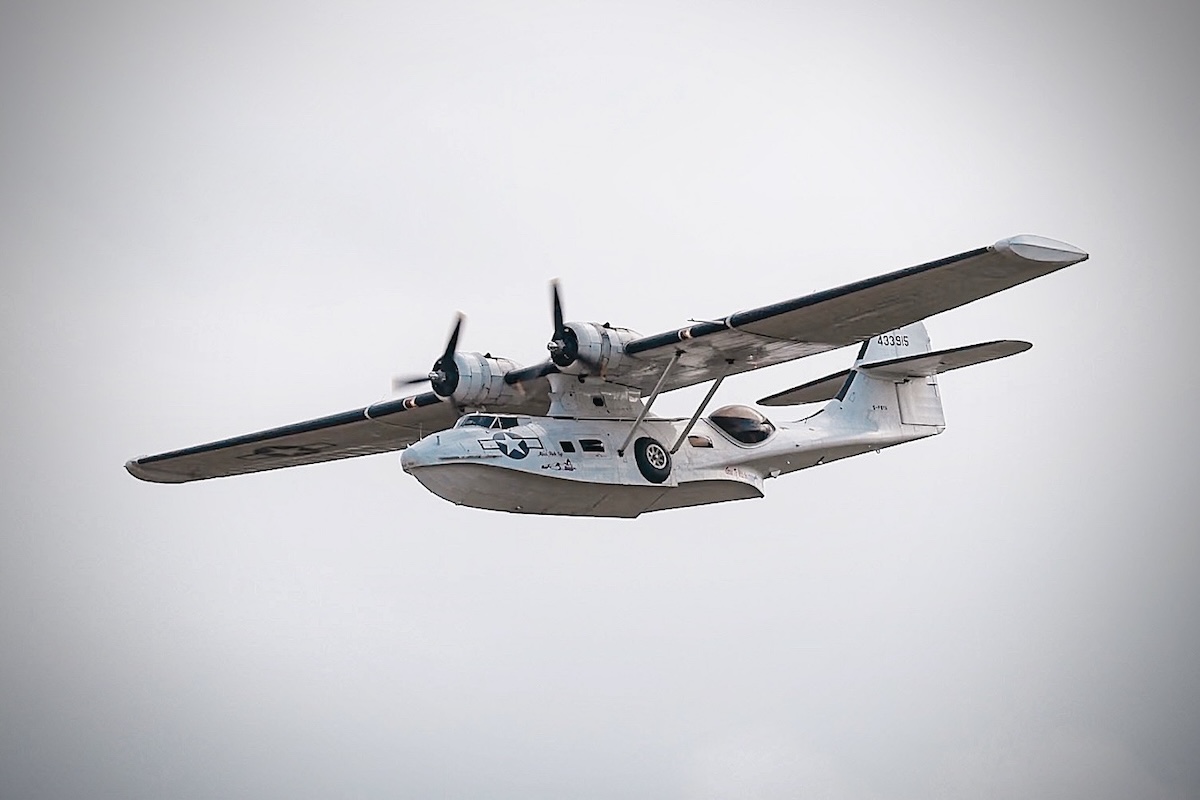 While an angel of mercy, the PBY was by no means a delicate poseur; its legendary toughness endeared it to its crews. They routinely called upon their charges to perform miracles in seas running as high as five-and-a-half metres (sixteen to eighteen feet) while concurrently, in at least one well-documented case, under heavy enemy fire.1 Subjected to this abuse necessary to save life and limb, the Catalina was known to bend and twist such that it would pop out structural rivets holding it together; crews were said to have carried pocketfuls of golf tees, pushing them into the empty rivet holes prodigiously peeing water into the aircraft’s bilge.2
Such search and rescue flights would routinely last as long as fifteen hours, or even longer under special circumstances.3 Their oddly endearing Dumbo nickname derived from what some thought was the Catalina’s enormous, floppy-eared appearance of its glider-like—and super efficient—wings. They felt the aircraft’s appearance was reminiscent of the beloved, cartoon elephant Disney character and the eponymous feature film of 1941.
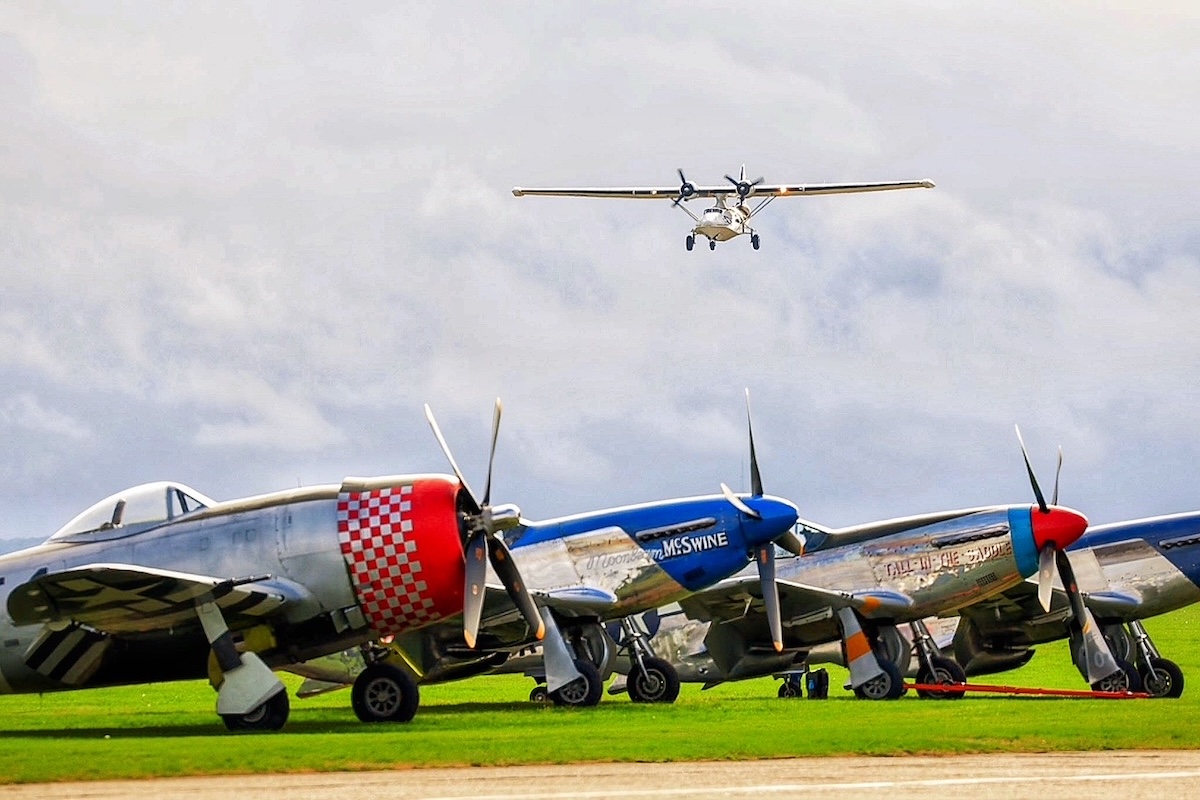
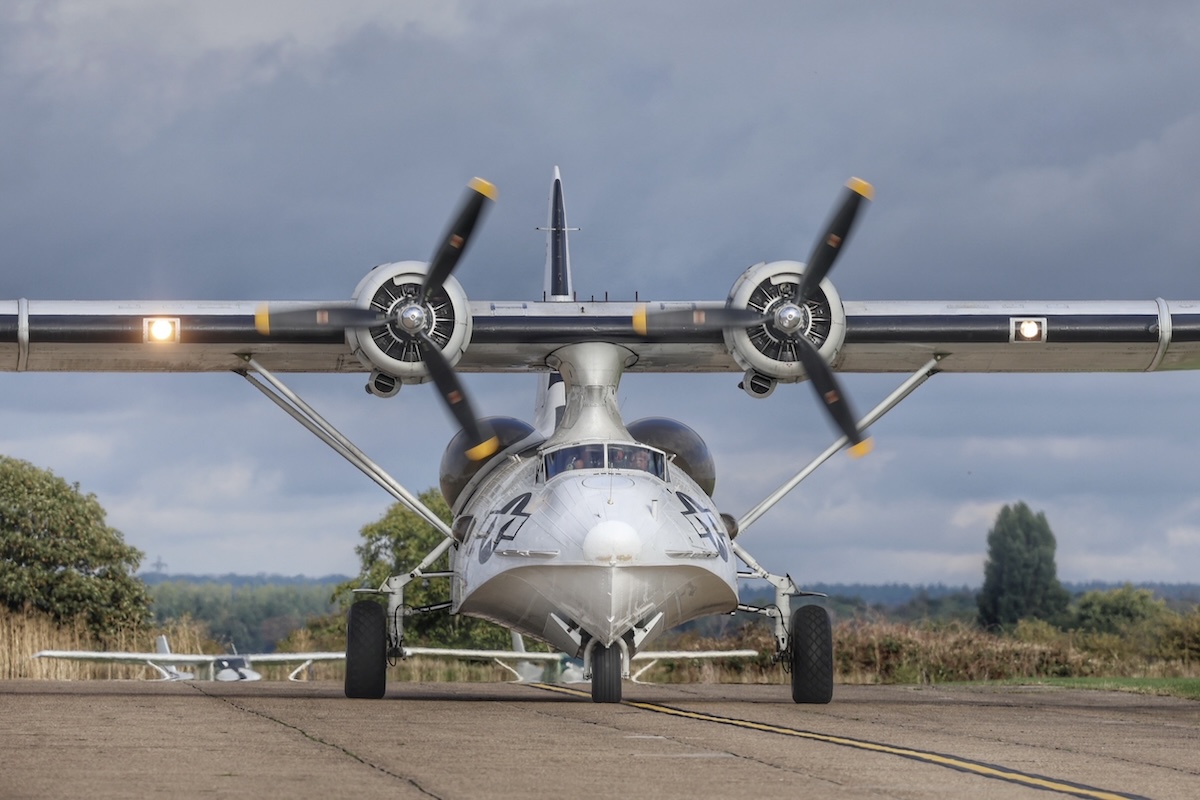 Of the thousands built and flown, a mere handful of PBYs remain today in airworthy condition—perhaps a dozen—in various levels of repair. One of, if not the best, examples is Miss Pick Up, a recent photo of which graces our cover this month. It was taken by BluFly’s good friend Cheryl Goodwin, who had the opportunity to see it fly when she attended the Duxford Battle of Britain Air Show just last month. But therein lies quite a tale; more on that in a moment. In recent conversation with Cheryl, however, it was clear that at the Duxford show, where all manner of lovingly preserved World War II aircraft were present, Miss Pick Up was Cheryl’s Best of Show, the compelling evidence of which is her beautiful photos.
Given that November is the month in which Remembrance Day falls when, for too short a time, we set aside other concerns to honour all those who served back then, and who serve today, it seemed fitting to have such a remarkable aircraft as our cover photo to honour them and their infinite sacrifices. We owe all these selflessly brave men and women a debt we can never hope to repay, so I will simply offer the recognition they so richly deserve and the deepest of heartfelt gratitude and thanks.
Post-War PBYs
It’s funny to think of the aluminium siding on a mid-century suburban home having flown Dumbo missions over hostile territory. Not en toto, perhaps, but there would have been a pretty good chance that in the immediate post-war period, aluminium atoms from many scrapped PBYs, and a wide range of now-useless military aircraft prized by modern-day aficionados, eventually found their way into the humble, too-easily-dented-by-hail builders’ material.
 As versatile and beloved as they were during wartime, and while they proved surprisingly capable in a variety of civilian roles, it can be safely assumed that hundreds, if not thousands of Catalinas, their Canadian cousin Cansos and other license-built variants were eventually crushed, cut up and melted down to find a new, transmogrified, peacetime life. While this was, of course, inevitable and necessary, it still breaks this avgeek’s heart every time I think about it. If you, dear reader, made it this far in this rambling tome, it probably breaks your heart, too.
Of all the activities the estimated hundreds of Catalinas operated in civvies in the post-war period, the largest subset of these were converted into water bombers for which they were quite well suited. Quebec, Newfoundland and Saskatchewan provincial governments in Canada operated them, along with a number of private operators such as Kenting, Norcanair and Buffalo Airways amongst others.
When the Quebec Service Aérien (QSA) went looking for a replacement for their aging war surplus PBY water bomber conversions, the QSA’s requirements found their way into the design of what would eventually become the Canadair CL-215. It is not a coincidence, therefore, that it bears many striking similarities to the Catalina while being designed from the ground up for the surface skimming water bombing role. The notable exception is the unceremonious lopping off of the tips of the PBY’s lovely long wing in pursuit of a more fighter-like aspect ratio better suited to putting in the reps over the fire zone.
The CL-215 and its successor variant, the more svelte-looking turboprop CL-415 still fly in significant numbers across the globe today. A wildfire-weary world can still order brand new copies of still another successor, the CL-515, from De Havilland Canada, and for which there is an impressive backlog.5
However, of all the post-war roles of the Catalina, the most intriguing of all was that of the Landseaire luxury flying yacht conversions. These were popularised by a now-famous series of saucy and stylish photographs by Loomis Dean for Life magazine taken in 1950. The aircraft, these artefact photos and a plethora of other fascinating details are described in detail in Dave O’Malley’s extensive, meticulously researched Sweet Dreams and Nightmares published in August, 2021 by Vintage Wings of Canada.6
A Catalina for the 21st Century
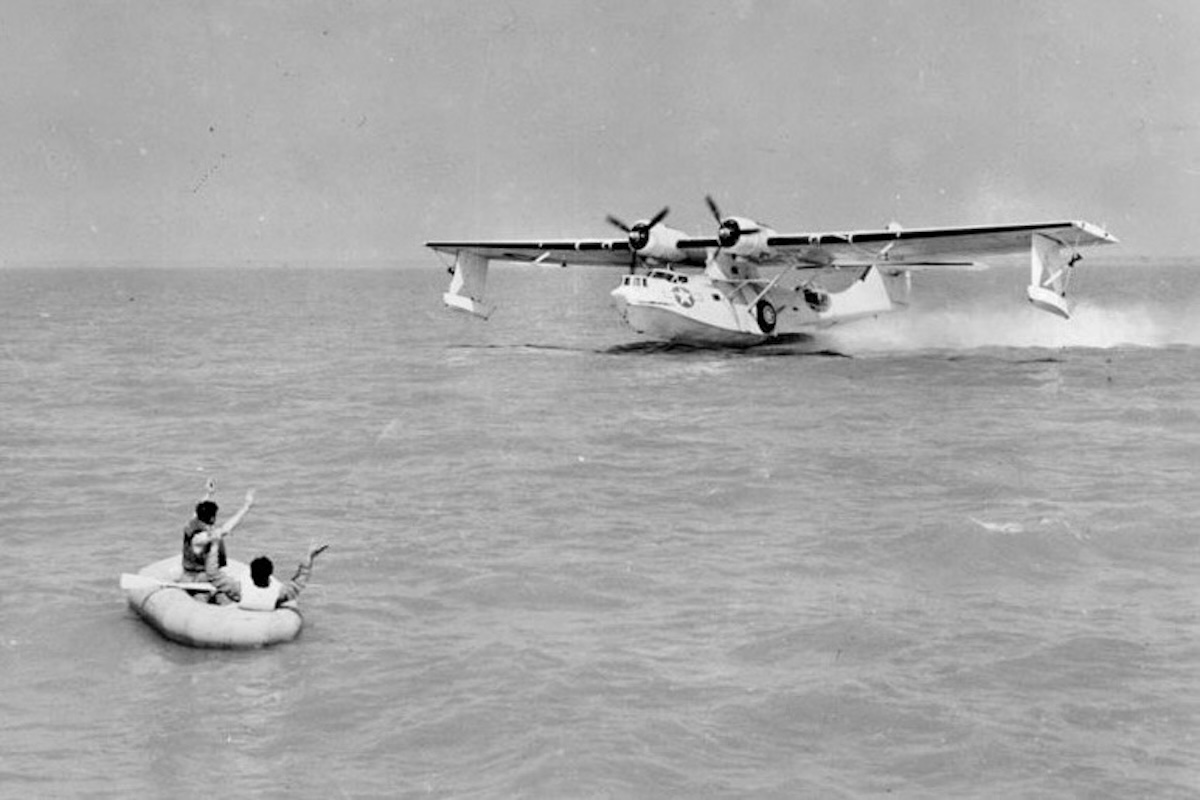 If you follow the BluFly socials, you may have noticed that at least a couple of interesting start-up companies are featured on a fairly regular basis. The attention paid to them is neither capricious nor compensated. It’s borne mostly out of a discernible pattern of steadily knocking off concrete milestones in the development of their offerings. Talk—of what might be, someday—is cheap. Actually getting stuff done is a much higher standard these regularly featured companies routinely meet.
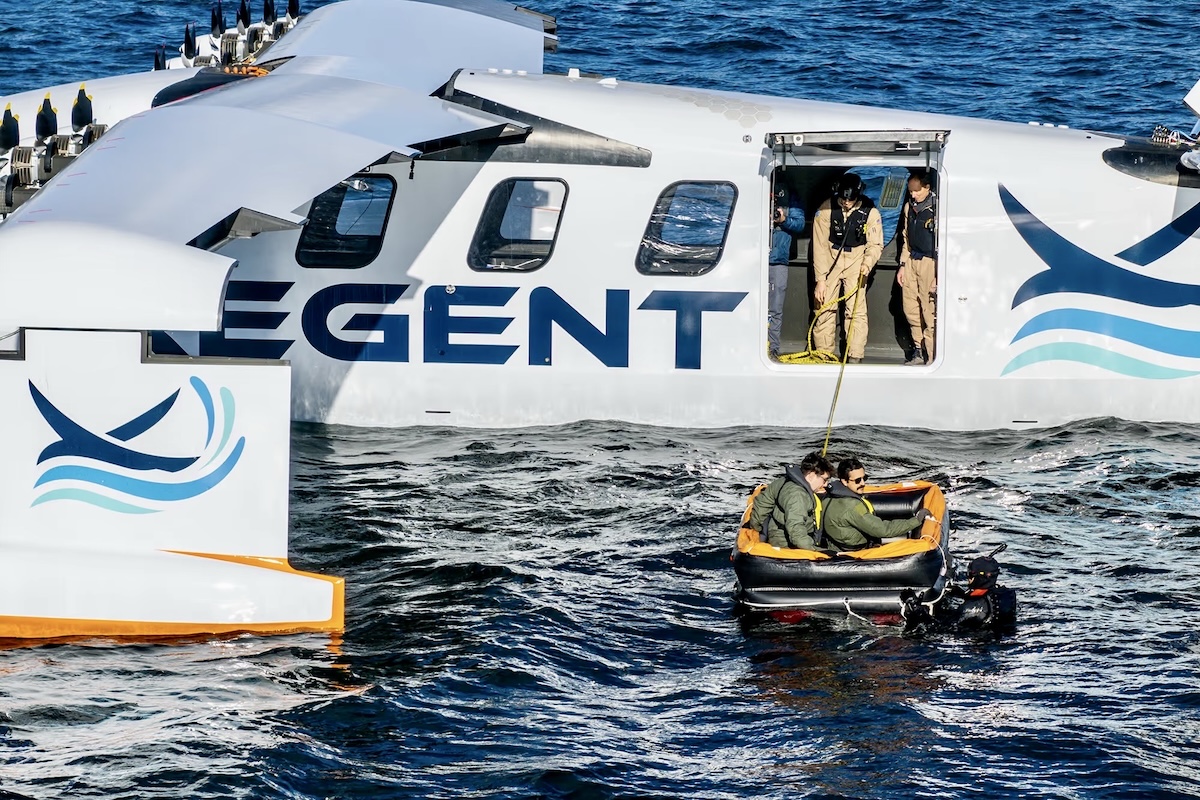
One of these is REGENT Craft of North Kingstown, Rhode Island. Their Seaglider ground effect vessel comes vividly to mind, at this moment, triggered by images the company released in November of last year.7 What simply leapt off the page for me was the striking resemblance to a classic—albeit staged—photo of the Catalina doing what it did best. Compare the two for yourself and see if you agree.
 Going one step further, sharp eyes will see beyond what could simply be a happy co-incidence of photographic composition. The high freeboard of the fuselage enables the configuration of a large door that remains clear of the water, essential to open water rescue operations. Where have you seen this before?
Also, and while it’s certainly conceivable I am seeing something that’s simply not there, I can’t look at the tip floats of the Seaglider and not see something of the Catalina in them. But maybe that’s just me.
 My favourite aviation stories have a compelling arc over an extended period of time—in the case of the Catalina, more than ninety years. Mostly I like them because they prove out the transcendent merit of the original thinking which, in this case, is that of the Catalina’s lead engineer, Isaac Machlin Mac Laddon, and the team at Consolidated Aircraft he led.8
While it’s impossible to know for sure, I believe Mac would look at the Seaglider, even with its unfamiliar construction materials and improbable number of fancy electric motors, and think hey, there’s a little bit of me in that.
You designed one hell of an airplane, Mac.
About That Cover Photo
Cheryl Goodwin is unique in that she is our first threepeat cover photographer. She contributed last year’s November cover featuring an elegant Lancaster uniquely juxtaposed with an ultra-modern, state-of-the-art, pixelated F-22.9 As with this issue, that cover was intended to honour Remembrance Day, and did a magnificent job at that. Cheryl also captured BluFly’s June, 2025 cover which coincidentally featured another great flying boat, the Martin Mars.10
I was aware that Cheryl had attended the recent Battle of Britain Air Show at Duxford—she had posted some exquisite pictures on her Bluesky feed—and it was that they led me to reach out to her for another photo for our this year’s Remembrance-themed issue. I figured there was an eye-popping Spitfire or Hurricane photo that would be a suitable tribute.
She presented what was, at first, a surprising choice. When I saw the photos she proposed, though, I immediately understood what it was that she found so fascinating about Miss Pick Up. What an aircraft. What a story. In particular, I liked the idea of a warplane focused on saving lives, for the most part, as opposed to taking them in pursuit of military objectives.
I had assumed that Cheryl and her husband Terrance had flown, like the rest of us would have, on an overstuffed bus with wings in order to take in the Duxford show. Uh, no, as it turns out. Over to Cheryl’s telling of the tale, in her signature economical prose:
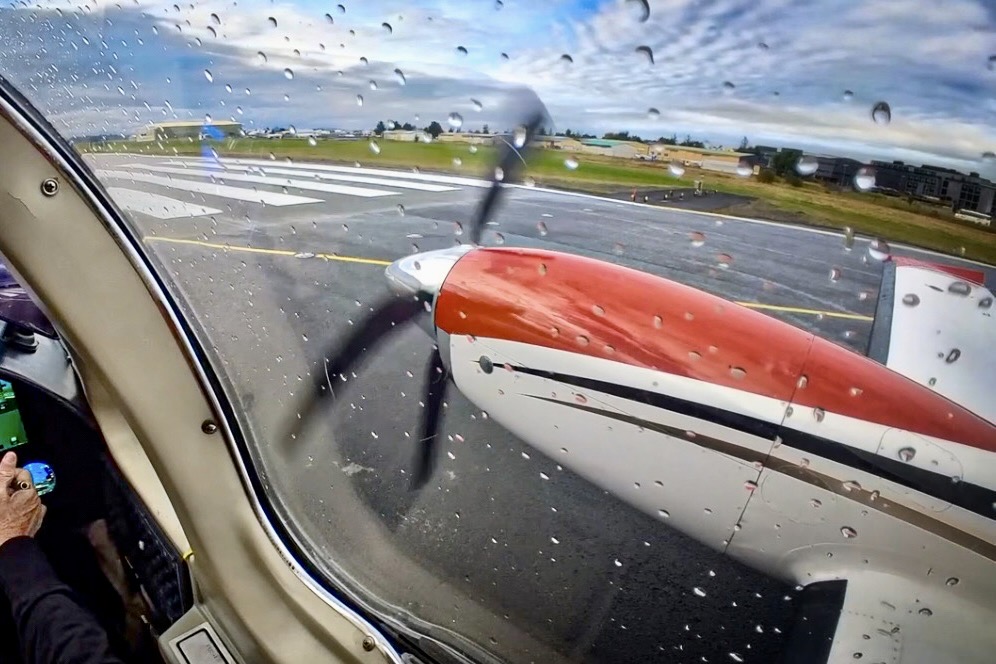
The back story to how we got to Duxford is pretty awesome so I will share some details. Hubby and I flew our Conquest II 441 over the big pond. YBW – YOW – YGB – BGSF – BIRK – EGTK – 5000 nm on a direct path. We had tremendously good weather both ways and our bird flew beautifully 🙏🏻 It was a quick trip to go to the Air Show and see some dear friends. The primary mission being the preparation for the North Atlantic crossing that we hope to repeat soon.
Her photos tell at least some of the rest of the story. Wow. Double wow. Between you and me and anybody else you care to tell, I’m on an arm-twisting campaign to see if I can get Cheryl to more fully write up and illustrate this adventure for BluFly. Anybody else out there think that her writing such an article is a good idea?
Thank you so much for your contributions to this humble journal, Cheryl. It does not overstate the case one bit when I say it would not be the same with you and without your beautiful photos. 🛩️
***
How about you? Is there a thought about the Catalina you would like to share with the rest of us? Maybe you have your own story of a globe-spanning flight just waiting to be told? Barring that, perhaps a flight just poking around the local airport on a summer evening that is particularly memorable for you? If so, I would love to hear from you about it, or any other subject.11
Until we meet again next month, thank you so much for reading and engaging with our social feed on LinkedIn.12
Fair winds and blue skies.

Terence C. Gannon
Managing Editor
This Month’s Hand-Picked Stories
This is what have for you for November, with most recent at the top: