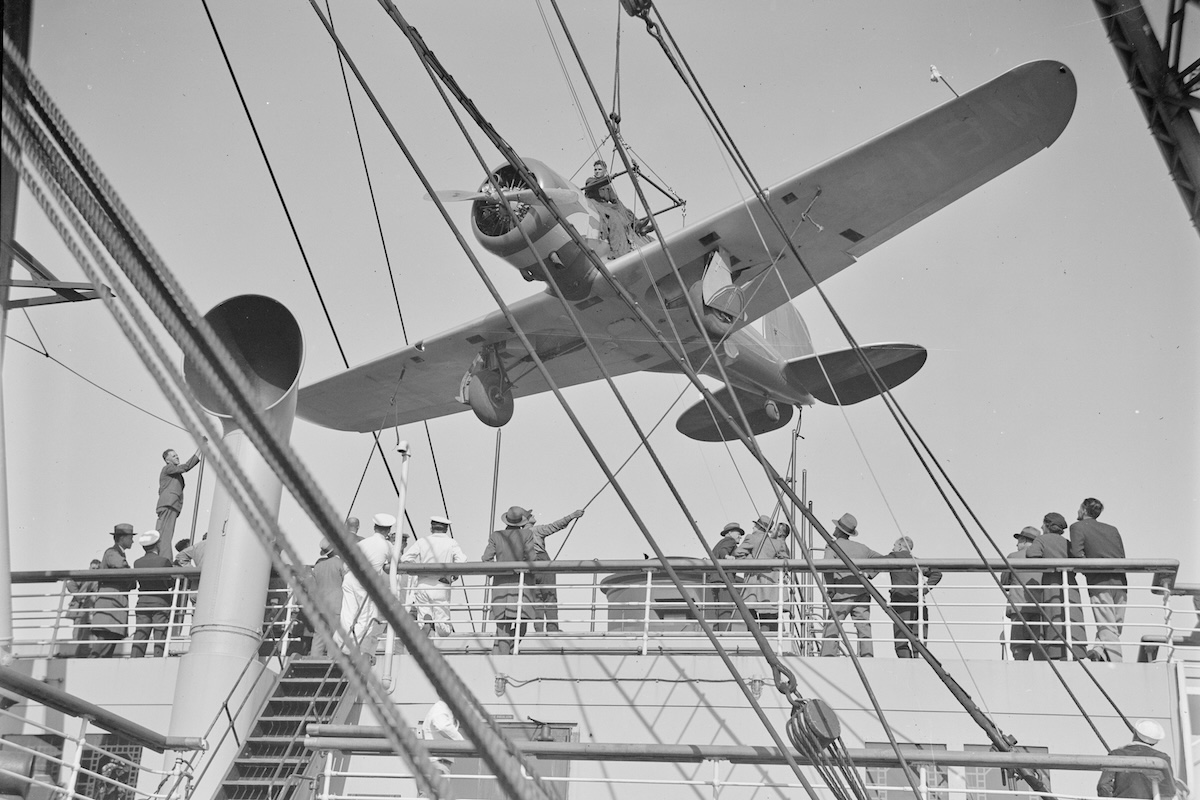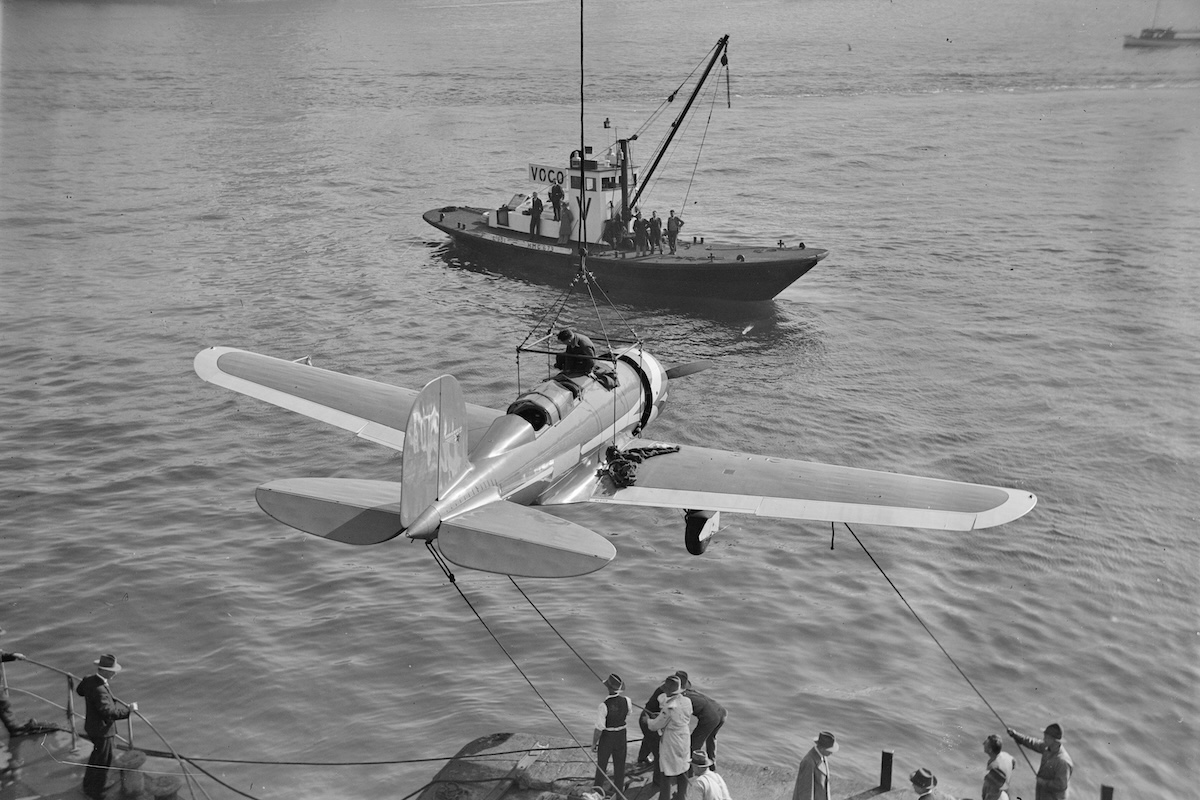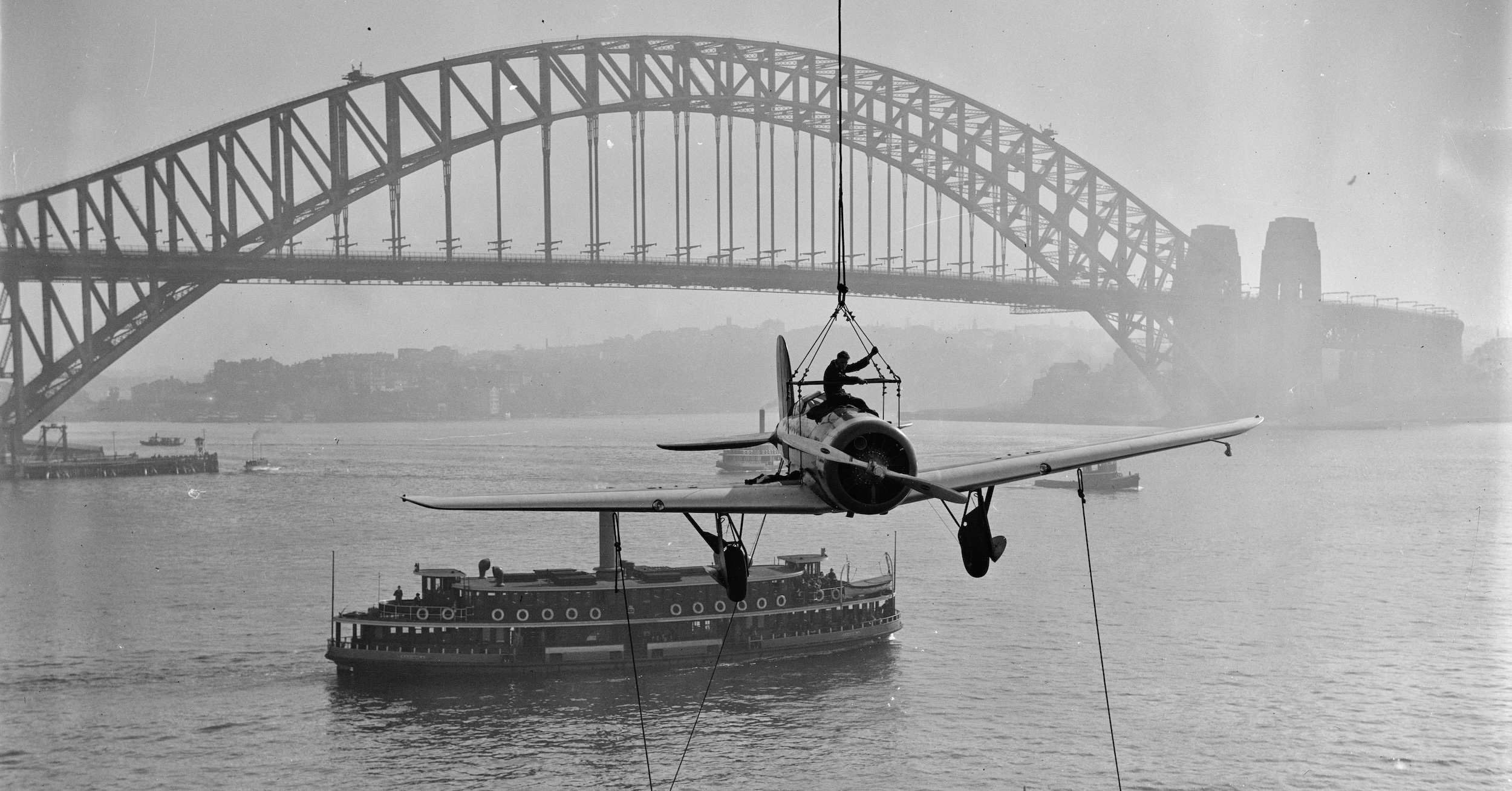
ANZAC over Circular Quay, Sydney, 17 July 1934. (📸 Sam Hood, from original glass negative, Mitchell Library, State Library of New South Wales, ON 204/Box 68/3.)
Scandal over Sydney
Charles Kingsford Smith and the Centenary Air Race, 1934
By Geoff Barker
On16 July 1934, the ship Mariposa pulled into Circular Quay, Sydney, with a strange item of cargo perched on the tennis court on its upper deck. The Mariposa, which had departed from Los Angeles on 27 June, had been the last-minute choice of Charles Kingsford Smith to carry the plane he had purchased in California, a Lockheed Altair.1 It had been loaded onto the ship’s tennis court fully assembled for use in the Centenary Air Race from England to Australia.2 The airplane sported deep blue livery, a Pratt and Whitney 550 horsepower nine-cylinder radial engine and had the name chosen by Kingsford Smith—ANZAC—emblazoned on it’s side.
Kingsford Smith (known widely as Smithy) had served at Gallipoli and was one of the first Australians to earn his pilot’s wings, joining the Royal Flying Corps in 1917. In 1928 he and Charles Ulm became national heroes when they made the the first transpacific flight between Australia and New Zealand.3 Smithy had purchased his new plane to enter the Centenary Air Race and win the £15,000 prize. This was important because he was in debt. The Australian National Airways company he had formed with Ulm failed in 1930 and although he had won a few air races and even established a mail service with New Zealand he remained in need of cash.4
 Sadly, Smithy’s choices over the course of 1934 would put more pressure on his finances rather than alleviate them. Firstly, there were problems with his choice of an American plane. This had stirred up a hornet’s nest of patriotic fervour by critics in Australia who felt he should use a British plane for the race. To add to his problems the plane arriving fully assembled meant it could not be transported to Mascot—the only viable plan was to somehow offload it to a nearby take-off platform and then fly it to Mascot.5 On top of this he didn’t have appropriate registration yet to fly the plane in Australia and he was forced to lobby for a special dispensation to fly the plane to Mascot.6 Smithy’s woes were further compounded by his choice for the plane’s name. Australian customs officers told him upon his arrival that he was not permitted to have the name ANZAC on the fuselage as the word had been debarred from private usage and limited to events associated with the Gallipoli campaign.7 Smithy was forced to apply for a new name for the plane.
In fairness this should not have been entirely unexpected for Kingsford Smith as in mid-May Senator McLachlan, the acting Attorney-General, had flagged that naming the plane ANZAC would be an infringement of copyright laws.8 At the same time Kingsford Smith was made aware of a possible public backlash if he purchased an American plane.9 It seems Smithy simply ignored all advice and went ahead anyway, and as a result ended up with the compendium of problems outlined above.
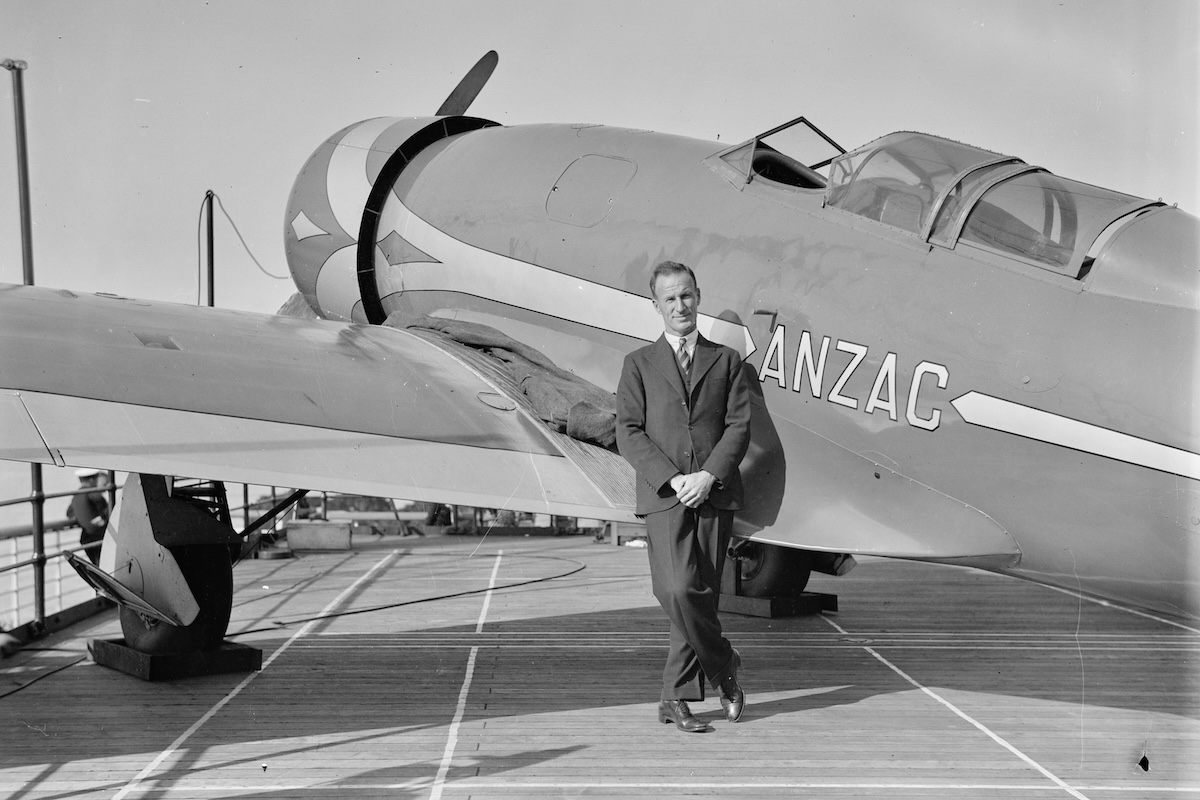
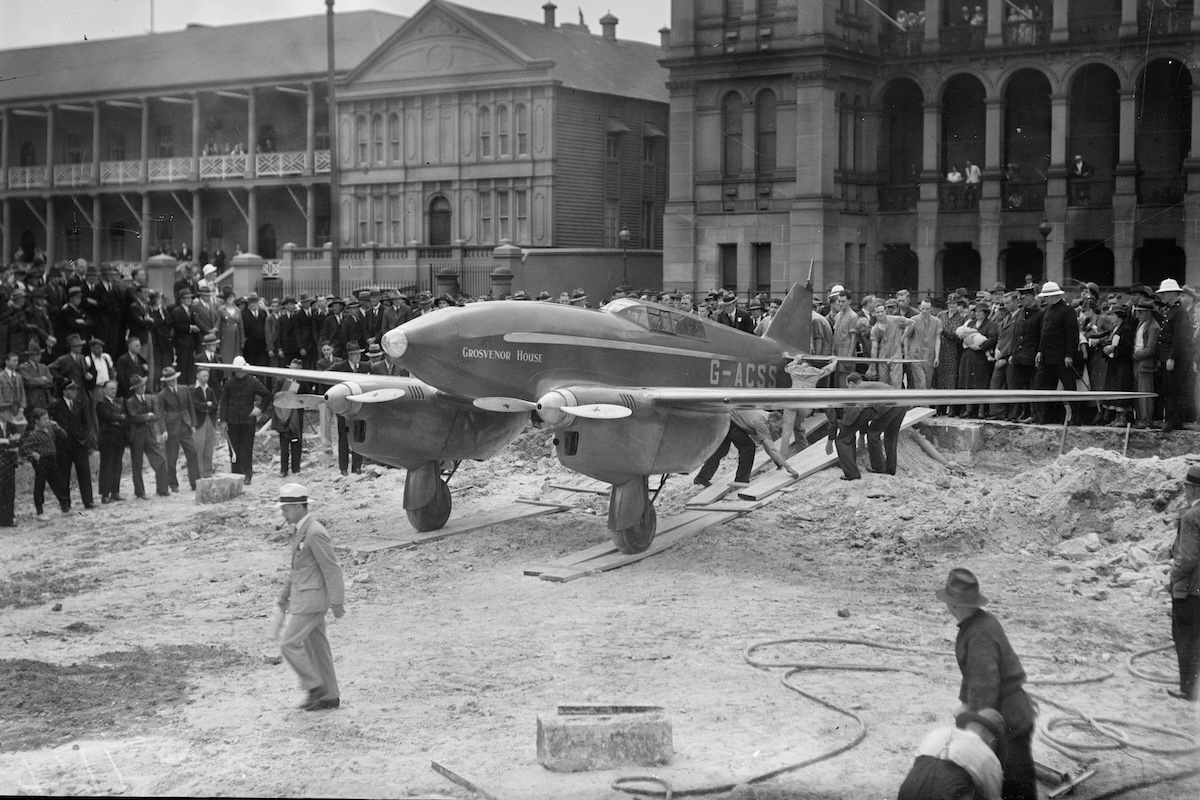
On 16 July however his primary problem was getting the plane off the Mariposa and to safety in a hanger at Mascot Airport. The naming problem was temporarily solved by placing a sheet of paper over the name (seen in some of these images) before being unloaded. As it was fully assembled the the wing span would not fit under bridges along the road routes, so it was suggested he try taking off from Macquarie Street—this was vetoed. In the end the decision was made to offload it onto a floating barge using a 150-ton crane and then tow it to Anderson Park in Neutral Bay where Smithy used the park as a runway.10 This was not going to be easy—at around 110 metres, reporters claimed the park would be like taking off from a pocket handkerchief compared to a normal landing ground.
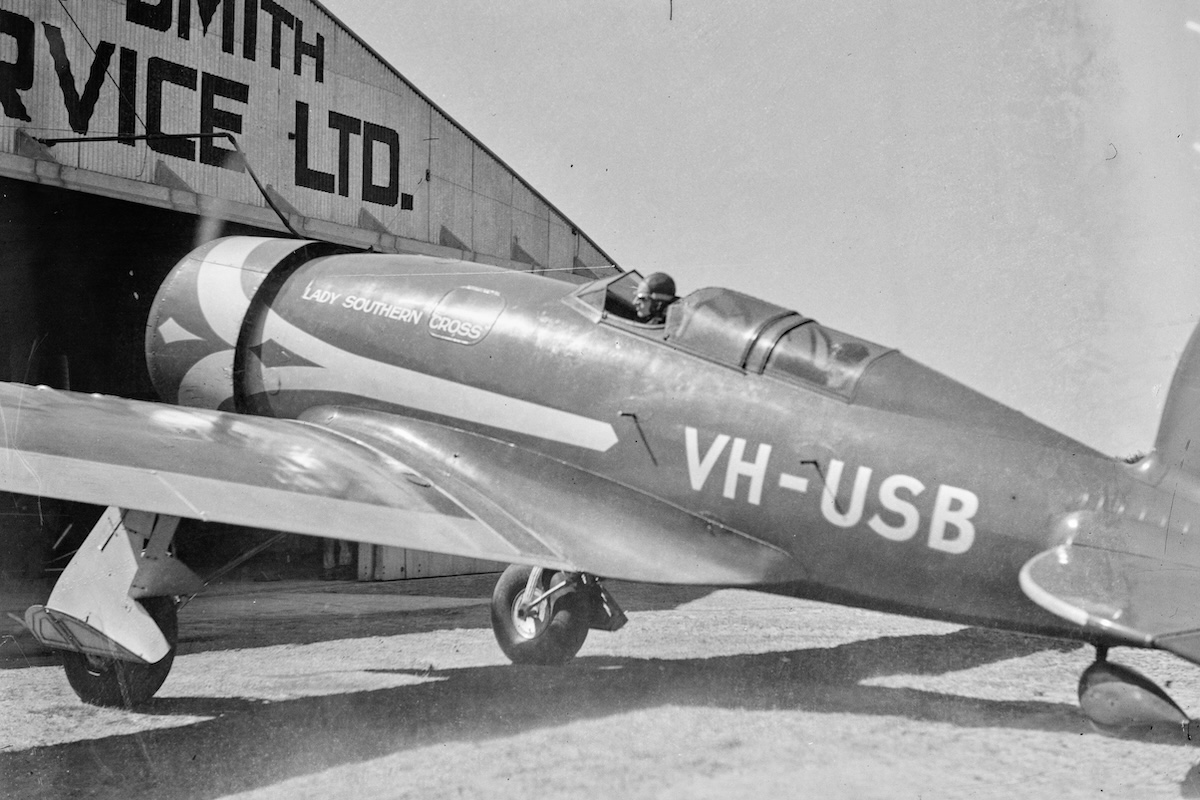
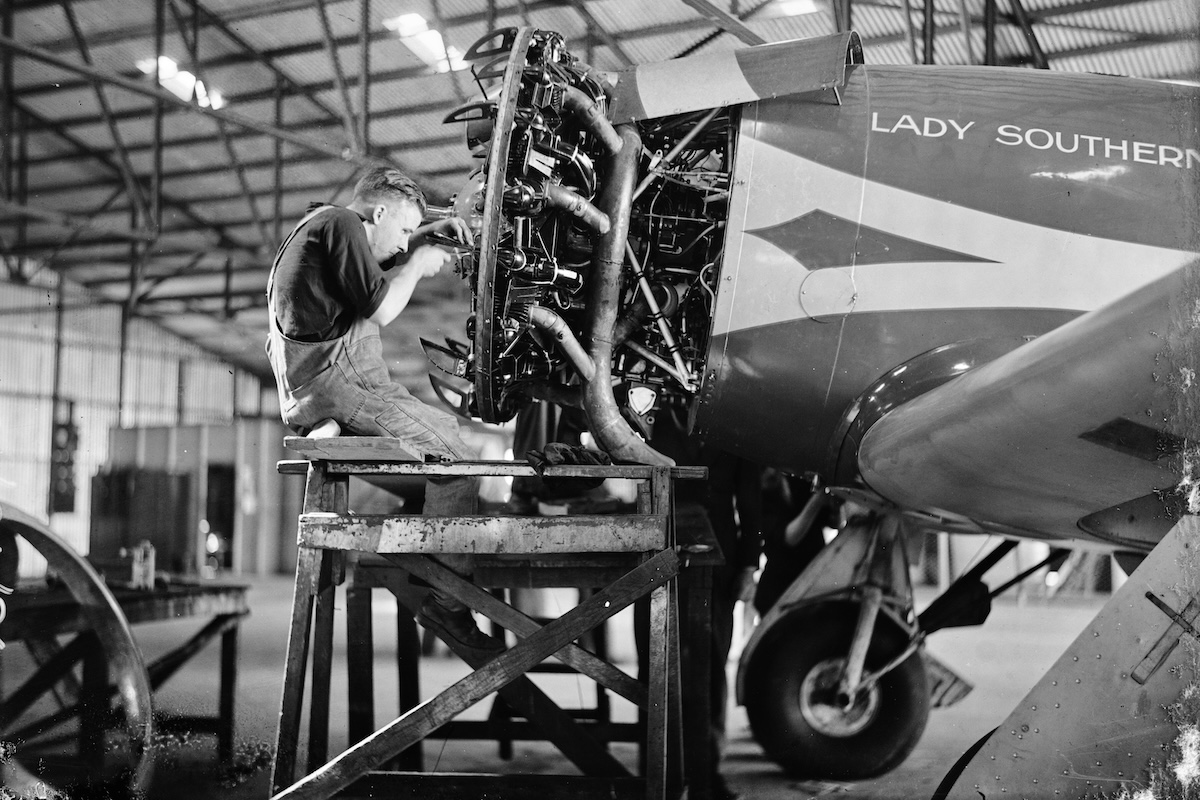
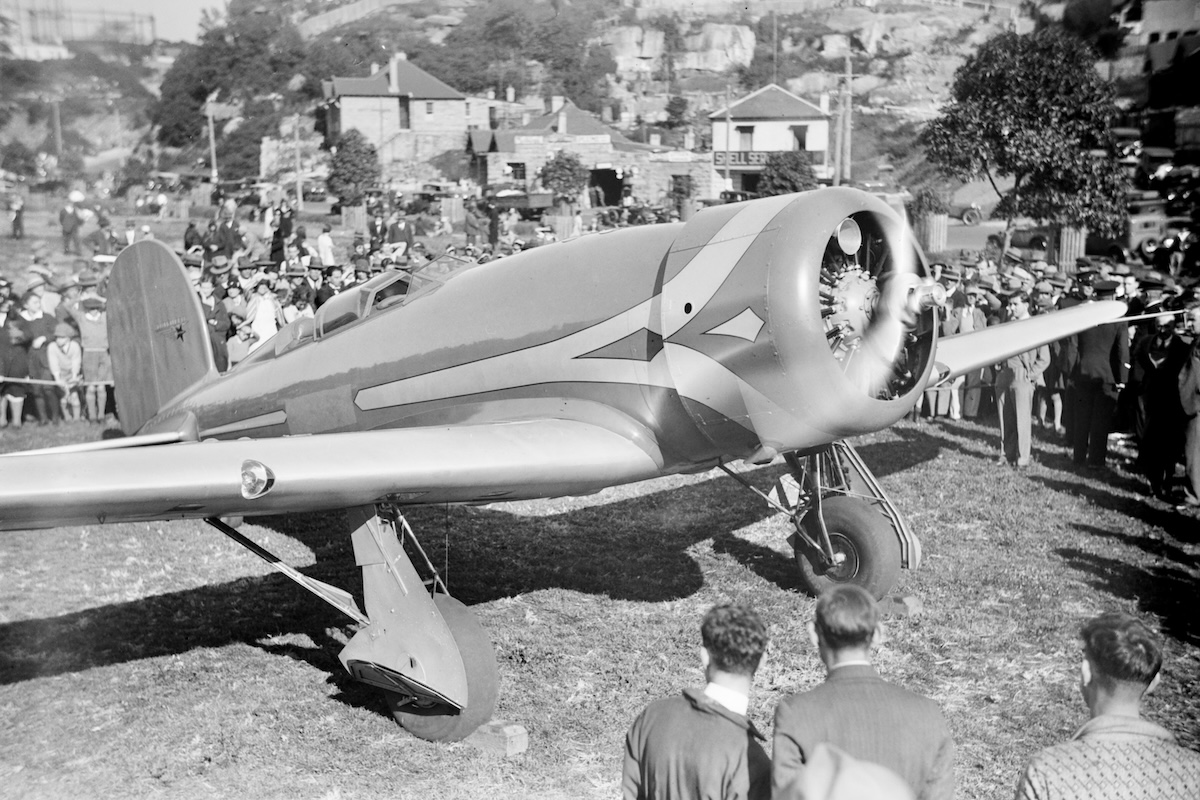 Over the course of the day some 5,000 spectators gathered at the park and at 4pm, with Captain PG Taylor as his copilot, Smith warmed up the engine and commenced his run down the park.11- 12 To the relief of those gathered the take-off was a success and the plane flew directly to Mascot Airport, where it was hobbled to prevent Smith or Taylor flying it before the official documents had all been signed.13 In the image below you can see the plane after its arrival with its new name Lady Southern Cross, on the front of the fuselage and its number VH-USB on the side.
The Centenary Air Race was scheduled to take place in October 1934 and in preparation Kingsford Smith and co-pilot Patrick Gordon Taylor set several speed records flying between Australian cities. They began their flight to England on 29 September 1934, with a first leg planned to end in Darwin, but dust storms and stress failure of the engine cowling turned them back to Sydney, and they were forced to withdraw from the race.14 Kingsford Smith was not alone as in early October it was predicted only twenty-five of the original sixty-four entries would start.15
The race was eventually won on 25 October by CWA Scott and Tom Campbell Black flying a DH.88 Comet in a time of seventy-one hours.16 After celebrations in Melbourne Scott and Campbell’s British built plane was transported to Sydney and displayed in Martin Place off Macquarie Street. One must imagine the annoyance of Kingsford Smith as this was the same street he was refused access to just a few months earlier.
 Kingsford Smith was now deep financial trouble and unless he could make a flight out of Australia the Lady Southern Cross was facing losing her airworthiness certificate. To get around this Smithy decided to attempt the first eastward crossing of the Pacific Ocean by aircraft, from Australia to the United States. Leaving Archerfield Airport on 21 October 1934, he arrived in Oakland, California, after a series of misfortunes on 4 November, and left the plane at Burbank, to be repaired and stored.17 The following year, 8 November 1935, Smithy and co-pilot John Thompson Pethybridge disappeared while flying the Lady Southern Cross overnight from Prayagraj, India. Their bodies and the plane were never recovered.18 🛩️ 🌲
***
This article is ©2025 Geoff Barker, released under the Creative Commons Attribution-NoDerivatives 4.0 International license. It was originally published in Geoff Barker's online journal Dissonance in February, 2025. Scandal Over Sydney is republished here under the Avergreen imprint with Mr. Barker's permission and with our thanks.